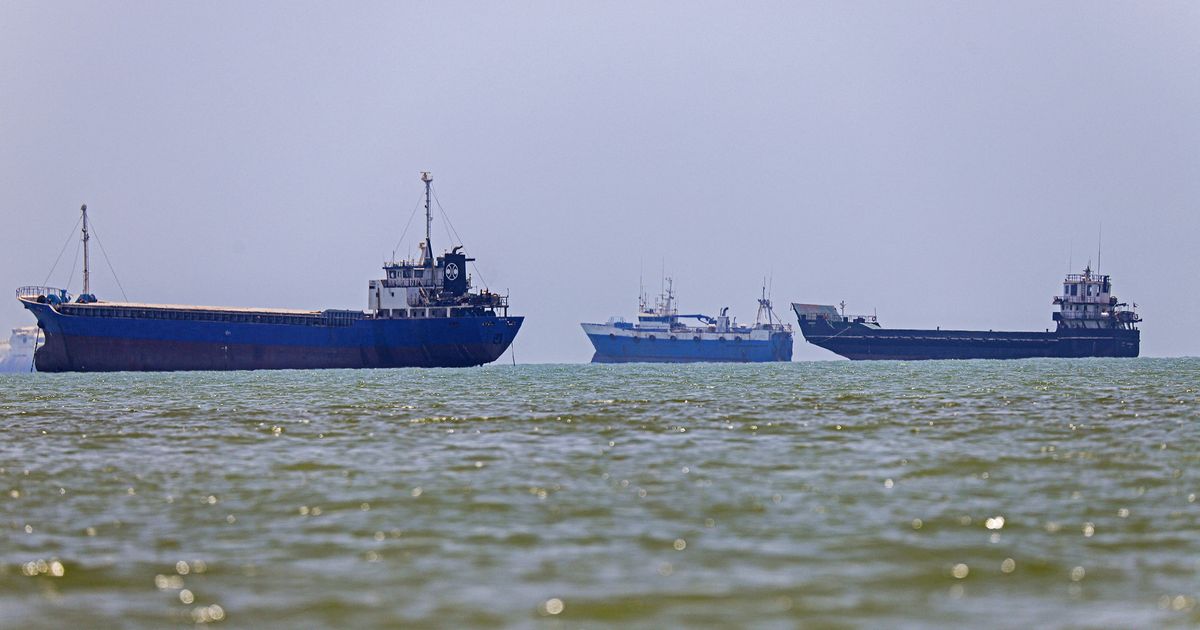
Iran signaled it may require permission, fixed routing, and potentially future "insurance fees" for vessels transiting the Strait of Hormuz, while U.S. officials said more than 20 ships crossed overnight via Oman’s coast. The prospect of tolls, mandated routing, and mine-related route disruptions raises fresh risk for the world's most important energy chokepoint and could tighten shipping and oil logistics. Although transit appears to be continuing, uncertainty remains high as the industry waits to see whether free passage under the interim peace deal is preserved or replaced by Iranian controls.
The market is shifting from a binary “open/closed” thesis to a more toxic regime: a politically managed corridor with discretionary tolling, routing control, and documentation friction. That is worse for risk assets than a clean closure because it creates persistent basis widening, higher insurance premia, and operational uncertainty that can suppress volumes without triggering the kind of supply shock that would force an immediate policy response. The first-order winner is any shipping capacity already positioned to arbitrate route selection and security, while the loser set broadens to include Gulf exporters, refiners dependent on uninterrupted Persian Gulf liftings, and shipowners whose utilization drops as vessels sit idle waiting for permits or rerouting decisions.
The biggest second-order effect is on optionality: if tolling becomes normalized, every additional convoy, permit, and “safe lane” becomes a pricing event that incentivizes dark sailing, longer transit times, and more working capital tied up in fuel and voyage insurance. That pushes freight rates and tanker day rates higher even if headline barrels still move, while simultaneously reducing the reliability premium embedded in Middle East supply. Over days, the most sensitive assets are spot crude, tanker equities, and marine insurers/reinsurers; over weeks to months, the real impact is on contract negotiations and the willingness of counterparties to book forward liftings from Gulf terminals.
The contrarian view is that the immediate headline risk may be overstated if most flows continue via de facto protected corridors and the U.S. tolerates a gray-zone status quo to preserve near-term de-escalation. If so, the larger trade is not a one-day oil spike but a slow bleed in shipping economics and a rising geopolitical tax on Persian Gulf trade. That argues for expressing the thesis through equities and dispersion rather than outright directional crude, because the probability-weighted outcome is elevated volatility and margin transfer, not necessarily a sustained supply outage.
Catalyst-wise, watch for a formal insurance/toll schedule, any casualty in the corridor, and whether major Western insurers refuse coverage on principle; those would convert a nuisance into a capacity shock within 1-3 weeks. Conversely, a continued trickle of dark transits without incident would cap crude upside and shift pricing toward logistics winners rather than energy producers.
AI-powered research, real-time alerts, and portfolio analytics for institutional investors.
Request DemoOverall Sentiment
moderately negative
Sentiment Score
-0.45
