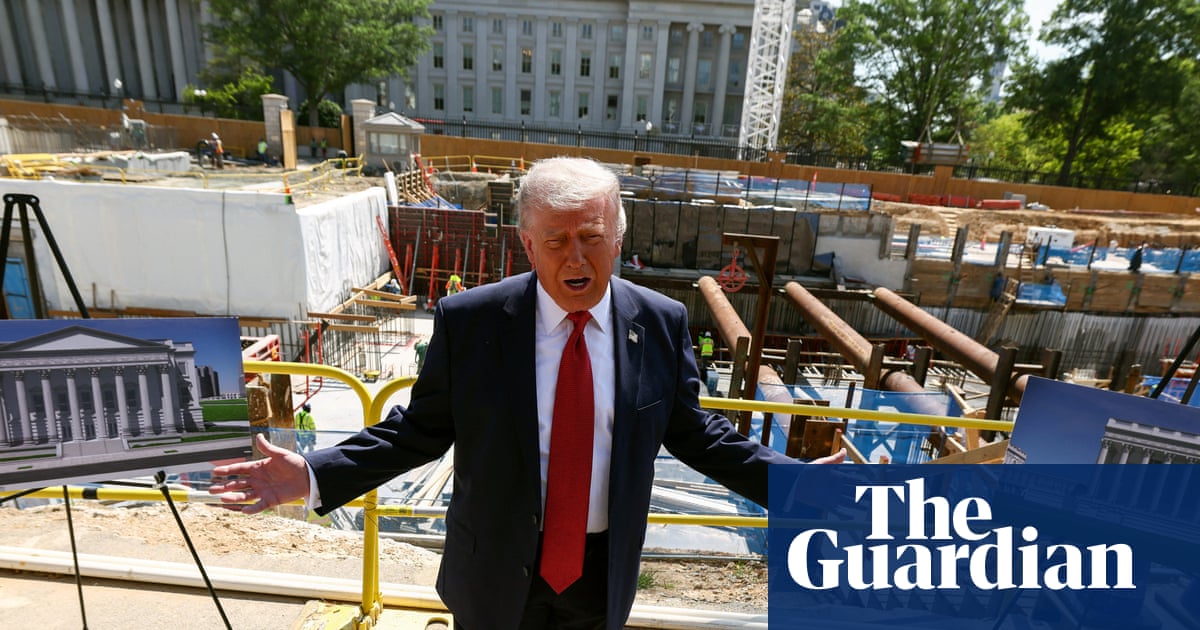
A DC appeals court is reviewing whether construction of Donald Trump’s proposed $400m White House ballroom and underground secure facility can be halted, after a lower court blocked the project and construction began before the usual approval process was completed. The Justice Department argues only Congress can stop the work, while preservationists say the administration is acting lawlessly and exceeding presidential authority. The Senate also stripped $1bn in Secret Service upgrade funding from a related spending bill, underscoring political resistance to the project.
The market read-through is less about the ballroom itself and more about the precedent: if the executive branch can accelerate capital projects on federal property by invoking security, then the relevant trade is a modest increase in political-risk discount across public works, historic-preservation, and permitting-dependent projects. That matters most for contractors and service providers with exposed federal backlogs, because the second-order effect is a higher probability that agencies will try to bypass standard review timelines when projects are framed as urgent or sovereign. The immediate winner is the administration’s discretionary spending agenda; the loser is any constituency that relies on procedural friction to delay projects.
The larger implication is a small but real shift in constitutional/administrative-law risk that could persist for months, not days. If the appellate court narrows judicial remedies, it increases the value of speed over process for government-sponsored construction, while also making it harder for opponents to extract concessions through litigation. Conversely, if the court signals that unauthorized work can be unwound, it will reinforce a risk premium on projects where site preparation is already underway and approvals lag construction starts.
From a portfolio standpoint, the cleanest expression is not a direct event trade but a relative-value stance on federal-infrastructure beneficiaries versus permit-sensitive developers. The consensus is probably underpricing how quickly a security rationale can become a template for future executive actions, but overpricing the probability that this becomes a broad regulatory regime shift. The most likely outcome is a narrow legal precedent with limited operational impact outside politically salient federal projects.
AI-powered research, real-time alerts, and portfolio analytics for institutional investors.
Request DemoOverall Sentiment
neutral
Sentiment Score
-0.05
