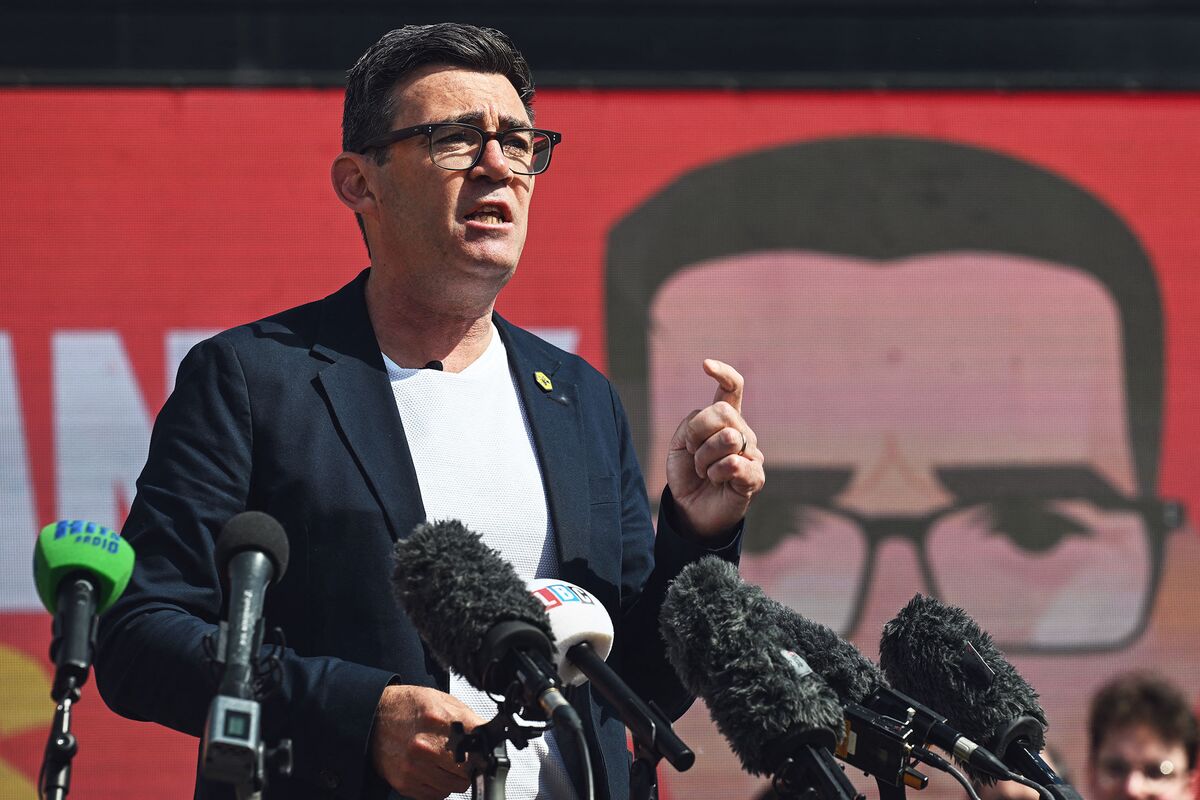
President Trump dismissed Andy Burnham, saying he was unfamiliar with the likely next UK leader and had only heard he was "extremely liberal." The article is a brief political comment with no policy announcement, economic data, or market-moving implications. Market impact is likely minimal.
The market implication is not a direct UK policy read-through so much as an increase in transatlantic friction risk at the margin. If Washington frames the next UK government as ideologically misaligned, the more relevant second-order effect is reduced room for fast-track alignment on trade, defense procurement, digital regulation, and sanctions coordination — areas where even small delays can move FX, aerospace, and defense sentiment before they change hard data.
The near-term risk is narrative-driven repricing rather than fundamentals: sterling and UK domestics can weaken on headlines if investors infer a more confrontational US-UK posture, but the move is likely capped unless policy follows rhetoric. The bigger medium-term catalyst is whether a new UK leadership team uses anti-Trump distance domestically, which could raise the probability of sharper regulatory divergence with the US on tech, antitrust, and energy transition issues.
Contrarian take: the consensus may overestimate how much personal chemistry matters and underestimate institutional inertia. A new PM can change tone quickly, but budget constraints, NATO commitments, and supply-chain interdependence limit any meaningful break; that makes this more of a volatility event than a regime change. The better expression is to fade overreaction in UK macro assets after headline spikes, while keeping an eye on sectors most exposed to procurement and cross-border regulation.
AI-powered research, real-time alerts, and portfolio analytics for institutional investors.
Request DemoOverall Sentiment
neutral
Sentiment Score
-0.05
