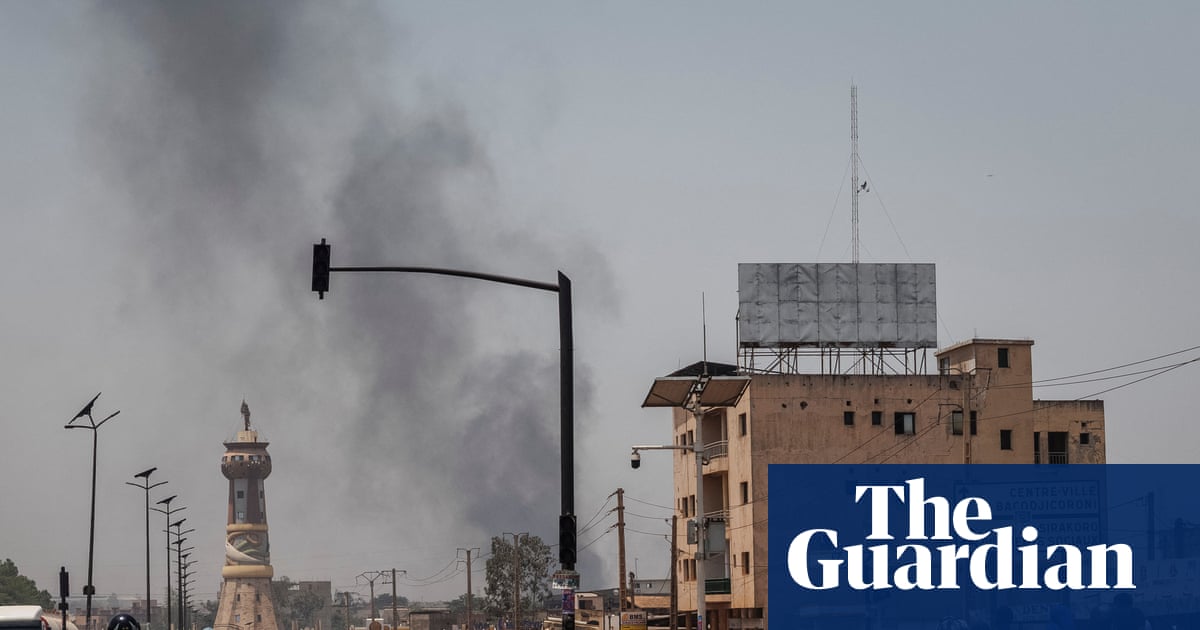
Mali faces a severe escalation in violence as JNIM and Tuareg separatists launched coordinated attacks on military bases, Bamako’s airport and Kidal, killing top officials including Defence Minister Sadio Camara. The junta’s position appears increasingly fragile, with Russian mercenaries retreating and analysts warning militants may force concessions rather than seize full control. The conflict underscores worsening instability across the Sahel and raises broader regional security risk.
The market implication is less about a single failed regime and more about a widening probability distribution for Sahel fragmentation. That matters because when central authority weakens further, the immediate winners are not just militants but any actor able to monetize road control, logistics disruption, or security provision — which usually means higher friction costs for everything from fuel distribution to humanitarian supply chains across West Africa. The second-order effect is a premium for perimeter security, convoy services, satellite comms, and drone-enabled ISR, while local banks, insurers, and transport operators face rising non-performing assets and reserve stress.
The key catalyst path is asymmetric: deterioration can happen in days, but repair takes quarters to years. Near term, the big risk is spillover into neighboring corridors and a step-up in attacks on airports, military bases, and trunk roads that choke import-dependent economies; that would pressure sovereign spreads and FX reserves before it shows up in headline GDP. Over a 6-12 month window, the more important question is whether this becomes a template for insurgents elsewhere in the Sahel, which would raise the probability of additional coups, capital controls, and reduced foreign contractor exposure.
Consensus is likely underpricing how durable a negotiated “gray zone” can be for the militants. Investors may think the base case is an eventual counteroffensive or limited settlement, but the more plausible equilibrium is prolonged state erosion: enough instability to block investment, not enough centralized control to restore order. That is bearish for long-duration infrastructure bets and any EM exposure that depends on stable logistics, but it may be too early to fade defense and private security names given the global repricing of irregular warfare risk.
The cleanest trade is to own global defense primes and ISR enablers versus short-duration African risk proxies. If the situation worsens, sovereign risk premia in frontier Africa should widen faster than global defense multiples compress, creating a favorable asymmetry. The main reversal trigger would be a credible external security intervention or a power-sharing deal that restores road access and fuel flow; until then, volatility is the asset class.
AI-powered research, real-time alerts, and portfolio analytics for institutional investors.
Request DemoOverall Sentiment
strongly negative
Sentiment Score
-0.75
