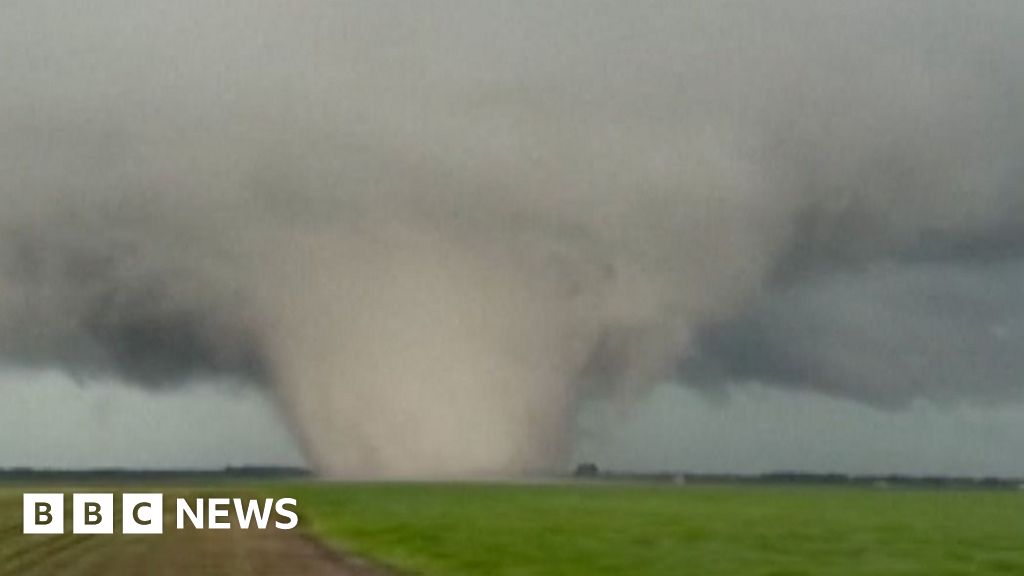
Tornadoes ripped through the US Midwest, with at least a dozen reports across Illinois, Indiana, and Wisconsin and widespread disruption in Streator, Illinois, where a man was rescued from rubble. Hundreds of thousands lost power, Chicago Midway Airport tower was evacuated, and thousands of flights were delayed or cancelled. The White Sox-Braves MLB game in Chicago was also postponed. NOAA's preliminary tally puts May tornadoes in the US at 168.
The immediate market impact is not the tornado headlines themselves but the compounding operational friction: localized grid outages, tower evacuations, and flight disruptions create a short-lived but real shock to regional commerce, especially same-day logistics, perishables, and low-inventory retail. The first-order damage is mostly insurance and municipal repair, but the second-order winner/loser set is broader: utilities, tower/airport services, and freight networks face a 1-3 week catch-up period, while carriers with exposed Midwest hubs can see cascading delay costs that exceed the initial weather window.
The bigger point is that these events are becoming less of a “black swan” and more of a recurring capex and maintenance tax on infrastructure-heavy businesses. That favors firms with embedded resilience spend and punishes operators with thin redundancy, especially in transportation and warehouse/distribution footprints concentrated in the central U.S. Over months, repeated severe-weather episodes can quietly raise insurance premiums, accelerate claims inflation, and tighten credit terms for small commercial property owners in affected corridors.
Consensus will likely overfocus on the visible destruction and underweight the asymmetry in timing: the economic hit is immediate, but the earnings impact is mostly deferred into higher opex, repair backlog, and premium resets. The contrarian angle is that the cleanest tradable expression is not to short the most obviously damaged local names, but to lean into ancillary beneficiaries of resilience spending and disaster-response logistics, where revenue visibility improves as weather volatility rises. The main reversal catalyst is a quieter weather stretch plus normalization of flight schedules and grid restoration, which can unwind the “disruption premium” within days, but the insurance and infrastructure re-rating can persist for quarters.
AI-powered research, real-time alerts, and portfolio analytics for institutional investors.
Request DemoOverall Sentiment
mildly negative
Sentiment Score
-0.15
Ticker Sentiment
