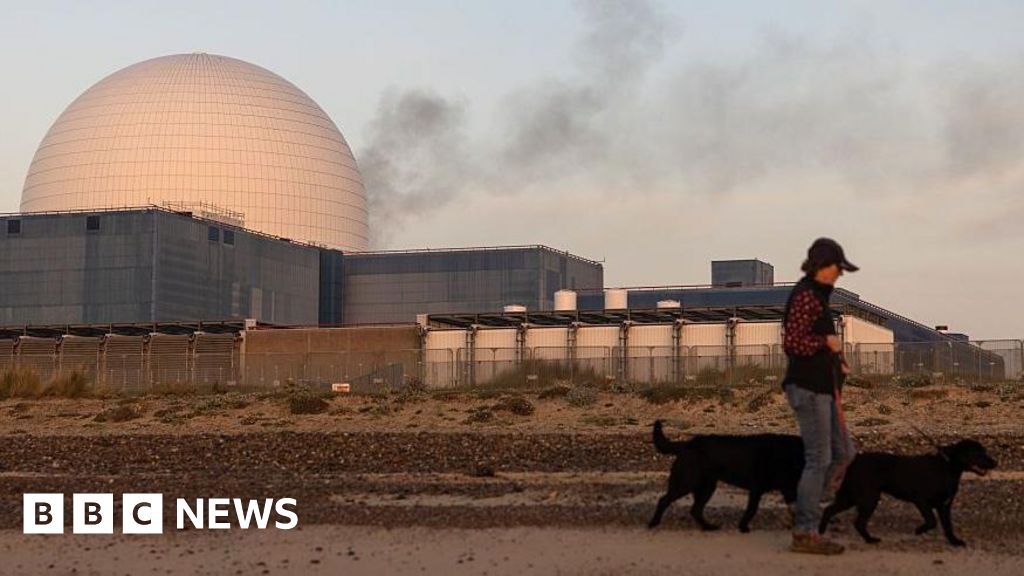
A government-commissioned Nuclear Regulatory Taskforce chaired by John Fingleton found the UK is the "most expensive place in the world" to build nuclear plants, blaming fragmented, risk-averse regulation and near-monopolistic industry structure for large cost overruns and delays. The report calls for a radical reset including a unified "one-stop" commission to streamline decisions and says reforms could save Britain "tens of billions"; the government will respond in the upcoming Budget. The findings matter for utilities, contractors and sovereign fiscal planning: the UK’s nine reactors supply ~15% of 2024 electricity, eight are set to close by 2030, Hinkley Point C and Sizewell C are years away, and small modular reactors are being pursued amid a global push to expand nuclear capacity by 2050.
Market structure: A centralised “one-stop” regulator would shift economic rents toward politically-favoured suppliers and approved SMR vendors while penalising LSTK contractors and incumbent operators that rely on fragmented change-claiming. The effective loss of ~15% of 2024 baseload by 2030 implies replacement demand for 20–30 TWh/year; short-run wholesale tightness could lift peak prices +15–25% in stress months and raise spark spreads for flexible gas/CCGT and storage assets. Cross-asset: expect 10y gilt yields to reprice +25–100bps on fiscal backstops, GBP down 1–3% on magnitude ≥£10–20bn contingent liabilities, and construction commodities (steel, copper) +5–10% on sustained rebuild activity.
Risk assessment: Tail outcomes include (A) nationalisation/large contingent liabilities adding £20–50bn to the public balance, (B) a moratorium on new large reactors crippling vendor orderbooks, or (C) rapid SMR procurement concentrating exposure in few suppliers. Immediate market moves will be driven in days by Budget headline language; weeks–months by regulatory draft legislation; real project cash flows shift over 2–5 years. Hidden dependencies: grid reinforcements, supply‑chain lead times for forgings/precision components, and contractual pass-throughs for inflation and financing costs.
Trade implications: Tactical longs: SMR supply-exposed equities and UK flexible generators; tactical shorts: large EPC contractors and incumbent reactor owners with thin balance sheets. Use pair trades (long RR.L vs short BBY.L) and options to express convexity: buy 12–24 month call spreads on RR.L and 9–12 month put spreads on EDF.PA to cap capital while leaving upside. Hedge macro via short 10y gilt futures sized to expected fiscal hit (sell exposure equal to notional £10–25bn-equivalent risk) and consider 3–6 month hedges on GBP if Budget signals material guarantees.
Contrarian angles: The consensus prices primarily downside; a clear, time-boxed one-stop commission plus explicit capex sharing could re-rate a narrow set of contractors and SMR names quickly (6–18 months). Historical parallels: UK infrastructure regulatory consolidations (rail, telecom) produced multi-year reratings once rules and tariff frameworks were clear—if the government ties subsidies to price/distribution efficiency, underowned SMR suppliers could outperform. Risk: centralisation could entrench incumbents and reduce competitive tendering, turning an apparent pro-approval reform into a de‑facto monopoly subsidy benefitting few players.
AI-powered research, real-time alerts, and portfolio analytics for institutional investors.
Request DemoOverall Sentiment
moderately negative
Sentiment Score
-0.35
