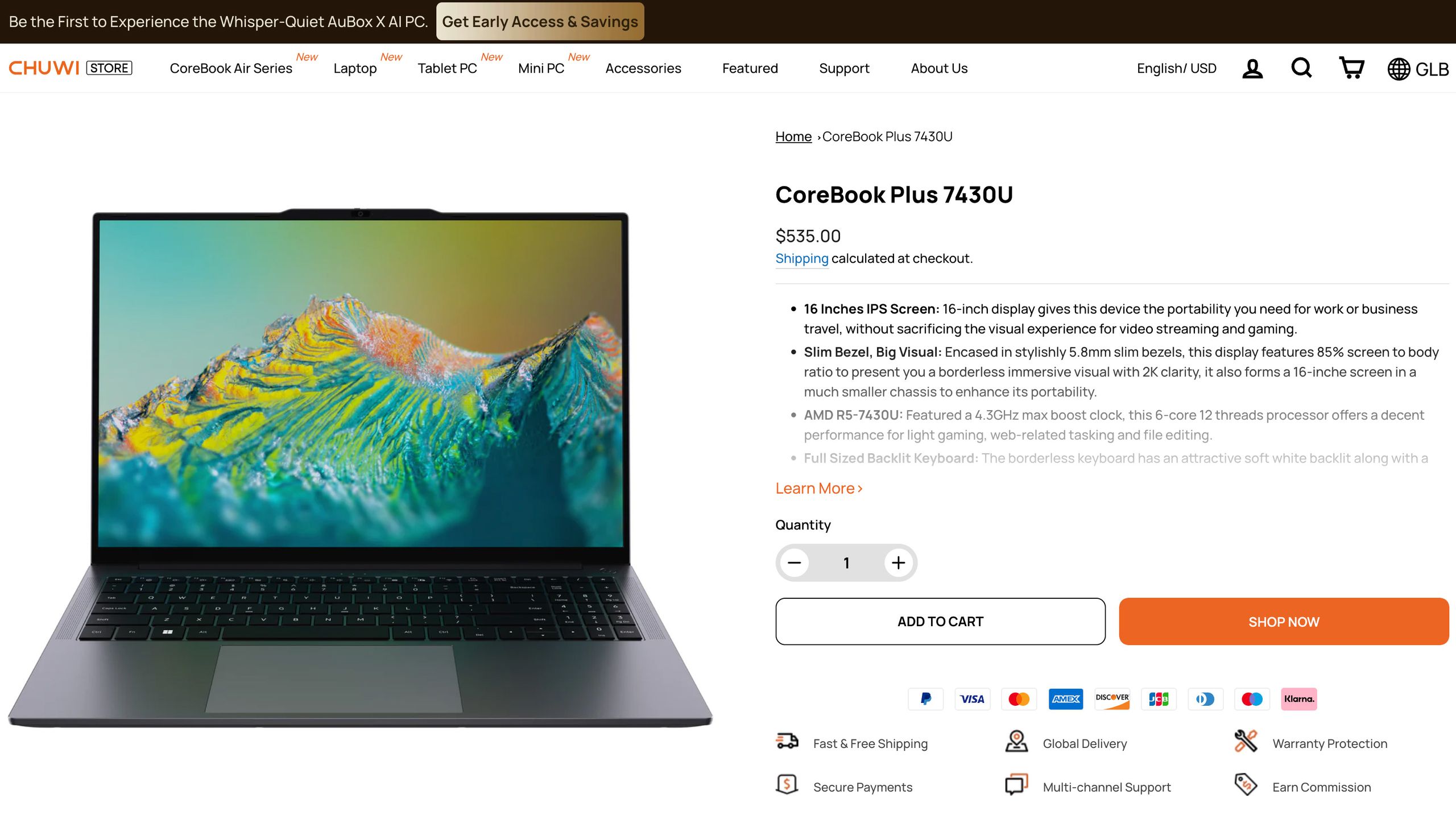
Two Chuwi laptops marketed with the Ryzen 5 7430U were confirmed to contain the older Ryzen 5 5500U (OPN 100-000000375 vs 100-000000943) after teardown and BIOS/firmware inspection. The 7430U is on average ~7% faster than the 5500U (up to ~20% in some workloads), and Chuwi is selling the CoreBook Plus 7430U for about $535, raising concerns of profit-motivated substitution or supplier fraud. Evidence points to intentional firmware-level spoofing and attempted legal pressure on Notebookcheck, implying material reputational and quality-control risks for Chuwi and its supply chain.
This episode exposes a predictable economics mismatch: low-margin OEMs/ODMs face strong incentives to substitute cheaper silicon or accept supplier swaps because per-unit savings of $15–$40 scale quickly. At 100k–1M units annualized that’s $1.5–$40M of gross margin, which can materially move a sub-$1bn revenue player’s profitability and explains why fraud looks economically attractive unless controls rise.
Expect two immediate supply-chain responses over 3–12 months: (1) retailers and distributors will institute random teardowns and firmware attestation checks, adding per-unit verification costs (~$5–$15/unit on small runs or capitalized ATE spend for scale), and (2) larger OEMs will use this as a marketing wedge to emphasize “authenticated silicon” and stricter QC, pressuring low-cost brands’ volumes. Both increase demand for test/inspection services and firmware attestation products while compressing margins of budget OEMs.
Legal and regulatory risk is non-linear: consumer class actions, EU/US advertising enforcement, and mandated recalls can convert modest margin gains into multi‑million liabilities within 6–24 months. A single high-profile enforcement or retailer delisting is the fastest path to revenue loss (sales down 10–30% in affected channels in the first year), which flips the calculus for already thin-margin vendors.
Catalysts to watch: (1) retailer/distributor audit policies and delisting announcements (days–weeks), (2) filings/letters from consumer protection agencies or class‑action counsel (weeks–months), (3) ODM earnings-call disclosures or supplier admission (quarterly), and (4) public adoption of per-unit attestation by AMD/Intel or new ATE bookings (2–4 quarters). These will determine whether costs are absorbed, outsourced to suppliers, or passed to consumers.
AI-powered research, real-time alerts, and portfolio analytics for institutional investors.
Request DemoOverall Sentiment
strongly negative
Sentiment Score
-0.60
