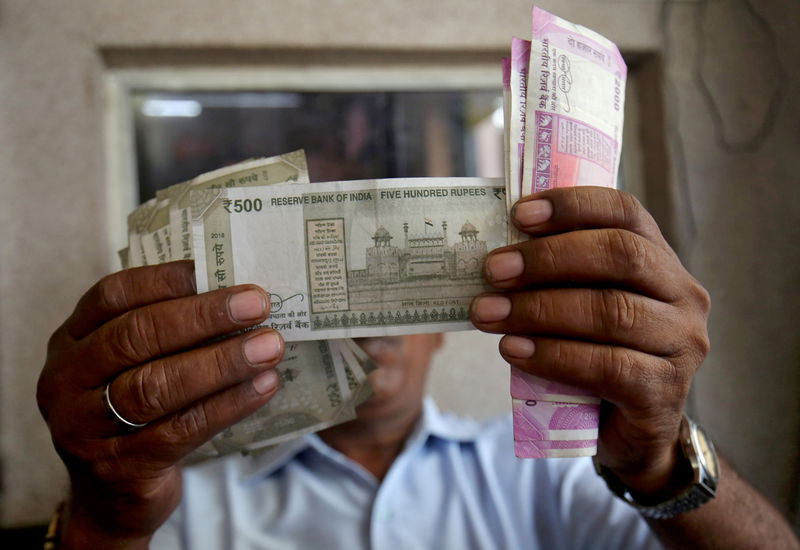
The Indian rupee firmed 0.5% to 95.70 per dollar after hitting nearly 97 last week, helped by RBI intervention warnings and falling oil prices tied to hopes of a U.S.-Iran peace deal. The currency had weakened about 6% since the onset of the Iran war, reflecting India’s dependence on crude imports. RBI Governor Sanjay Malhotra said the rupee was undervalued and that the central bank would do whatever is required to curb further weakness, while ruling out interest-rate hikes.
The first-order winner here is not the rupee itself but India’s current-account-sensitive domestic complex: lower crude relieves pressure on inflation, the trade balance, and FX reserves simultaneously. That creates a cleaner path for the central bank to defend the currency without tightening, which matters because a rate hike would have hit housing, autos, and leverage-sensitive financials at the exact wrong point in the cycle. The bigger second-order effect is that a softer oil tape reduces the probability of a policy mistake in India, which is bullish for duration-sensitive domestic growth assets over the next 1-3 months.
The market is likely underappreciating how fast FX stress can unwind once the oil bid disappears. A large part of the recent weakness in the currency was not idiosyncratic India risk but a commodity-driven terms-of-trade shock; if crude stays below the psychological trigger zone for even a few weeks, speculative USD/INR longs can become crowded and vulnerable to a sharp squeeze. That makes the next move more about positioning and official credibility than macro fundamentals.
The contrarian risk is that peace hopes in energy are notoriously binary: any setback in diplomacy can quickly re-ignite the crude bid, and then the currency would again be forced to absorb the shock. From a cross-asset standpoint, the clearest loser is imported-energy inflation hedging, while the hidden beneficiaries are rate-sensitive domestic equities and RBI credibility. The move is likely overextended only if traders assume a durable oil regime shift; in reality, this is still a headline-driven trade with a short half-life unless supply expectations materially improve.
For markets outside India, the message is that lower crude is a negative for momentum in energy equities but positive for EM risk appetite and Asian FX stability. If this persists, it reduces the chance of second-round inflation in goods-heavy economies and lowers the odds of synchronized EM tightening. The setup favors tactical trades over structural conviction.
AI-powered research, real-time alerts, and portfolio analytics for institutional investors.
Request DemoOverall Sentiment
mildly positive
Sentiment Score
0.15
Ticker Sentiment
