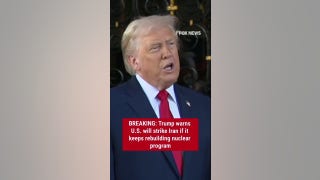
Ukrainian President Volodymyr Zelenskyy denied Russian claims that Kyiv carried out a drone strike on President Putin’s residence in the Novgorod region, calling the allegation a fabrication, while senior Kremlin aides (Ushakov, Lavrov) alleged the attack and Lavrov warned of determined retaliatory strikes. The White House confirmed President Trump spoke with Putin after meeting Zelenskyy and said he was angered by the report; the dispute increases near-term geopolitical escalation risk that could prompt risk-off flows into safe-haven assets and selectively affect energy and defense-related securities.
Market structure: A credible escalation (confirmed strike/retaliation) favors defense primes (LMT, NOC, RTX), energy (integrated majors) and safe-haven assets; expect an asymmetric near-term move: oil +3–8% and gold +2–5% within days, while Russian assets/RUB could gap -10–30% if market-implied credibility rises. European cyclicals, insurers and commercial airlines are direct losers from higher regional risk-premia; pricing power shifts to suppliers of munitions, ISR and long-lead components, tightening supply for high-grade defense electronics over months.
Risk assessment: Tail risks include a misattributed strike prompting broader Russian strikes or NATO entanglement (low probability, high impact) and targeted sanctions that choke energy exports; these could push Brent above $100 and force energy rationing in Europe over 3–9 months. Immediate (days) risk is volatility spikes and liquidity squeezes; short-term (weeks) risk is policy noise (sanctions, arms packages); long-term (quarters) is sustained reallocation into defense and energy security capex.
Trade implications: Tactical allocation: overweight defense equities (LMT, NOC, RTX) 2–3% each for a 3–9 month horizon, hedge with a 7–10% stop; buy GLD 1–2% and a 2–6 week TLT/10y futures position sized to capture a 10–30bp flight-to-quality move. Relative value: long LMT vs short VGK (Europe ETF) 1:1 notional for 6–12 weeks to express US-defense/Europe-risk divergence; if Brent breaks $85, scale into 3–6 month Brent call-spreads (buy $85 / sell $110) sized 1–2%.
Contrarian angles: Consensus may already price a permanent defense uplift; risk of mean-reversion is real if diplomacy calms—recall 2008 Georgia where initial spikes faded in months. Look for underpriced pockets: smaller defense suppliers with order backlogs (mid-cap electronics/subsystem suppliers) and energy services (HAL) that rerate on multi-year capex; conversely avoid long-dated civilian aerospace exposure (BA) which is sensitive to prolonged sanctions and travel weakness.
AI-powered research, real-time alerts, and portfolio analytics for institutional investors.
Request DemoOverall Sentiment
moderately negative
Sentiment Score
-0.45
