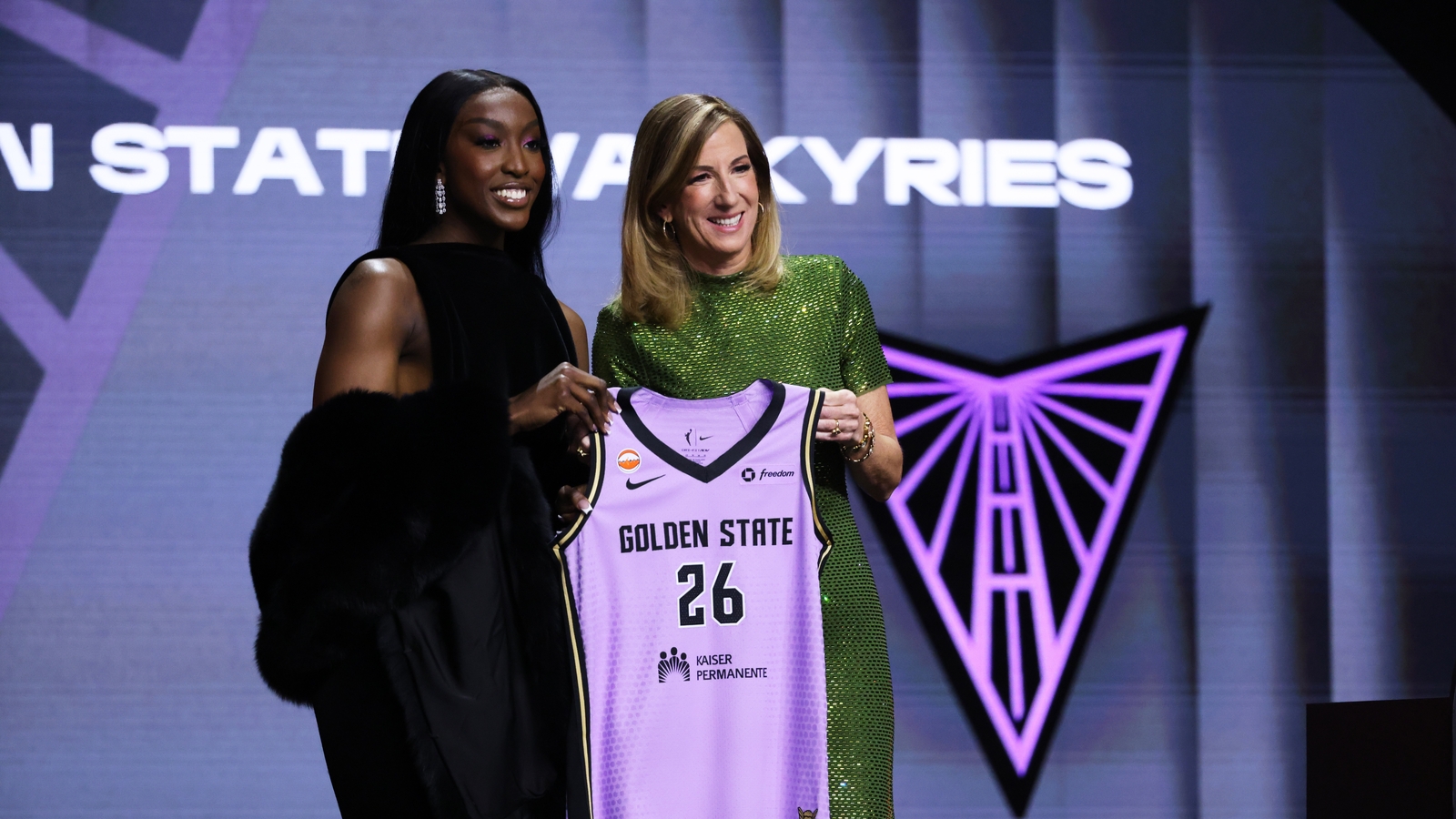
The Seattle Storm and Golden State Valkyries agreed to a draft-night trade before picks were submitted, sending No. 8 pick Flau'jae Johnson to Seattle in exchange for Marta Suarez (No. 16) and a 2028 second-round pick. The Storm also selected Awa Fam Thiam with the No. 3 pick and said Johnson fits their current and future roster build. The article is primarily a transactional roster update with little direct market impact.
This looks less like a player-driven surprise and more like evidence of disciplined asset allocation in a league where marginal roster value is concentrated in a few high-variance picks. The key second-order effect is that teams willing to pre-negotiate draft rights can arbitrage information asymmetry and roster-construction optionality: one club monetizes a slot into a future pick plus a more scheme-flexible profile, while the other compresses uncertainty by turning a late-first asset into a higher-upside near-term contributor.
The market implication is on valuation of young, cost-controlled talent rather than any single athlete. In a capped league, the team that gets the more plug-and-play player likely improves near-term rotation efficiency, but the team that adds a future second-rounder and a multi-sport brand asset may have extracted more total enterprise value if the outgoing slot had low probability of becoming a retained asset. The hidden risk is fit: a prearranged trade can optimize process while still missing on positional redundancy, which becomes visible over the next 6-12 months if the acquiring team already has a crowded frontcourt.
Contrarian angle: consensus will read this as a simple talent swap, but the more important signal is that front offices are increasingly treating draft night as a negotiated balance sheet exercise, not a pure selection event. That matters because it suggests the league’s valuation curve for mid-first/early-second rights may be flatter than fan perception; in other words, the premium for ‘name value’ can be smaller than the premium for age, size, and fit. If the acquired player translates quickly, the trade will be called a steal; if not, the larger lesson is that teams are willing to sacrifice upside variance for roster certainty much earlier than the public expects.
AI-powered research, real-time alerts, and portfolio analytics for institutional investors.
Request TrialOverall Sentiment
neutral
Sentiment Score
0.05
