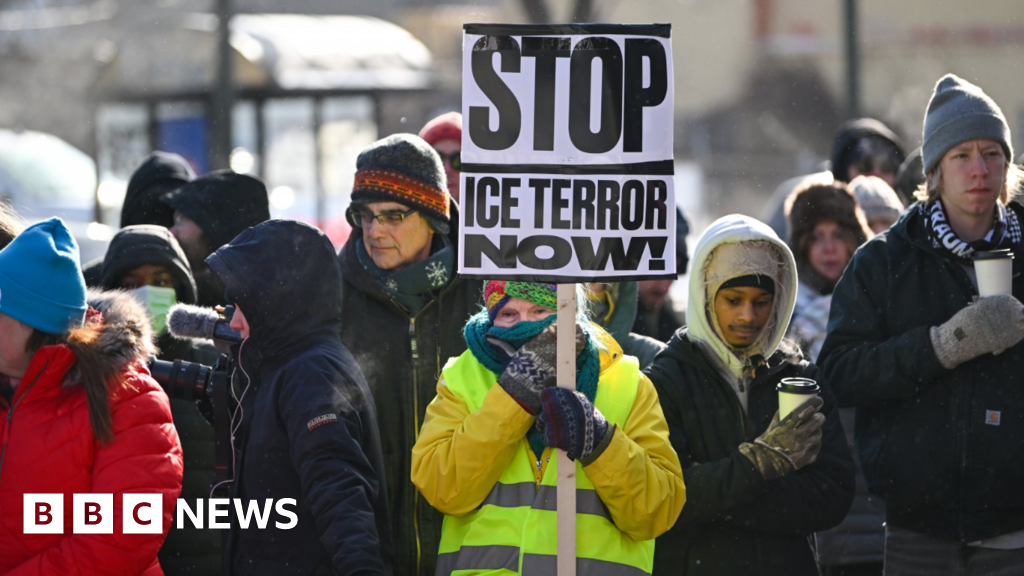
A federal border agent shot and killed Alex Pretti, a registered VA nurse, during an ICE operation in Minneapolis, with bystander video and sharply divergent accounts from federal and state officials. The NRA and other gun-rights groups have called for a full investigation while local leaders accuse the federal government of mischaracterizing events, creating heightened political and regulatory scrutiny of ICE/DHS actions rather than direct near-term market implications.
Market structure: Political violence and high-profile federal enforcement actions are a localized catalyst that tends to lift manufacturers of firearms, ammunition and private-security services while increasing reputational, legal and budgetary pressure on municipal issuers in affected cities. Expect a short-term demand bump for consumer firearms/security products (order-of-magnitude: single-digit %-points over 1–3 months) and asymmetric liability risk for local governments and federal agencies that can depress local muni spreads vs. national munis by 10–50bp if litigation escalates.
Risk assessment: Tail risks include federal legislative action restricting certain firearms or ammunition (low-moderate probability ~10–25% within 12 months but high impact to equities) and state-level suits against ICE/DHS (moderate probability 30–50%) that could produce multi-quarter budget reallocations. Immediate window (days) is media and sentiment-driven; weeks–months sees demand/legislative noise; quarters+ sees legal outcomes and capex/budget shifts. Hidden dependency: gun-equipment demand correlates inversely with perceived regulatory risk—more talk often equals more sales.
Trade implications: Tactical trades favor small, hedged long exposure to U.S. gun and security names (ticker plays) and modest overweight to defense contractors that benefit from increased federal enforcement budgets, paired with downside protection and explicit stop/triggers tied to legislative progress. Reduce concentrated Minneapolis/Hennepin muni exposures and reallocate into national IG corporates or broad muni ETFs as a liquidity/credit hedge over 30–90 days. Use defined-risk options (3–6 month call spreads) to capture demand spikes while capping downside.
Contrarian angles: The market consensus that this singular event will trigger sweeping federal gun control is likely overstated given political math; therefore outright long positions in well-capitalized gun-equipment names could be underpriced for upside but must be guarded against regulatory binary risk. Historical parallels (post-incident purchase spikes) suggest a 4–12 week window to capture upside before sentiment normalizes; unintended consequence: increased legal scrutiny of federal agencies could pressure defense-related small caps more than large prime contractors.
AI-powered research, real-time alerts, and portfolio analytics for institutional investors.
Request DemoOverall Sentiment
neutral
Sentiment Score
0.00
