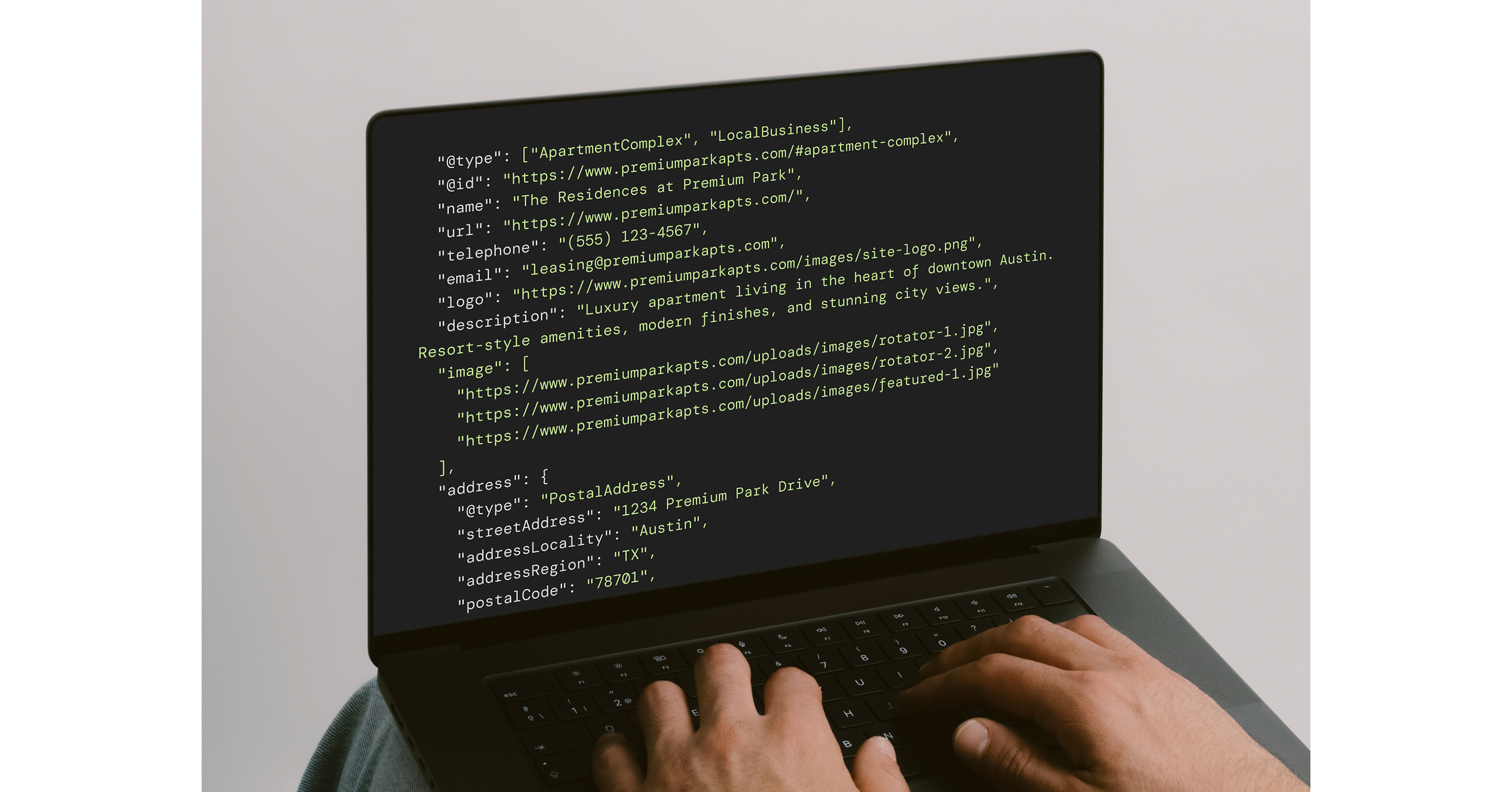
Jonah announced the rollout of a custom schema architecture for its multifamily property websites to improve AI search visibility, building on Schema.org but adding industry-specific vocab for community, neighborhood, and floorplan content. The company says the schema is automatically generated from existing client website content and is being tested against major AI models (ChatGPT, Claude, Gemini, Llama, Grok). Overall, this is a product/technology update with limited immediate market impact and a cautiously positive outlook for future lead generation.
This reads more like a vendor feature update than a near-term earnings catalyst. The investable angle is not the schema itself, but whether AI-mediated discovery becomes a new traffic gatekeeper for multifamily, shifting spend from generic SEO and paid portals toward data-layer optimization and direct-site tooling. If that happens, winners are the software layers that own structured property data and integrations; losers are commoditized web agencies and any marketplace model that depends on renters starting and ending the journey on third-party portals.
The second-order issue is margin, not top-line hype: if AI search drives even a small increase in direct-qualified leads, property managers can reduce lead leakage and lower customer acquisition costs over 1-3 quarters. But the structural risk is that schema becomes table stakes quickly; once everyone automates it, the edge moves to data freshness, PMS/CRM integrations, and citation authority. In that case, the pricing power accrues to the platforms with distribution, not the niche website layer.
For WLK specifically, there is no obvious fundamental linkage, so this is not a tradeable read-through. The contrarian view is that renters may not meaningfully use generative search for high-intent apartment shopping at scale, which would leave this as a marketing story rather than a budget line item. That would falsify the bullish thesis if AI referral traffic and lease conversion do not improve over the next 1-2 reporting cycles.
AI-powered research, real-time alerts, and portfolio analytics for institutional investors.
Overall Sentiment
neutral
Sentiment Score
0.10
Ticker Sentiment
