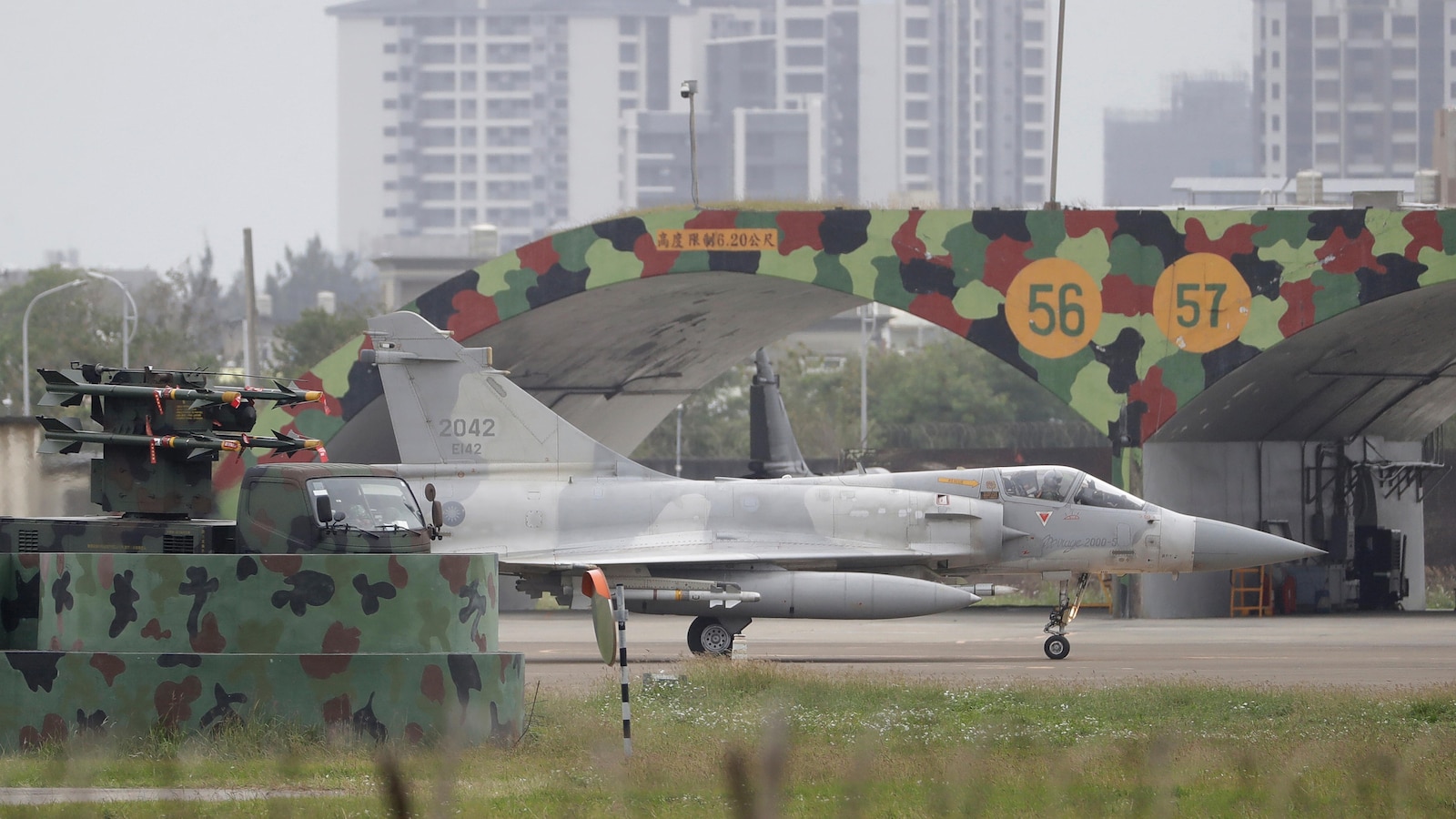
China’s PLA conducted a second day of large-scale live-fire drills around Taiwan under “Justice Mission 2025,” deploying destroyers, frigates, fighters and bombers and reporting 130 aircraft, 14 military ships and eight other official vessels near the island (with 90 aircraft crossing the median line). Taiwan reported live-fire impacts about 44 km off its coast, temporary danger zones that disrupted more than 100 flight schedules and halted fishing activity, while Beijing simultaneously imposed sanctions on 20 U.S. defense firms after a proposed >$10bn U.S. arms package. The maneuvers heighten regional military and political risk, raising near-term downside for regional assets, travel and trade flows and increasing the probability of further sanctions-driven market volatility.
Market structure: Near-term winners are defense primes and defense ETFs (e.g., LMT, NOC, RTX, ITA) as budgets and risk premia rise; losers include Asia- and Taiwan-exposed transport/logistics and airlines (AAL, UAL) due to rerouted routes, temporary port closures and >100 flight disruptions already reported. Semiconductor supply chains (TSM, ASML, KLAC) sit in the middle — vulnerable to a blockade shock that could remove ~20–30% of advanced foundry capacity short-term, but beneficiaries of long-run de-risking capital flows into inland fabs.
Risk assessment: Tail risk of a kinetic invasion remains low near-term (<5% next 3 months) but mid-term probability grows (5–15% over 1–3 years) with political catalysts (US arms approvals, Japan statements). Immediate (days) impacts are liquidity and volatility spikes in EM Asia FX and regional equities; short-term (weeks/months) is higher shipping/container rates (+10–30%) and supply-chain delays; long-term (quarters/years) is structural capex relocation and sustained defense spending.
Trade implications: Tactical trades should favor long defense equities and safe-havens (GLD, TLT) while shorting airlines/logistics and buying downside protection on Taiwan-specific equities (TSM, EWT). Use options to express asymmetric views: buy 3-month puts on EWT/TSM and call spreads on LMT/NOC; consider USD/JPY long in FX as a risk-off hedge. Position sizing: keep single-name exposure to 2–3% and options notional to <1% of NAV to limit tail gamma.
Contrarian angles: Consensus may overstate immediacy of blockade—histor parallels (1996 Taiwan crisis) show selloffs recover in months, creating buy-the-dip opportunities in high-quality semicap names. If markets overprice a full blockade (>20% drawdown in TSM/ASML), initiate phased buys: ASML/TSM on 10–20% dips; unintended consequence is accelerated onshoring that benefits ASML/KLAC capex cycle over 12–36 months.
AI-powered research, real-time alerts, and portfolio analytics for institutional investors.
Request DemoOverall Sentiment
strongly negative
Sentiment Score
-0.60
