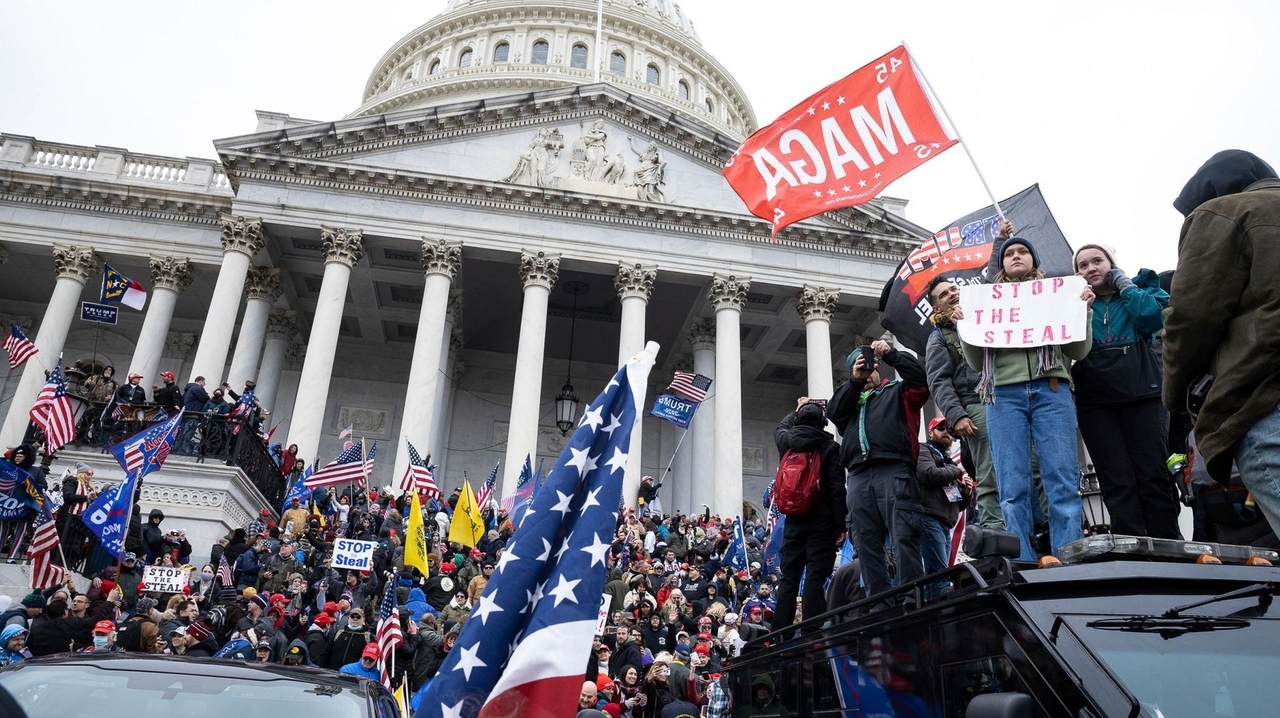
The Trump administration’s proposed $1.776 billion "Anti-Weaponization Fund" is drawing bipartisan opposition, with lawmakers questioning the legality of using taxpayer money without congressional approval. Several members, including Chuck Schumer, Kirsten Gillibrand, Tom Suozzi, Andrew Garbarino, Nick LaLota, and Laura Gillen, have voiced criticism or pledged to block the fund, while lawsuits have already been filed to stop it. The article centers on fiscal appropriations, constitutional separation-of-powers concerns, and potential eligibility for Jan. 6 defendants convicted of assaulting officers.
This is less a direct IRS earnings issue than a governance shock that raises the discount rate on any agency tied to politically exposed enforcement actions. The market should treat the IRS headline as a proxy for broader administrative leakage: if executive settlements can bypass normal appropriations norms, agencies become harder to model and litigation risk migrates from “background noise” to a recurring budget variable. That is modestly negative for federal contractors and counsel-heavy service providers that depend on process stability, while benefiting litigation shops and government-overhaul narratives that monetize institutional dysfunction.
The second-order effect is on timing, not magnitude. In the near term, this is a headline-driven legal fight, so the signal should fade unless courts issue an injunction or Congress moves to block the settlement mechanics. Over a multi-month horizon, the bigger catalyst is whether the dispute becomes a template for attacking other politically sensitive agency decisions; if so, it could chill enforcement aggressiveness and slow discretionary spending execution inside DOJ/IRS-adjacent workflows.
The contrarian view is that the cash amount is small versus the federal budget, so the investable impact is not the payout itself but the precedent. That means the consensus may be over-indexing on the moral outrage and underpricing the procedural risk: if the administration is forced to rework the structure, the market could see an immediate relief rally in governance-sensitive government-service names. For IRS specifically, the issue is reputational rather than operational unless this escalates into broader staffing or compliance disruptions.
For the near-term trading book, this is a low-conviction short catalyst on the institution, not the ticker, so I would fade any move in IRS-linked sentiment unless legal action broadens. The cleaner expression is through vol or relative value: headline risk is asymmetric to the downside for political-risk-sensitive Washington contractors, but the fundamental carry is too small for outright directional exposure without a litigation trigger.
AI-powered research, real-time alerts, and portfolio analytics for institutional investors.
Request DemoOverall Sentiment
mildly negative
Sentiment Score
-0.25
Ticker Sentiment
