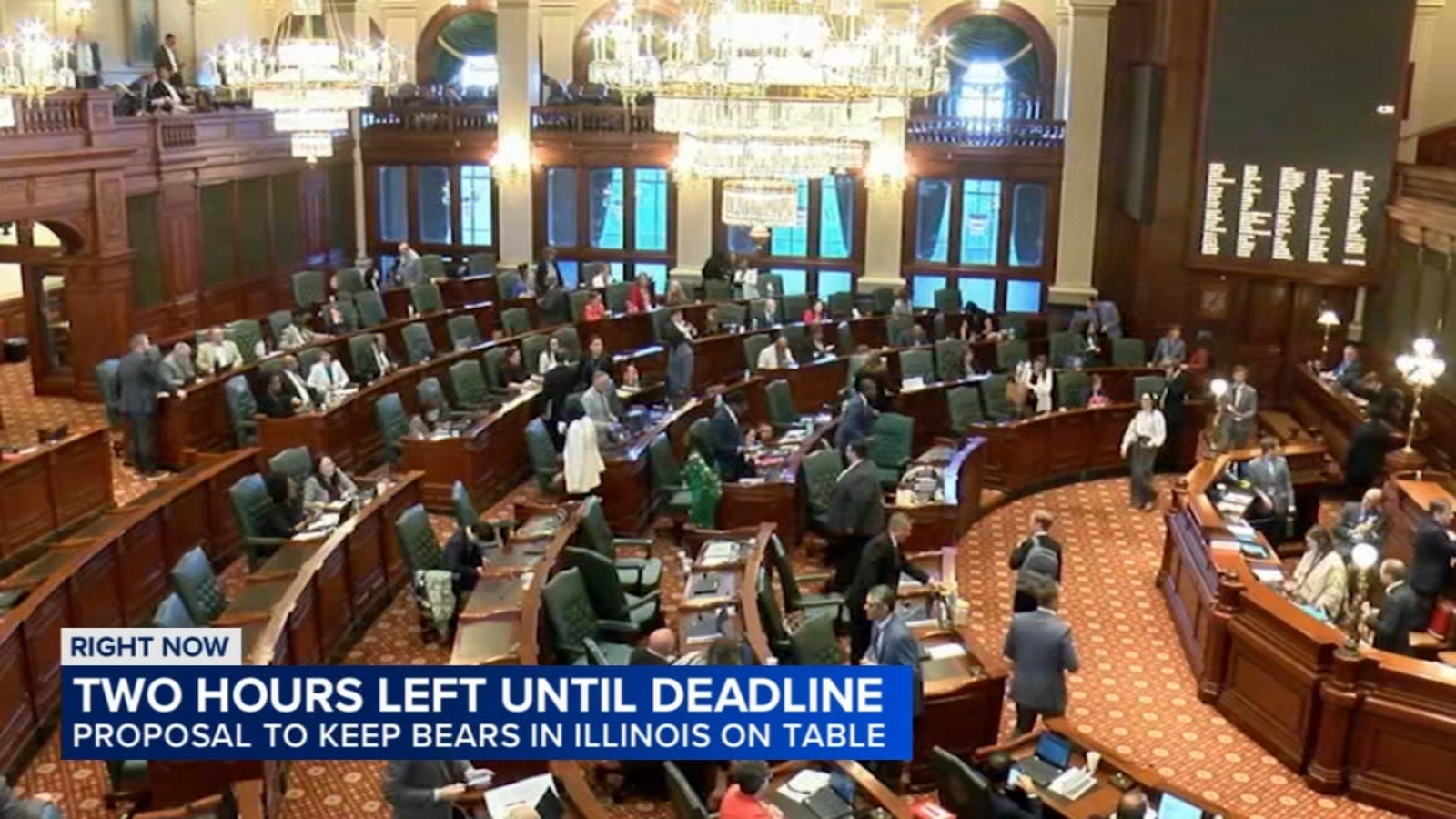
Illinois lawmakers face a Sunday midnight deadline to pass a balanced budget and are also advancing a bill that could let Chicago and Arlington Heights create stadium authorities to help keep the Bears in-state. The proposal would enable private stadium financing with municipal ownership and property-tax exemption, while Democrats also plan to use a $150 million gasoline sales-tax surplus to balance the budget. The article signals legislative progress but no final Bears deal yet, leaving the outcome uncertain.
The market impact is less about the Bears and more about what this episode signals for Illinois credit and quasi-public funding behavior. A last-minute willingness to route a private tenant through a public authority suggests policymakers are still searching for off-balance-sheet solutions, which is supportive for near-term political optics but raises medium-term questions about precedent: once one asset class gets special treatment, other municipalities will press for comparable structures in redevelopment, transportation, and venue financing.
For investors, the second-order effect is on the distribution of winners. Construction and engineering vendors tied to any eventual stadium build would benefit only if a site and financing package clear; the more immediate trade is in land values and adjacent commercial real estate optionality, especially around the competing sites. The bigger loser is the state’s budget credibility if lawmakers use one-off surplus buckets to solve structural gaps: that tends to compress the timeline before the next fiscal stress point and can widen spreads in Illinois-linked credit if repeated in future sessions.
The key catalyst window is days, not quarters, for the stadium decision; if a deal stalls, the probability of a later, broader incentive package rises materially over the next 1-3 months as political pressure from the team and local constituencies builds. The contrarian read is that the market may be overestimating the permanence of the public subsidy debate: if lawmakers fail now, it doesn’t kill the relocation threat, it simply increases the chance of a more expensive package later, which is actually negative for taxpayers but could be positive for the eventual host-site winners. In budget terms, using cyclical revenue windfalls to paper over recurring obligations is a low-quality fix that matters most if growth slows or fuel volumes normalize, because the cushion disappears quickly.
AI-powered research, real-time alerts, and portfolio analytics for institutional investors.
Request DemoOverall Sentiment
neutral
Sentiment Score
0.05
