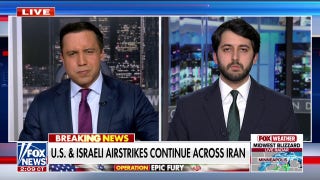
Pope Leo XIV called for an immediate ceasefire after strikes in the Iran-related conflict that reportedly killed more than 165 people (many children) roughly 11 days into the war; U.S. officials say one strike may have been based on outdated intelligence and an investigation is underway. The Vatican’s appeals for dialogue and ongoing diplomatic engagement reduce near-term escalation risk but the humanitarian toll and regional fighting continue to create risk-off dynamics likely to support higher oil prices and widen regional risk premia in the near term.
The Pope’s public ceasefire appeal is a diplomatic accelerant that increases the probability of short-to-medium term de-escalation attempts via third‑party mediation. That makes two relevant second‑order effects likely: first, headline-driven energy and defense spikes may be front‑loaded and mean-revert within 2–8 weeks if diplomacy gains traction; second, humanitarian optics raise the political cost for Western backers to tolerate open-ended kinetic escalation, capping upside for sustained defense outperformance unless a material new kinetic event occurs.
Market mechanics: war-risk insurance and freight premia can push regional shipping and LNG short‑term spreads wider, adding an incremental $2–6/bbl transitory oil-equivalent impact while raising tanker charter rates 15–40% in the first month of disruption. Conversely, if mediation reduces cross‑border strikes within 30 days, those premia typically compress faster than underlay fundamentals, producing a short window where long energy/defense positions are most profitable.
Investor sentiment will stay risk‑off in the near term; expect relative flows into gold and long-duration Treasuries and outflows from EM sovereign credit and regional banks. The more persistent structural winner is energy producers with integrated balance sheets able to arbitrage higher commodity realizations into free cash flow — but that is contingent on a >60‑day horizon of elevated prices; otherwise, buy dips into 1–2 month mean reversion.
Contrarian angle: the market’s reflexive defense/energy bid is likely overbroad — not every defense contractor benefits equally (services and long‑cycle capex names are more sensitive than immediate supply of munitions and ISR). Short-duration option structures that capture initial vol expansion and then fade are a more efficient way to express the view than outright equity buys.
AI-powered research, real-time alerts, and portfolio analytics for institutional investors.
Request DemoOverall Sentiment
strongly negative
Sentiment Score
-0.65
