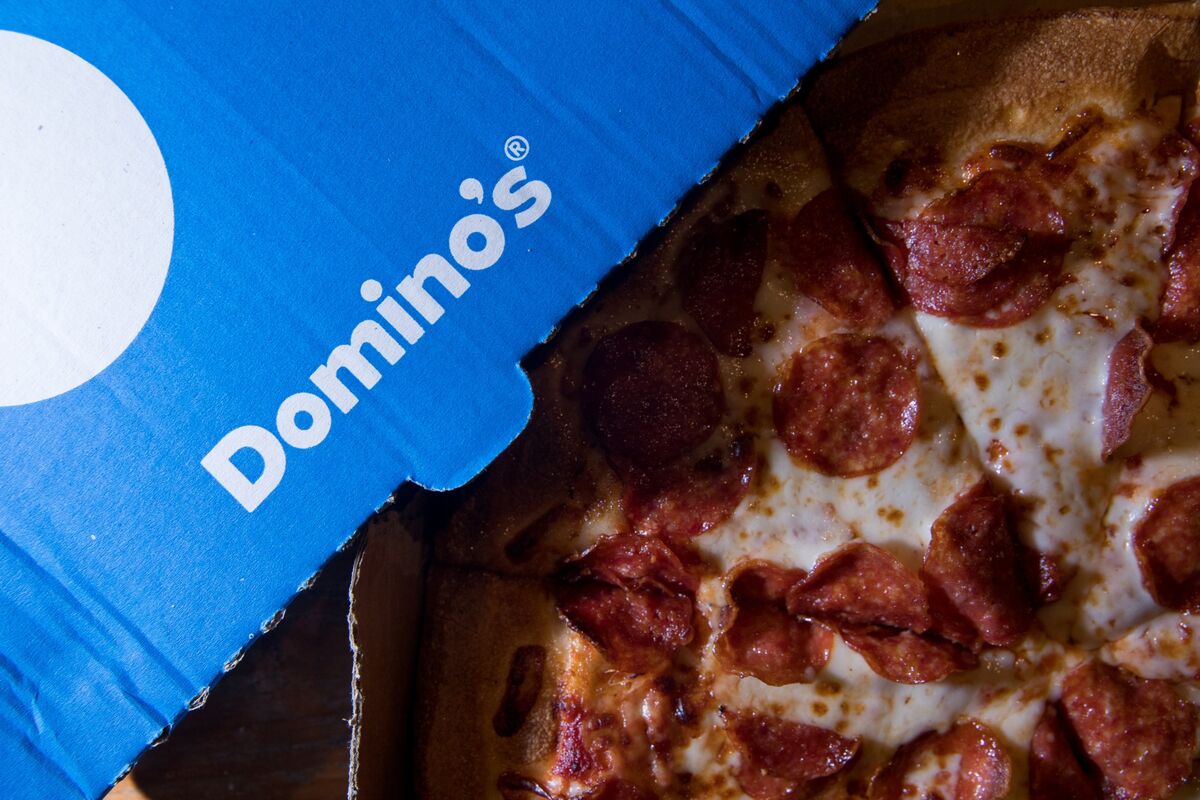
Domino’s US same-store sales rose 0.9% in Q4, missing analysts’ 2.5% estimate and falling short of earlier expectations around 3.1%. The company cited growing competition and economic challenges, and shares fell as much as 4.8% in premarket trading. The miss points to softer consumer demand and weaker near-term operating momentum.
Domino’s miss is less about one quarter of weak traffic and more about the elasticity of its value proposition in a slowing consumer environment. When a national QSR brand underdelivers against already-marked-down expectations, it usually signals that discounting is no longer enough to defend frequency; that pressures the entire pizza cohort because competitors can now test share gains with more aggressive couponing without immediately destroying unit economics. The second-order effect is margin compression up the chain: if larger chains lean into promos, cheese, packaging, delivery labor, and third-party logistics vendors all face a tougher mix backdrop over the next 1-2 quarters.
The market is likely underestimating how quickly delivery-heavy concepts lose operating leverage when same-store sales slip below low-single-digit growth. A 100-150 bps comp miss can translate into materially lower franchisee cash flow, which tends to reduce remodel pacing, new unit openings, and local advertising willingness in the subsequent 6-12 months. That creates a slow-burn negative for DPZ and a relative opportunity for operators with better dine-in mix or stronger own-driver economics.
The contrarian angle is that the move may be tactically overdone if investors treat this as a trend break rather than an execution miss against a tougher baseline. If management can re-accelerate through menu innovation or more targeted value offers, the stock can stabilize quickly because DPZ still screens as a defensible earnings compounder; however, the burden of proof is now high and the next catalyst is likely the next few monthly industry read-throughs, not just the next earnings call.
Key risk is that a weaker consumer and heavier promo activity become a multi-quarter category issue rather than a DPZ-specific issue. In that case, the downside shifts from sentiment-driven to estimate-driven, with further multiple compression likely over the next 3-6 months as analysts cut 2025 comp assumptions and franchisee health becomes a more visible debate.
AI-powered research, real-time alerts, and portfolio analytics for institutional investors.
Request DemoOverall Sentiment
moderately negative
Sentiment Score
-0.38
Ticker Sentiment
