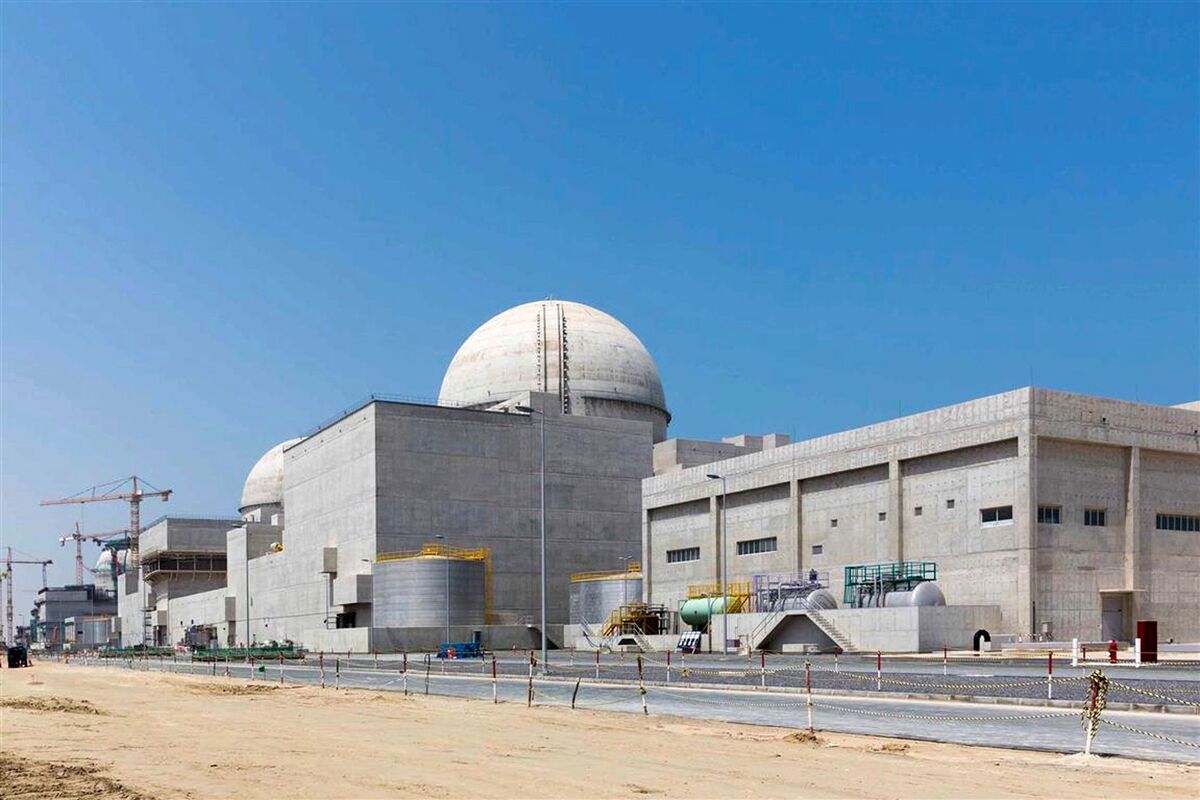
A drone attack on the UAE’s Barakah nuclear plant was reportedly launched from Iraq, escalating fears over the regional scope of Iran’s retaliation and the growing role of Iran-backed militias. The UAE condemned the strike as a terrorist act, and a senior adviser blamed Iranian militias in Iraq. The incident raises geopolitical risk for Gulf energy and infrastructure assets and could unsettle broader regional markets.
This is less about the immediate physical damage and more about signaling a broadened theater: using Iraq-based proxies against GCC energy infrastructure raises the probability that the next response set targets are not military-only, but logistics, desalination, and power assets that are harder to defend and politically more sensitive. That creates a second-order risk premium for Gulf utilities, shipping, and industrials with regional supply-chain exposure even if the direct asset hit is limited. The market is likely underpricing how quickly insurers will widen deductibles and how that feeds into capex and project-finance costs across UAE/Saudi infrastructure over the next 1-3 months.
For energy, the key channel is not just crude supply disruption but gas/LNG and refined-product routing uncertainty through the Strait of Hormuz and adjacent airspace. Any sustained perception that export nodes can be reached from a third country is bearish for Gulf upstream project timelines and bullish for non-Middle East supply optionality; the winners are U.S. LNG, North Sea, and select Latin American producers with cleaner geopolitical risk. Defense beneficiaries are not the obvious primes alone — counter-UAS, radar, electronic warfare, and base-hardening names should see budget acceleration because this type of attack is cheap, repeatable, and difficult to deter with conventional air defense.
Consensus may overreact to the headline and underreact to duration. A single incident does not necessarily reprice oil materially unless it becomes a pattern, but the asymmetry is that repeated low-cost attacks can force disproportionate protective spending and operational delays. The near-term reversal trigger is credible evidence that proxies are being reined in or that retaliation is confined to a narrow, symbolic domain; absent that, the risk premium can persist for weeks even without a supply outage.
The contrarian read is that the attack could strengthen, not weaken, regional de-escalation incentives if it exposes how vulnerable critical infrastructure is to deniable proxy action. That would mean the first move in energy and defense may be the wrong one: energy volatility spikes, but the medium-term trade is more about capex winners in protection and redundancy than outright oil shortage. If the incident prompts faster Gulf procurement of layered drone defense, the most durable beneficiaries are niche defense suppliers and systems integrators rather than commodity-linked hydrocarbons.
AI-powered research, real-time alerts, and portfolio analytics for institutional investors.
Request DemoOverall Sentiment
strongly negative
Sentiment Score
-0.68
