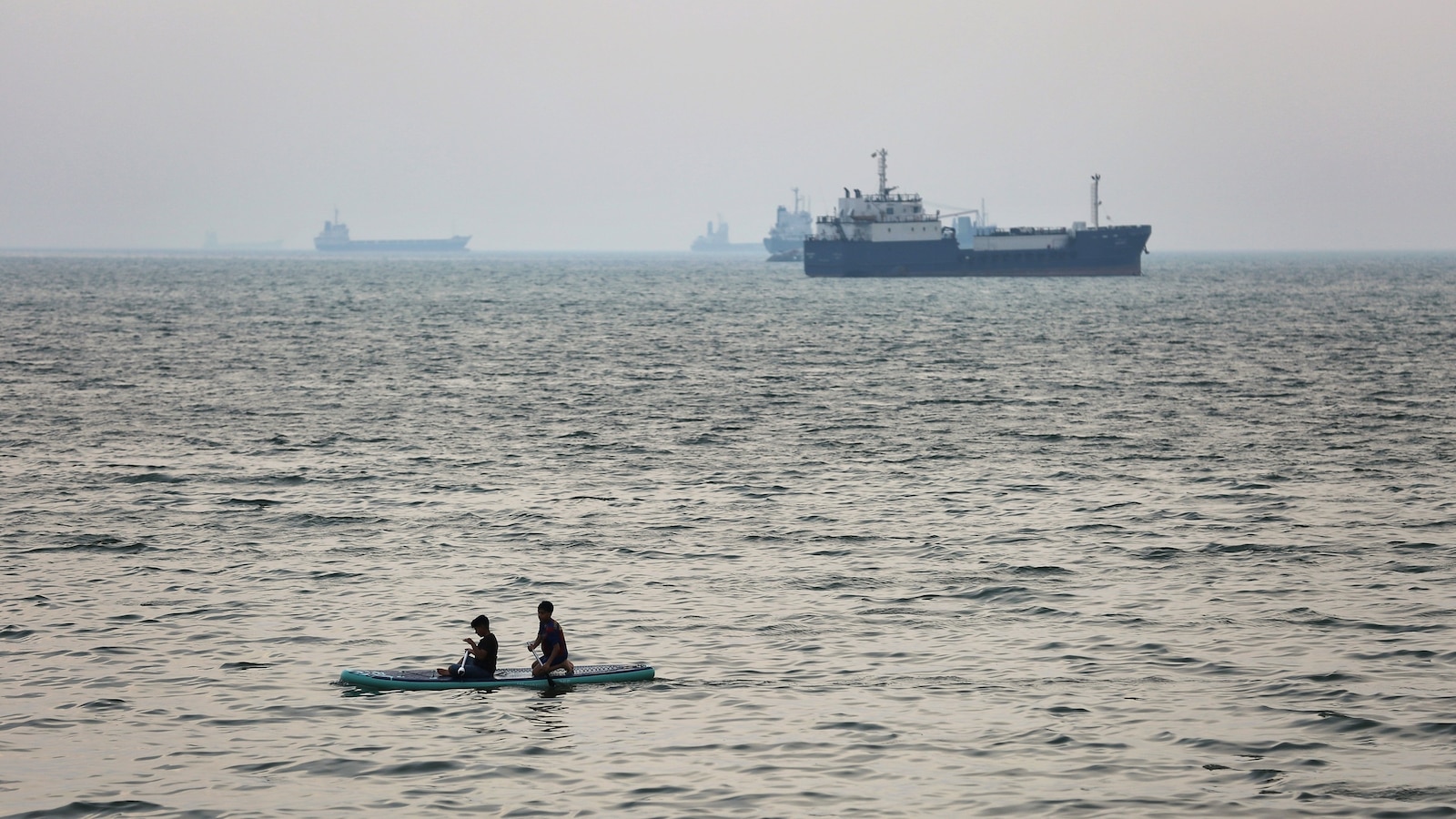
A potential closure of the Strait of Hormuz has lifted Brent crude to about $106 a barrel, roughly 50% above pre-war levels, raising the risk of a broader inflation shock and global growth slowdown. Oxford Economics warned a six-month impasse could push oil to $190 and global inflation to 7.7%, tipping the world economy into outright contraction, while the IMF and OECD still assume a quicker resolution. Economists remain divided, but the article flags substantial downside risk for consumers, businesses, and oil-importing economies if disruption persists.
The market is still pricing this as an energy shock, but the bigger second-order risk is a margin squeeze across transport-intensive sectors that have weak pricing power and long working-capital cycles. Airlines, parcel/logistics, grocers, and consumer staples with heavy diesel exposure typically see input costs move faster than they can reprice, so the earnings hit often arrives before the macro data rolls over. The most vulnerable regionally are Asian importers with the least flexible subsidy regimes and the weakest FX buffers, where the energy bill becomes a balance-of-payments problem before it becomes a CPI problem.
The key time element is not whether oil stays elevated, but whether the shock persists long enough for inventory depletion to force spot buying and rationing behavior. A few weeks of disruption is manageable; 2-3 months changes corporate behavior, pushes consumers into demand destruction, and starts feeding through to credit spreads via lower coverage ratios in airlines, chemicals, transport, and small-cap industrials. That creates a nonlinear effect: the recession risk is less about the absolute Brent level and more about the duration of elevated prices relative to how quickly companies can pass through costs.
Consensus may be underestimating how much of the damage shows up outside the U.S. and Europe first. The fast transmission mechanism is not gasoline at the pump, but imported inflation hitting EM central banks, forcing tighter policy into slowing growth and higher dollar funding stress. If diplomatic progress restores throughflow sooner than expected, the unwind should be sharp because positioning will likely crowd into the same inflation/recession hedge trades at once.
AI-powered research, real-time alerts, and portfolio analytics for institutional investors.
Request DemoOverall Sentiment
strongly negative
Sentiment Score
-0.70
Ticker Sentiment
