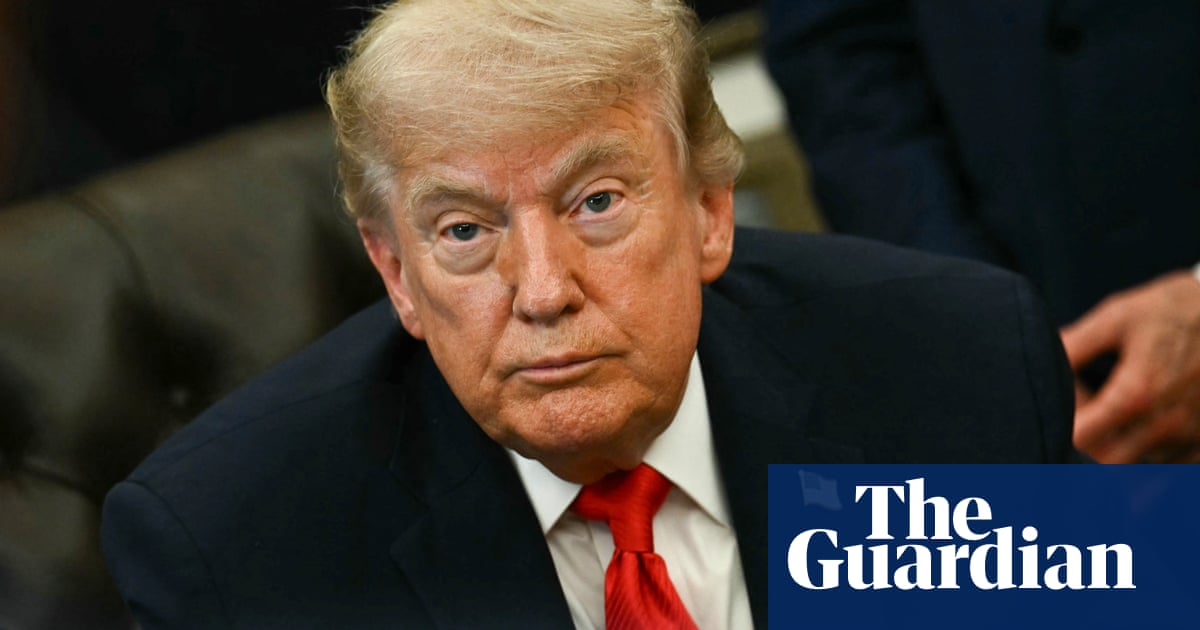
Trump said the US and Iran are on the verge of a peace agreement and that he will cancel fresh missile strikes, but the claim was not immediately confirmed by Iranian leadership. A diplomat said the deal had largely been agreed weeks ago, yet there is still a 50% chance it collapses amid multiple spoilers. The article points to persistent geopolitical uncertainty with potential implications for defense and broader risk assets.
Markets should treat this less as a binary peace headline and more as a volatility regime signal. When diplomatic progress is repeatedly telegraphed and then reversed, the tradable edge is not direction on any single statement, but the widening gap between headline risk premium and realized follow-through. That usually compresses into a short-lived relief bid in risk assets, then re-expands once the next spoiler appears; the most vulnerable assets are those with convex exposure to shipping disruption, defense urgency, and Middle East premium in commodities.
The second-order beneficiary is not necessarily the broad defense complex, but the parts of the stack tied to replenishment and readiness: missile defense interceptors, munitions, EW, and logistics. If a deal looks real for even a few weeks, procurement urgency can actually slow at the margin, which is negative for names trading on expectation of persistent elevated inventories and replacement demand. Conversely, any collapse likely re-prices near-term budget urgency faster than long-cycle platform spending, making smaller defense suppliers more sensitive than primes.
The bigger hidden risk is that a false peace signal can cheapen crude, shipping, and hedging costs just long enough for energy-heavy industries to underwrite softer input assumptions. If talks fail again, the unwind can be violent over days, not months, because positioning tends to chase the last headline. That makes this a good setup for optionality rather than outright beta: the market is underpricing the probability of an abrupt reversal after a series of false positives.
Contrarian view: consensus is likely focusing too much on whether a deal happens and too little on how repeated near-deals change bargaining power. Every cycle may be incrementally improving the other side’s ability to extract concessions while reducing the market’s sensitivity to future announcements, which means the next headline may move less unless it is accompanied by observable enforcement on the ground. The trade is therefore not "peace or war," but "credibility decay" — and that tends to favor relative-value shorts in names that are most exposed to temporary de-risking.
AI-powered research, real-time alerts, and portfolio analytics for institutional investors.
Request DemoOverall Sentiment
mildly negative
Sentiment Score
-0.15
