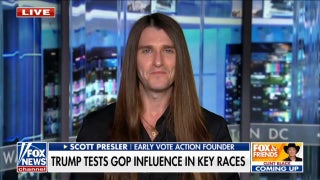
Thomas Massie lost the Republican primary in Kentucky's 4th Congressional District to Trump-backed challenger Ed Gallrein, prompting a wave of intra-party criticism and praise for Trump's influence. Marjorie Taylor Greene said the GOP's future was 'destroyed,' while Lindsey Graham called Trump's power 'real' and congratulated Gallrein on an 'amazing victory.' The article is primarily political commentary with no direct market-moving financial information.
This is a signal event for intra-party discipline rather than a macro political shock. The market implication is not about one House seat, but about the probability of a more unified Republican legislative posture over the next 6-12 months, which modestly lowers the odds of high-friction governance surprises from the small faction of persistent fiscal hawks and process rebels. In practice, that is mildly supportive for “gridlock premium” trades: fewer one-off shutdown or debt-ceiling knife-edge outcomes, but also a somewhat higher chance of cleaner passage of leadership-backed fiscal packages if the party keeps consolidating.
The second-order effect is on issue salience, especially around disclosure, oversight, and foreign-influence narratives. That tends to keep a steady bid under volatility in defense, surveillance, and legal-discovery adjacent names only when the rhetoric converts into hearings, subpoenas, or document demands; otherwise it fades quickly. The risk window is short on the headline, but the longer tail is reputational damage to party-aligned candidates who are forced to choose between loyalty and populist authenticity, which can depress crossover appeal in competitive districts.
Contrarian takeaway: the consensus will likely overread this as a meaningful shift in policy direction, when it is more likely just a reshuffling of factional power. The cleaner trade is not a directional election bet, but a modest increase in confidence that Washington’s next disruptions will be procedural rather than ideological. If the dominant faction later overreaches on spending, immigration, or foreign aid, the same “unity” that looks bullish for governance can flip into backlash within one to two quarters.
AI-powered research, real-time alerts, and portfolio analytics for institutional investors.
Request DemoOverall Sentiment
mildly negative
Sentiment Score
-0.20
