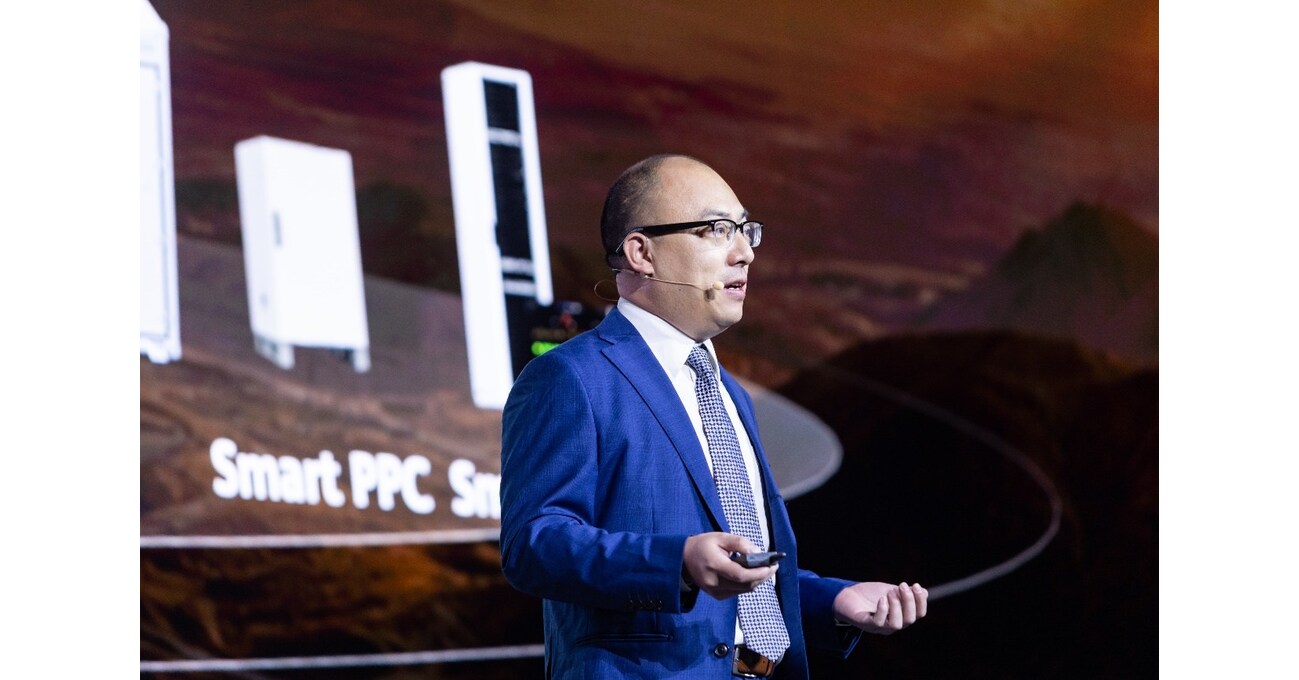
Huawei zaprezentowało platformę LUTERRA Smart String Grid-Forming ESS na Intersolar Europe, celując w wyższą sprawność i łatwiejsze wdrożenia dla systemów magazynowania energii. Firma deklaruje m.in. RTE 93,1% (strona niskonapięciowego PCS przy 25°C) oraz dokładność SOC na poziomie 2,5–3%, a także poprawę przepustowości systemu o ponad 10% dzięki architekturze z komponentami SiC i rozproszonemu chłodzeniu. Dla przykładowej elektrowni 1 GWh Huawei podaje skrócenie czasu dostawy o min. 30%, obniżkę BOP o min. 20% oraz redukcję wymaganego areału o 1 m²/MWh względem rozwiązań tradycyjnych.
This is less a battery story than a procurement-power story: if grid-forming becomes a hard spec, value shifts away from standalone container sellers toward vendors that can bundle PCS, controls, thermal management, and grid-code compliance into one bankable package. That favors grid-equipment names with entrenched utility relationships and balance-sheet strength, notably Eaton (ETN), ABB (ABB), Schneider, and Siemens Energy, while pressuring pure-play storage integrators such as Fluence (FLNC) and, in EMEA, Tesla Megapack on price and warranty terms. The real second-order effect is margin compression in the middle of the stack as customers demand performance guarantees rather than headline efficiency.
Near term, this is mostly a validation event, not an earnings event. The key catalysts over 1-3 months are TSO tenders, interconnection rule changes, and whether independent operating data from live projects supports the claimed availability and cycling economics; without those, the story stays promotional. Over 6-18 months, if European inertia and black-start markets scale, grid-forming could force a redesign of utility-scale BESS specs, pulling more spend into switchgear, transformers, EMS, and cooling while making cheaper commodity assembly less important.
The contrarian view is that the market may be underestimating non-technical friction: cybersecurity scrutiny, procurement restrictions, and the fact that utility buyers pay for bankability, not lab-grade RTE. If Huawei clears those hurdles, incumbents lose share; if not, the announcement mainly raises expectations and tightens pricing discipline for rivals. The thesis is falsified if FLNC, Tesla, or European integrators keep winning GFM-qualified awards without margin pressure, or if European regulators tighten Huawei participation rules.
AI-powered research, real-time alerts, and portfolio analytics for institutional investors.
Request TrialOverall Sentiment
moderately positive
Sentiment Score
0.45
