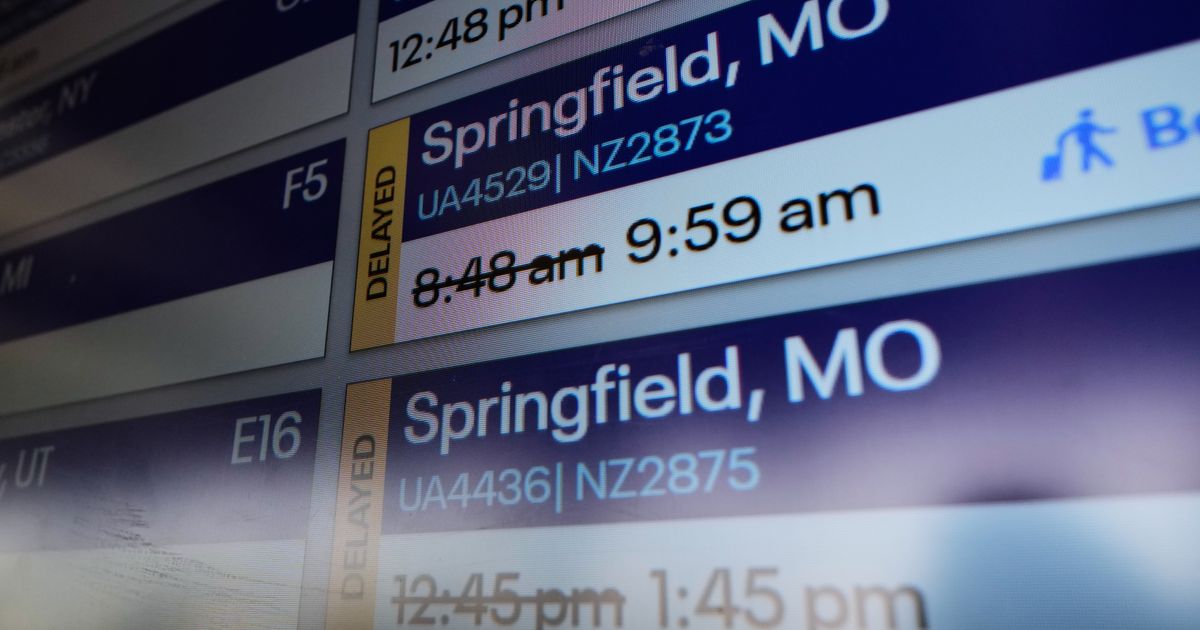
A winter storm across the Northeast and Great Lakes forced at least 1,500 flight cancellations from Friday night into Saturday and produced just under three inches of snow in New York City, with hazardous travel warnings stretching from the Great Lakes through the northern mid‑Atlantic and southern New England. New York and New Jersey declared states of emergency as agencies warned of potential tree damage and power outages; forecasters expected the storm to weaken by Saturday morning, suggesting disruption is likely to be short‑lived but could temporarily impact airlines, airports and regional logistics during a peak travel period.
Market structure: Short, concentrated shocks like a 1,500+ flight cancellation event acutely reward point‑to‑point, low‑cost carriers (LUV) and car‑rental/agile ground operators while penalizing large hub carriers (AAL, DAL, UAL) and airport services that suffer cascading crew/slot disruptions. Pricing power shifts short‑term: network carriers absorb higher operational recovery costs (reaccomodation, crew repositioning) compressing margins by an estimated 1–3 percentage points over the holiday week if disruptions persist beyond 48–72 hours.
Risk assessment: Tail risks include multi‑day power outages or crew shortages turning a 1–3 day event into a 1–2 week operational crisis, regulatory DOT scrutiny or class actions if passengers stranded >72 hours; probability low but impact high on equities and credit spreads of highly leveraged carriers. Immediate (0–7 days) effects are operational and volatility spikes; short (weeks) see revenue reallocation and fuel demand blips; long (quarters) repeated severe weather raises capex for de‑icing, crew buffering and insurance costs.
Trade implications: Favor short‑dated volatility and relative value: go long resilient, asset‑light travel names and short hub‑dependent, levered carriers for 2–6 weeks. Cross‑asset: expect a modest (0.5%–1.5%) downward impulse to jet fuel/ULSD in the week following widespread cancellations, and transient widening of high‑yield spreads for small regional carriers with leverage.
Contrarian angles: Consensus will oversell all travel equities; the mispricing is relative operational resilience not demand — passengers rebook, so OTAs (EXPE/BKNG) see sticky bookings while large carriers face reputational and cost hits. If cancellations revert to baseline within 48 hours, hub carriers can bounce 8–15% quickly; therefore size and timing around volatility are critical.
AI-powered research, real-time alerts, and portfolio analytics for institutional investors.
Request DemoOverall Sentiment
moderately negative
Sentiment Score
-0.30
