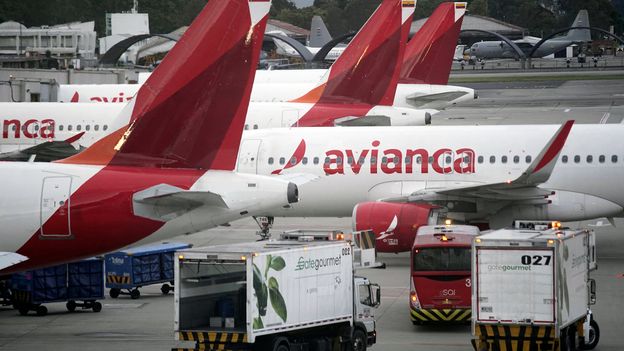
A suspected cosmic-ray single-event upset on a JetBlue A320 on 30 October 2025 prompted EASA and FAA emergency airworthiness directives requiring urgent software updates — and in about 900 cases hardware changes — across more than 6,000 Airbus A319/A320/A321 variants, grounding large numbers of aircraft and causing holiday-weekend disruption. Airbus says the software fix rapidly refreshes corrupted parameters and by 1 December most affected aircraft had been updated with fewer than 100 remaining; the episode raises potential operational costs, short-term revenue disruptions for carriers and highlights a longer-term need for avionics hardening and regulatory standards against space-radiation-induced bit flips.
Market structure: Short-term losers are commercial carriers (AAL, LUV, UAL) and OEM reputation (AIR.PA/EADSY) because ~6,000 A320-family groundings compressed capacity over a peak travel weekend; winners are avionics/aftermarket suppliers and integrators (RTX, LHX, HON) who gain pricing power on retrofits. The 900 hardware replacements imply incremental revenue on order of $45m–$180m (900 units × $50k–$200k) plus recurring software-service contracts, improving aftermarket margins for suppliers by an estimated +2–5% on retrofit revenue in 6–18 months.
Risk assessment: Tail risks include regulatory mandates forcing mandatory rad-hard retrofits across fleets (capex shock of $0.5–2bn industry-wide if scaled to 20–30k aircraft), class-action lawsuits from injury incidents, and a clustered solar event causing repeat ADs; these have 1–10% annualized low-probability/high-impact chances but would materially widen airline credit spreads and increase OEM warranty reserves. Time horizons: immediate (days) = booking/volatility shock and options vol spike; short-term (weeks–months) = AD wording, retrofit orders, supply-chain bottlenecks (semiconductor lead times 3–12 months); long-term (1–3 years) = standards adoption and higher aftermarket TAM for hardened electronics.
Trade implications: Tactical trades favor long select aerospace suppliers and short operationally sensitive airlines. Prefer buying 6–12 month exposure to RTX/LHX/HON to capture retrofit contracts while using limited-cost bearish option structures on AAL/LUV to express near-term disruption; if FAA/EASA issue mandatory ADs within 60–90 days, increase supplier exposure and rotate into semiconductor suppliers of rad-hard parts (IFNNY/MCHP/ON) with 6–18 month horizons.
Contrarian angles: The market may be overpricing permanent demand change—Airbus pushed a quick software fix and most planes were patched within days, suggesting tail-risk is manageable absent repeat events; the 2008 Qantas analog produced only incremental industry action, not structural collapse. Conversely, investors underestimating semiconductor lead-time and testing-capacity constraints risk supply-driven misses: if solar activity spikes again within 12 months, suppliers could miss delivery windows and disappoint consensus revenue upgrades.
AI-powered research, real-time alerts, and portfolio analytics for institutional investors.
Request DemoOverall Sentiment
mildly negative
Sentiment Score
-0.25
