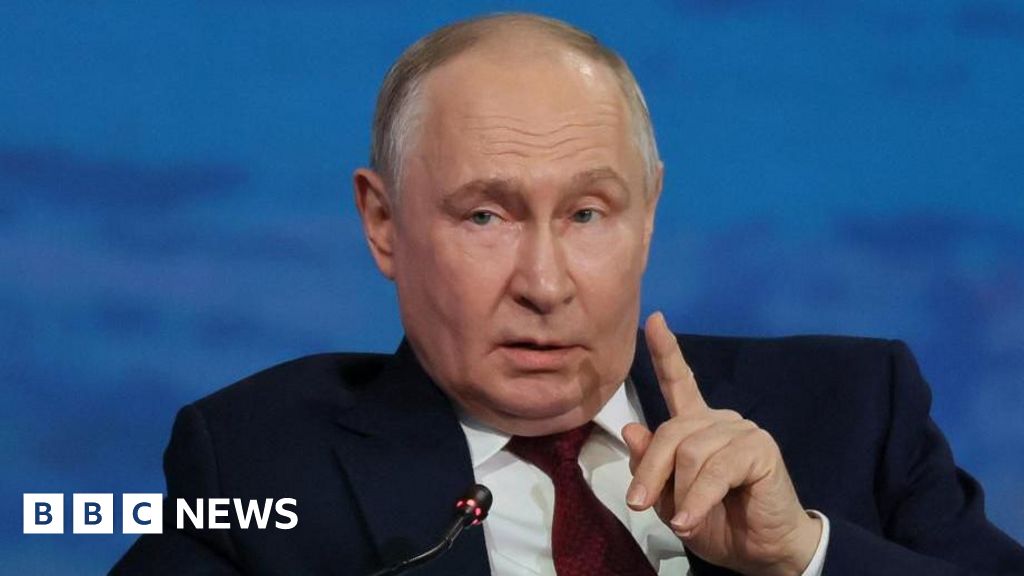
Putin rejected Zelensky’s request for direct peace talks, saying there is “no point” meeting and that any ceasefire must follow, not precede, broader agreements. The comments reinforce a protracted-war scenario, while Ukraine reported attacks on Russian-linked ships, an exploded drone in Romania, and at least 13 deaths and 70 injuries from Russian strikes in the past day. The escalation keeps geopolitical risk elevated for Europe, defense, energy, and commodity-linked markets.
The immediate market read is not “peace is off,” but “the war premium gets repriced upward and stays sticky.” The refusal of a face-to-face path lowers the probability of a near-term ceasefire headline, which matters more for assets with convex geopolitical sensitivity than for broad risk assets: European gas, diesel crack spreads, defense procurement names, and Eastern Europe freight insurance all keep a bid, while any tactical dip on negotiation hopes should be sold into. The second-order effect is that every additional week of conflict forces higher replacement demand for munitions, drones, air defense, and electronic warfare, shifting the beneficiaries from classic energy names toward defense supply chains with constrained capacity.
Commodity transmission is asymmetric. Grain and refined-product logistics through the Black Sea remain vulnerable to episodic disruption, so the bigger risk is not a one-day spike in wheat or shipping rates but a slow ratchet in delivered costs and inventory precaution across import-dependent regions. That creates a tailwind for global ag-inputs, specialty metals tied to defense, and select logistics insurers, while pressuring European industrials and consumer discretionary names exposed to higher input and transport costs. The market’s mistake would be treating this as a binary peace/no-peace event; the more durable setup is prolonged low-intensity escalation punctuated by sudden headline shocks.
The contrarian view is that the diplomatic deadlock may already be broadly priced in, and the next marginal move could come from battlefield or political developments rather than rhetoric. If Washington shifts attention elsewhere or if either side signals a narrower technical truce around infrastructure, the most crowded war hedges can unwind quickly over 1-2 weeks. The key catalyst watch is whether attacks expand onto transport nodes and energy infrastructure in the next 30-60 days, which would lift defense and commodity volatility, versus a surprise intermediary channel that reopens ceasefire optics and compresses the risk premium.
AI-powered research, real-time alerts, and portfolio analytics for institutional investors.
Request DemoOverall Sentiment
strongly negative
Sentiment Score
-0.70
