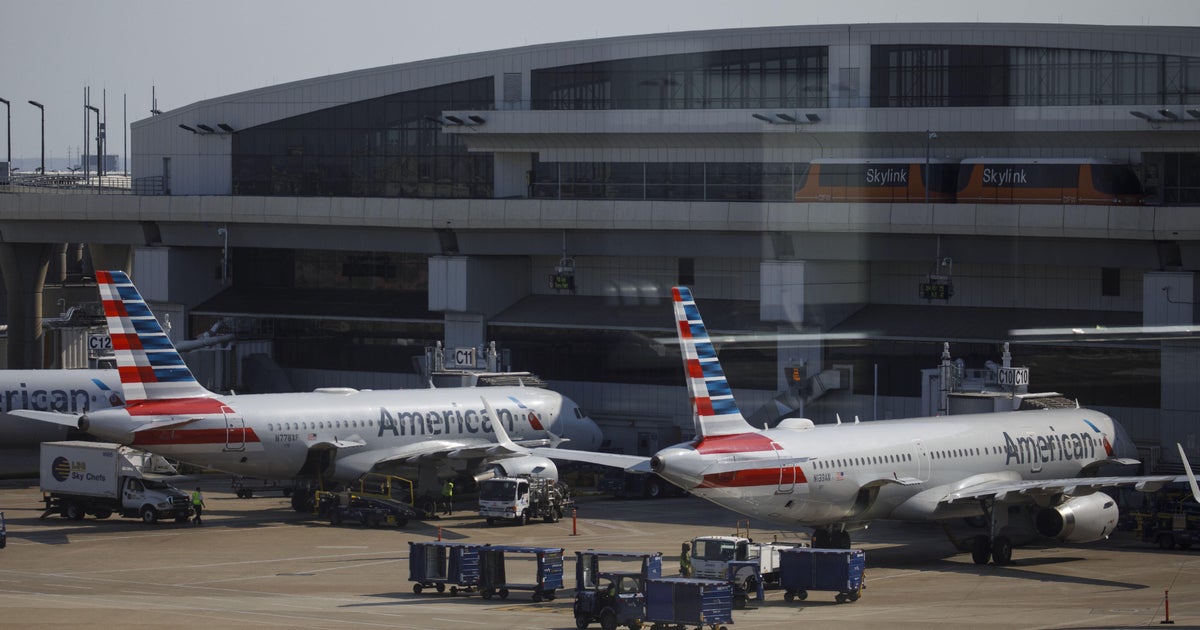
American Airlines will add more than 100 departures from Chicago O'Hare early next year, expanding spring service to 75 destinations and raising peak spring operations to over 500 daily departures—about 30% more than last spring. The carrier is increasing frequencies to five Florida airports (Orlando, Fort Myers, Sarasota‑Bradenton, Pensacola, Panama City) and adding flights to Las Vegas, Savannah, Asheville, San Diego and San Francisco, while also boosting service to Boston, Cincinnati and DFW and extending summer seasonal routes to Paris and Dublin; management frames the moves as part of rebuilding and strengthening the Chicago hub ahead of its centennial. The capacity increase signals potential revenue upside and improved network competitiveness at ORD, with modest implications for AA’s near‑term traffic mix and premium product availability.
Market structure: American’s +100 departures (peak >500 daily, ~30% YoY increase at ORD for spring) signals aggressive hub densification that benefits AAL (higher O&D capture, premium uplift on transcon/intl) and airport services (gates, ground handlers, regional feeders). Competitors with weak ORD exposure (LUV, regional ULCCs) face near-term leisure yield pressure on overlapping Florida/Las Vegas routes; expect PRASM headwinds of 2–6% seasonally if load factors don’t rise ~200–400 bps. Cross-asset: modest tightening in AAL credit spreads possible if revenue trajectory improves; jet fuel demand up fractionally (small upward pressure on crack spreads); FX impact limited but incremental transatlantic capacity exposes AAL to EUR/USD volatility on revenue mix. Risk assessment: Tail risks include major operational disruption at ORD (weather, ATC, staffing) or slot/antitrust intervention that could reverse gains; a sustained oil spike >$90–$100/bbl for 60+ days would erase margin lift. Time horizons: immediate (days) — muted stock move; short-term (weeks–months) — capacity-driven PRASM volatility; long-term (12–24 months) — hub rebuild can convert to durable share if completion and premium product yield +5–8% unit revenue. Hidden dependencies: labor contracts, gate infrastructure, and connecting feed (regional partners) are critical and can add 3–6 month execution slippage. Trade implications: Direct play — establish a modest long AAL (2–3% net portfolio) into spring 2026 schedule activation, targeting +15–25% upside if PRASM stabilizes and OAG departures match announced cadence; use tight 8–10% stop. Pair trade — long AAL vs short LUV (equal notional 1.5–2%) to express hub capture vs point‑to‑point leisure pressure through Apr–Jun 2026; unwind if spread narrows >5% or AAL PRASM underperforms by >3% QoQ. Options — use a low-cost defined-risk AAL May 2026 call spread (buy ATM, sell ~20% OTM) sized 0.5–1% portfolio to lever upside while capping premium; exit on +20% equity move or IV collapse >30%. Contrarian angles: Consensus treats expansion as unambiguous upside; underappreciated is yield dilution risk — historical post-reopening ramp cycles (2021–22) saw 3–7% PRASM drag before recovery, so upside may be delayed 3–6 months. Market may underprice execution risk at ORD: a single-season operational disruption could cut expected incremental revenue by >50% for the quarter. Unintended consequence — capacity could trigger competitor fare retaliation on high-frequency leisure routes, compressing margins; price-sensitive indicators (weekly OAG departure fills, DOT T‑100 yields) should be watched as early signals.
AI-powered research, real-time alerts, and portfolio analytics for institutional investors.
Request DemoOverall Sentiment
mildly positive
Sentiment Score
0.32
Ticker Sentiment
