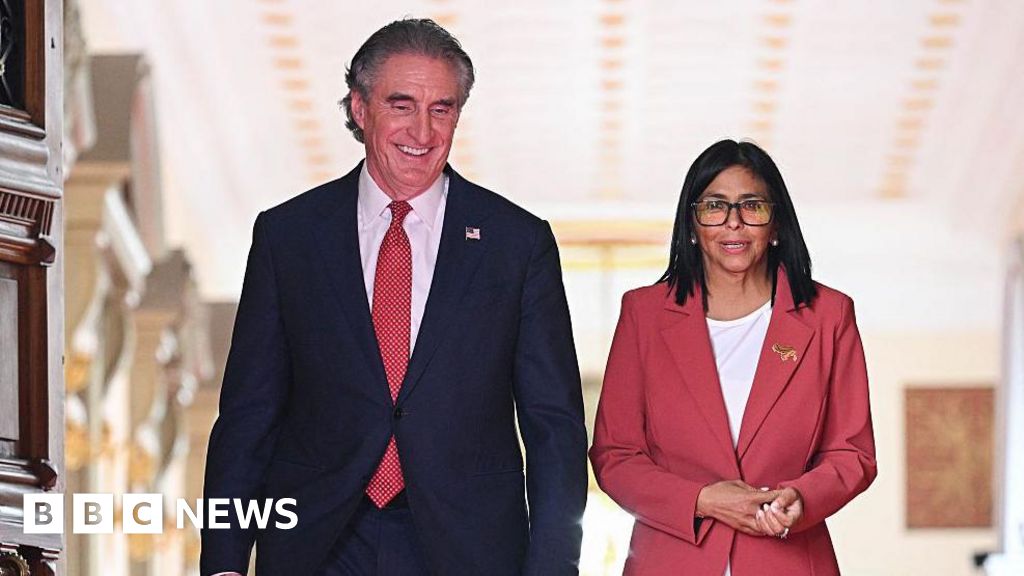
The US and Venezuela have formally re-established diplomatic and consular relations after a US operation that captured President Nicolás Maduro, reopening the US embassy in Caracas and installing a new diplomat; Washington has authorized Venezuela to sell previously sanctioned oil under US oversight and Caracas has amended laws to permit greater foreign investment in the oil sector. US and Venezuelan officials signaled cooperation on oil and mining development—potentially unlocking Venezuelan crude and strategic minerals—while Maduro faces a US criminal trial and regional geopolitical violence (including recent US/Israel strikes on Iran) that leave political and legal risks for investors despite the prospect of increased commodity supply.
Market Structure: Re-establishing US–Venezuela ties creates a pathway for sanctioned barrels and foreign-capex into oil and mining. Expect a gradual supply lift of 200–800 kbpd over 12–36 months (not immediate) as PDVSA requires CAPEX and technical partners; integrated majors (Chevron XOM, CVX) and service firms (SLB, HAL) gain pricing power on contracts, while high-cost US shale faces margin pressure if Brent falls $5–15 vs current levels.
Risk Assessment: Tail risks include legal/political reversal (US trial of Maduro, retaliatory strikes) that could re-impose sanctions within 0–6 months, and operational failure in Venezuela reducing realized supply. Monitor three catalysts: formal investment agreements (within 90 days), monthly Venezuelan exports (increase >200 kbpd in 6 months), and OPEC+ quota responses — any one can flip risk premia by ±$8–$12/bbl.
Trade Implications: Tactical winners are integrated oil majors and offshore service providers; losers are levered US shale and long-duration oil price call holders. Use 3–12 month instruments: idiosyncratic equity exposure to CVX/XOM, tactical call-spreads on energy ETFs to monetize capped upside, and selective distressed PDVSA/sov debt exposure only when yields exceed 18–22% with legal enforceability.
Contrarian Angles: Consensus underestimates infrastructure lag — more likely outcome is capped oil price volatility rather than a big downward shock; gold/rare-earth supply upside from Venezuelan mining is possible but >24 months out and hard to scale. If Venezuelan barrels ramp >300 kbpd within 12 months (a high-probability falsifier), rotate aggressively into E&Ps and EM sovereign credit; until then favor optionality and credit-selective positions.
AI-powered research, real-time alerts, and portfolio analytics for institutional investors.
Request DemoOverall Sentiment
mixed
Sentiment Score
0.12
