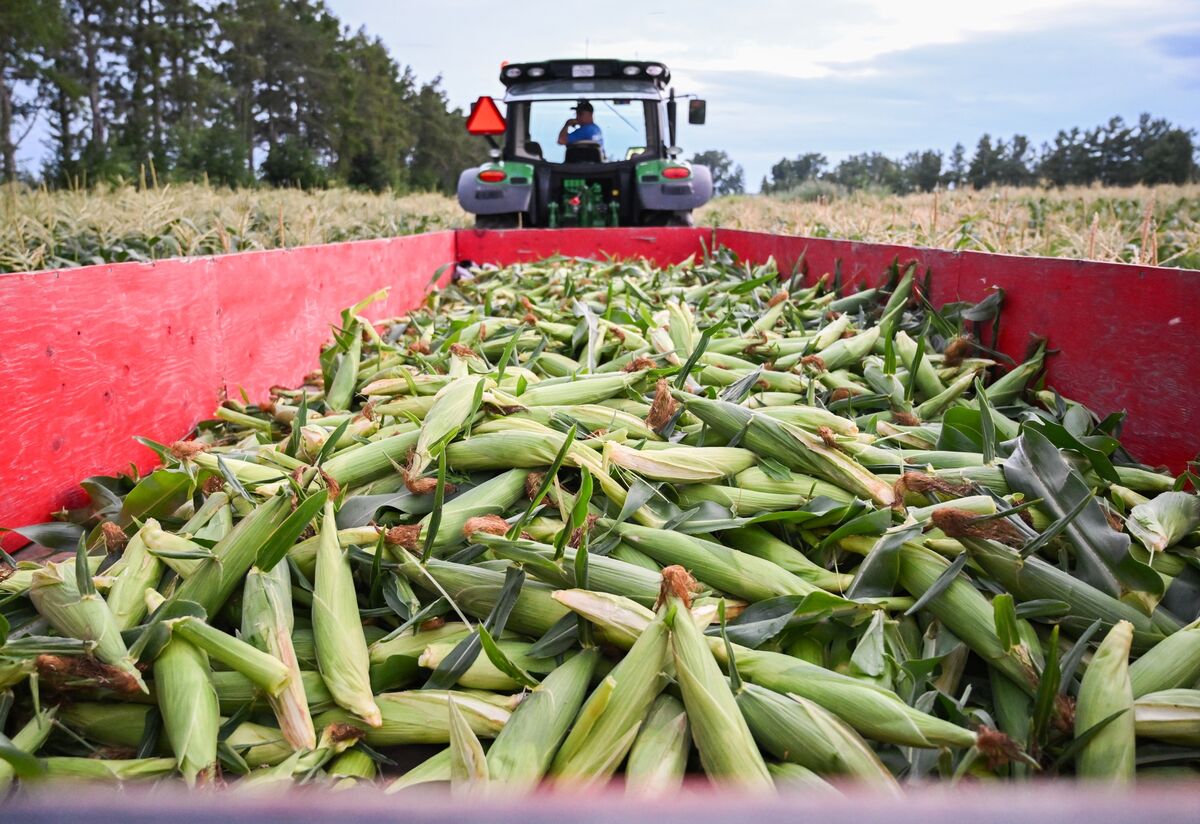
Corn futures fell as much as 1.3% after US-Iran hostilities eased, extending losses for a second session. Traders are also weighing hot US weather that could affect crop yields, keeping weather-driven supply risk in focus. The move reflects a softer geopolitical premium offset by ongoing concern over US crop conditions.
The immediate read-through is that the market is pricing out a geopolitical risk premium faster than it is pricing in weather risk, which usually creates a short-term overshoot in grains. That setup tends to favor processors and end-users more than outright producers, because nearby supply fear fades while the weather story needs several more hot days to convert into measurable yield loss.
The more important second-order effect is time decay: if heat persists but does not materially damage pollination/setting windows, the bid can remain capped while speculative length unwinds. If temperatures normalize within 5-10 trading sessions, corn can give back another leg even without a bearish fundamental shock, because the market hates paying for optionality once the catalyst becomes binary rather than imminent.
Conversely, if the heat map worsens, the downside in price is asymmetric because end-users are underhedged into a potentially tighter July/August balance sheet. That creates a late-summer squeeze risk where any fresh weather deterioration forces fund shorts to cover quickly; the move would likely be faster than the initial selloff because physical users are forced to chase coverage.
Consensus may be underestimating how much of the recent price action was driven by macro risk-off rather than crop fundamentals. If so, the current pullback is less a signal of improving supply and more a repricing of event risk; that usually makes the first dip a better entry for tactical longs than for structural shorts, but only with tight time stops.
AI-powered research, real-time alerts, and portfolio analytics for institutional investors.
Request DemoOverall Sentiment
mildly negative
Sentiment Score
-0.15
