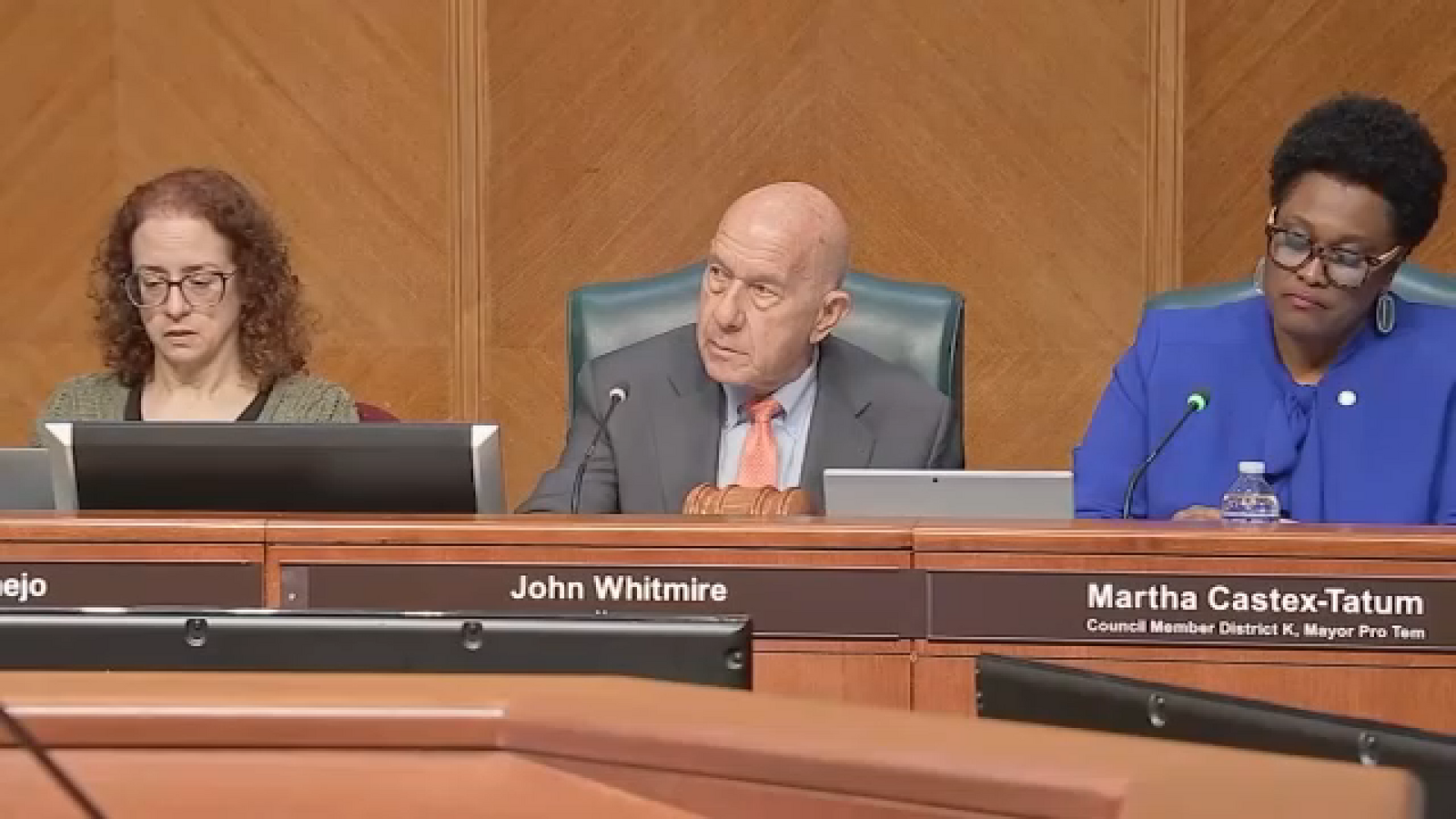
Houston City Council is set to vote Wednesday on revised HPD-ICE cooperation rules after Mayor John Whitmire proposed amendments aimed at avoiding the loss of state public safety funding. The changes would clarify cooperation required by state law and allow temporary detentions for a 'reasonably necessary' period, but critics argue the language could weaken Fourth Amendment protections and effectively restore broader ICE-related detention discretion. The debate is localized and policy-driven, with limited direct market impact.
This is less about immigration policy and more about municipal bargaining power under fiscal stress. The key second-order effect is that state funding leverage can force local governments toward broader law-enforcement cooperation even when the political coalition is split, which raises the odds of similar policy rewrites in other Texas cities facing budget pressure. For investors, that matters because it makes the current debate more of a governance/sovereignty issue than a one-off legal dispute, and it increases the probability of a patchwork enforcement regime that creates headline risk but limited direct economic impact.
The near-term market reaction should remain muted for ICE because the company is not economically exposed here; the ticker is effectively a zero-beta proxy for immigration policy headlines. The real risk transmission is to public safety contractors, local-service vendors, and any Texas-exposed operators with labor-sensitive workforces, but even there the effect is indirect and likely confined to sentiment unless the dispute escalates into litigation or state sanctions. The more material catalyst is not the vote itself, but whether the language survives constitutional challenge or becomes a template for state-preemption action over the next 1-3 months.
The contrarian angle is that markets may overestimate the policy durability of a compromise passed under funding threat. If the ordinance is framed too broadly, legal challenges could freeze implementation, and if it is too narrow, it may fail to satisfy the state—either outcome reduces the practical change and creates another round of headline volatility without durable operational shift. The asymmetric setup is in municipal political volatility rather than equity beta: expect more noise than earnings impact, unless broader Texas policy tightening spills into staffing, policing, or litigation budgets across multiple cities.
AI-powered research, real-time alerts, and portfolio analytics for institutional investors.
Request TrialOverall Sentiment
neutral
Sentiment Score
-0.05
Ticker Sentiment
