
2026 Kentucky Derby predictions, horses, odds, post time: Surprising picks from proven horse racing expert
Source: CBS Sports
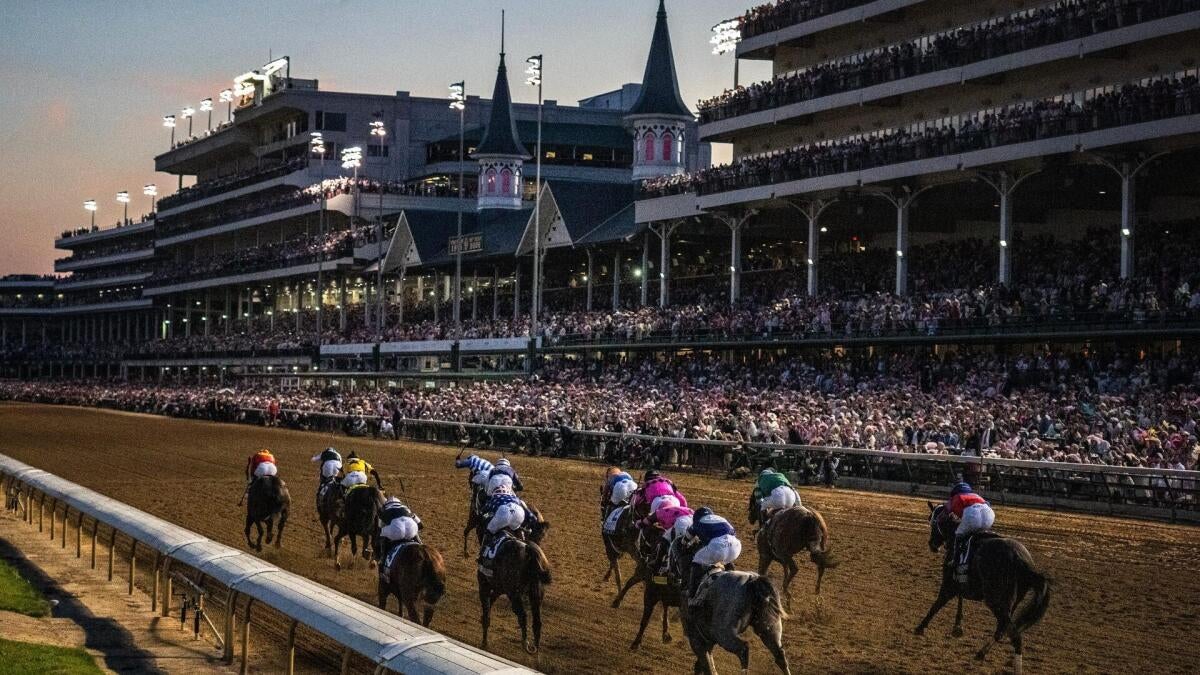
The 2026 Kentucky Derby is set for Saturday, May 2 at 6:57 p.m. ET at Churchill Downs, with a 19-horse field after four scratches and one late scratch that left no replacement. Morning-line favorite Renegade is 4-1, followed by Commandment and Further Ado at 6-1 and Chief Wallabee at 8-1, while Michelle Yu is fading Commandment and highlighting Chief Wallabee as a value play. The article is primarily betting analysis and race odds commentary, with limited broader market relevance.
Analysis
The cleanest read-through is not on the race outcome itself but on event-driven flow into CHDN-linked wagering and pari-mutuel volume. A wide-open field with a credible favorite that is still being faded creates exactly the kind of uncertainty that lifts handle, especially when the market can’t anchor on a dominant horse and late scratches force ticket re-pricing. That favors the house structurally: more dispersion in opinions tends to increase churn, while the promotional arms race from ADW platforms can pull incremental volume forward into the 24-48 hours before post.
The bigger second-order effect is positioning in the “wiseguy” names. When an analyst with a strong recent hit rate points to a mid-priced, lightly raced contender and explicitly leans against the chalk, recreational money often overreacts by concentrating on the top few public horses and leaving the broader board underbet. That can make exacta/trifecta overlays more attractive than win bets, particularly if the crowd overweights pedigree and trainer narratives while underpricing pace collapse risk at the added distance.
For CHDN, the event is less about a one-day spike and more about a short-window revenue catalyst with limited duration but high visibility. The stock tends to benefit most if pre-race buzz translates into record handle, but the move should fade quickly unless the company can show sustained wagering share gains versus other ADWs and casino peers. The contrarian view is that consensus may be overestimating the permanence of any Derby uplift; the structural win is volume elasticity, not a lasting change in unit economics.
Catalyst risk is asymmetric around the race window: if the public favorite performs well, the narrative supports handle but reduces the “upset” premium that often juices exotic payouts and media attention; if the favorite fades, there can be a sharper spike in interest, but that is usually a one-session effect. The more interesting medium-term question is whether this year’s field quality reinforces the idea that horse-racing wagering remains an event-driven, promotion-sensitive business rather than a stable secular growth story.
AllMind Terminal
AI-powered research, real-time alerts, and portfolio analytics for institutional investors.
Request TrialMarket Sentiment
Overall Sentiment
neutral
Sentiment Score
0.05
Key Decisions for Investors
- Long CHDN into the Derby window, but treat it as a 1-3 day trade: look to buy weakness before post and reduce after the handle print unless volume materially beats expectations; risk/reward is attractive if the stock is down 2-4% into the event and implied upside is a 4-6% pop on a record-handle headline.
- Pair trade: long CHDN / short a broader leisure basket ETF or an online-betting proxy for 1-2 weeks to isolate event-driven wagering flow from macro leisure beta; thesis is that Derby-specific handle is idiosyncratic and should not be priced as a durable growth signal.
- Use event volatility to buy short-dated CHDN calls only if liquidity is tight and IV has not already fully repriced; target a 2:1 payoff into the race/next-morning handle release, with a hard stop if the stock has already run >5% pre-event.
- For prop-oriented bettors/investors, favor exotic exposure over win exposure around the race: the market is likely overbetting the top two or three horses, making exacta/trifecta structures the better risk-adjusted expression of the consensus fade.
- If CHDN rallies sharply on the event, sell into strength within 24-72 hours; historical pattern should be mean reversion unless management confirms sustained share gains from incremental account acquisition.
More News
- Why did CoreWeave stock get crushed this week? Look to this corner of the debt market for clues
- Wall Street Anxiety Spreads as AI Rout Meets $110 Oil Shock
- Stock fixing scandal could see Turkish companies frozen out of global indexes
- AI stock sell-off ramps up over debt-fueled data center spending fears: ‘Full-blown crisis of confidence'
- 5 midterm money takeaways: Democrats have candidate cash. Republicans have Elon Musk
- Apple’s $1,999 iPhone Duo puts the company's status-symbol power to the test
From AllMind Research
- Anthropic IPO Preview: Valuation, Timing, and What to Watch
- Shein After the IPO: Venue, Valuation, and What Must Be Proved
- What AI Research Tools Should a Small Hedge Fund Buy First?
- Automating Financial Model Updates: A Source-Controlled Workflow
- Weekly Update: Live Event Center, In-App Documents, and Faster Transcripts