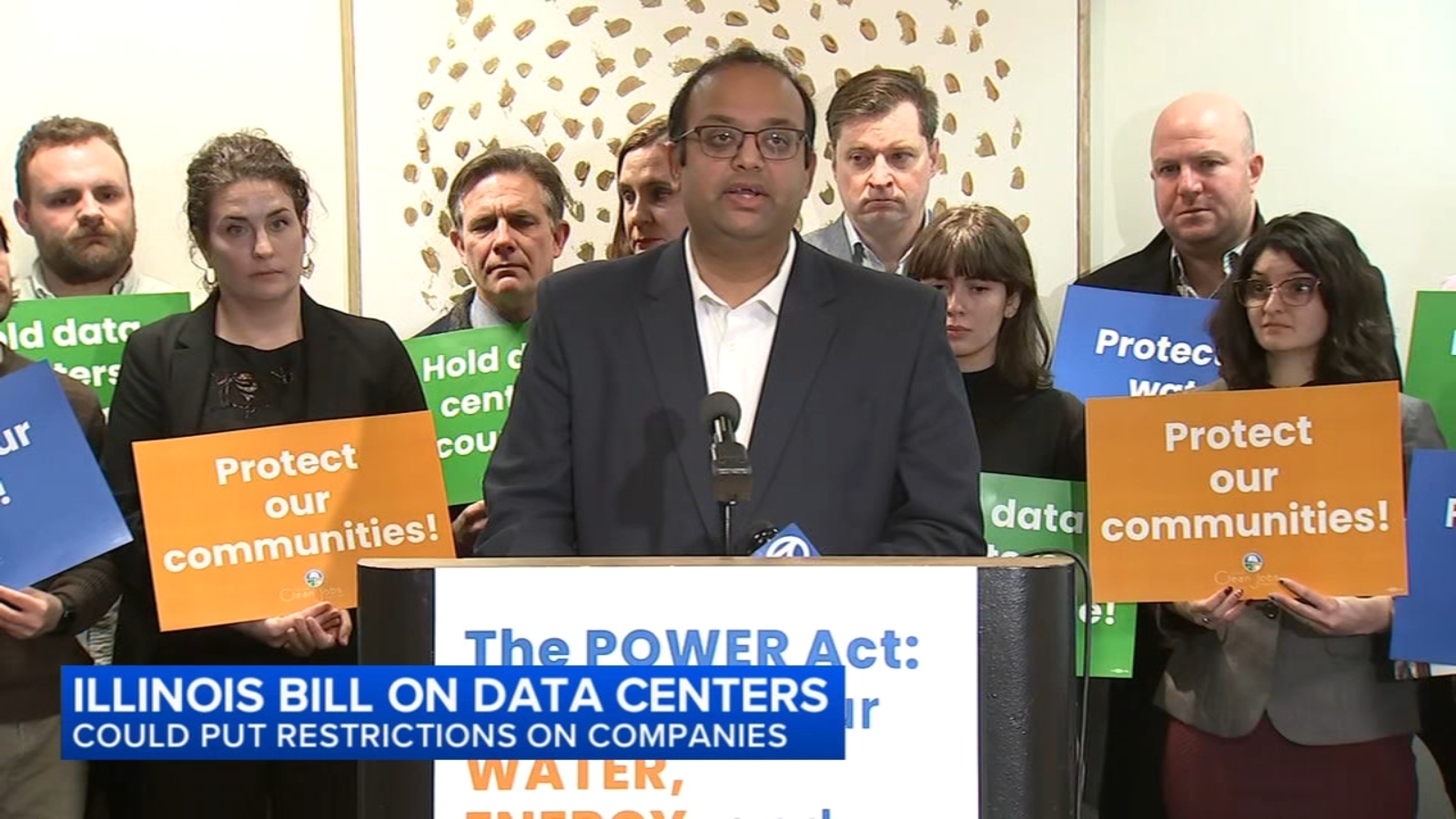
Illinois state lawmakers have introduced the POWER Act (Protecting Our Water, Energy, and Ratepayers) to impose guidelines on companies building data centers, aiming to shift increasing energy and water-related costs and environmental protections away from consumers and onto operators. The proposal, championed by state Sen. Ram Villivalam, would create regulatory requirements for future data center development in Illinois, representing a localized regulatory risk that could raise compliance or operational costs for data center developers and operators active in the state.
Market structure: The POWER Act shifts incremental costs and permitting friction onto data center operators and toward regulated utilities, favoring regulated electric and water-infrastructure providers (Ameren AEE, Exelon EXC, Xylem XYL) while creating headwinds for data-center developers/REITs with Illinois exposure (Digital Realty DLR, Equinix EQIX, QTS QTS). Expect project deferrals in IL and relocation to lower-regulation states (TX, OH), tightening available Chicago-area capacity and supporting near-term leasing pricing power for incumbent facilities by ~5–15% over 6–12 months.
Risk assessment: Tail risks include a punitive surcharge or retroactive cost allocation (low probability, high impact), litigation that freezes builds, or a watered-down compromise (high probability). Immediate (days) volatility will be headlines-driven; short-term (30–90 days) will hinge on committee votes and amendments; long-term (6–24 months) outcome is capex reallocation away from IL and greater spend on on-site renewables, storage, and water recycling.
Trade implications: Direct plays are overweight regulated utilities and water/wastewater equipment makers (AEE, EXC, XYL), underweight data-center REITs with IL footprints (DLR, EQIX, QTS). Use relative-value pair trades (long AEE, short DLR) and option structures: buy 3–6 month DLR put spreads sized to 0.5–1% portfolio risk; buy 6–12 month XYL or NEE call spreads to capture infrastructure upside amid PPAs and battery demand.
Contrarian angles: Consensus treats this as local nuisance; miss is acceleration of corporate PPAs and capex for on-site generation (benefitting NEE, BE, and battery metal suppliers). If the bill stalls, short-dated puts will decay—so size bets to legislative readouts (watch committee votes within 30 days) and avoid large directional exposure until final text clarifies pass-through vs. direct tax mechanics.
AI-powered research, real-time alerts, and portfolio analytics for institutional investors.
Request DemoOverall Sentiment
neutral
Sentiment Score
0.00
