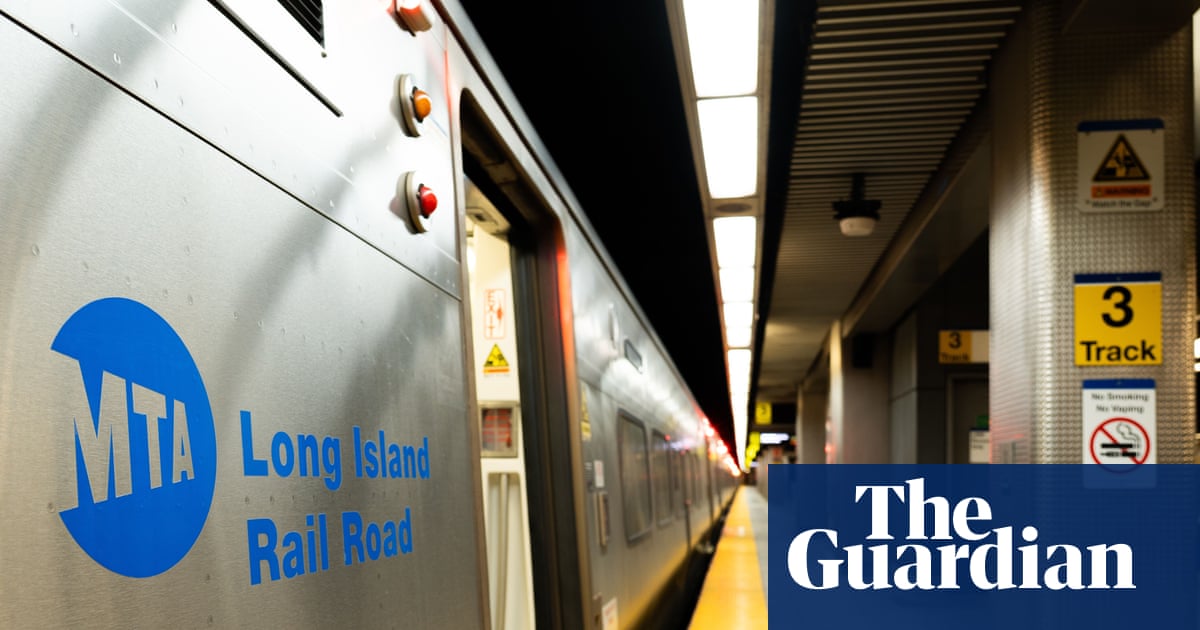
The Long Island Rail Road shut down for a second day after 5 unions representing about half the workforce struck for the first time in 30 years, halting service for roughly 250,000 weekday riders. Negotiations remain stalled over pay and healthcare premiums, and the MTA says limited shuttle buses will not cover normal demand. The stoppage is likely to disrupt commuting, sports attendance, and regional traffic, while also escalating political blame between Governor Hochul and the Trump administration.
The immediate market read is not about the railroad operator itself so much as the diffusion of pain into the New York mobility stack. The first-order winner is alternative transportation capacity: ride-hailing, commuter buses, and parking operators should see a same-week demand spike, but the second-order effect is worse for any business whose weekend or Monday traffic depends on Manhattan footfall from Long Island. The real economic damage scales nonlinearly if the stoppage extends into the workweek because commuters do not just delay trips — they re-route permanently for the duration of the strike, which increases congestion, lengthens trip times, and raises the perceived reliability hurdle for public transit recovery.
From a policy standpoint, the strike is a pricing event for political risk rather than a pure labor story. The governor now has an incentive to force a visible resolution quickly, which means headline risk should peak over the next 24–72 hours; after that, the market will likely shift to whether the settlement establishes a higher wage baseline for other transit and municipal labor groups. That matters for public-sector balance sheets and for any contractor exposed to New York infrastructure spending, because once one bargaining unit wins a more generous package, the next negotiations reprice upward even if this strike ends.
The main contrarian angle is that this may be over-read as a lasting demand shock when it is more likely a short-duration logistics disruption. If a deal lands early in the week, the economic hit is mostly lost productivity and temporary mode substitution, not structural ridership erosion. But if the outage persists beyond a few trading sessions, expect pressure on retail, gaming, and event-linked businesses around Penn Station and midtown to show up first, with spillover into regional operators as commuters optimize away from rail on a semi-permanent basis.
AI-powered research, real-time alerts, and portfolio analytics for institutional investors.
Request DemoOverall Sentiment
strongly negative
Sentiment Score
-0.55
Ticker Sentiment
