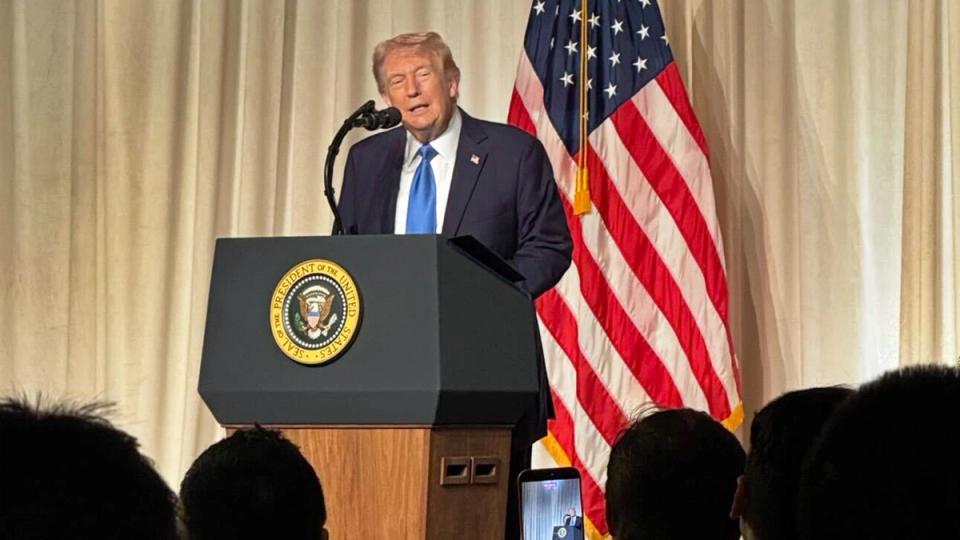
President Donald Trump used a private Mar-a-Lago event for top $TRUMP memecoin holders to say banks should not derail the long-stalled Clarity Act on U.S. crypto market structure. The bill remains caught in disputes over stablecoin rewards and whether such products resemble bank deposits, but recent discussions suggest a path forward. Trump also reiterated that crypto is "mainstream," reinforcing a supportive policy stance for digital assets despite ongoing political scrutiny.
This is less a headline about crypto policy than a signal that the White House is willing to subordinate bank lobby priorities to the broader political value of a pro-crypto posture. The second-order effect is that the regulatory battleground is shifting from “whether” to “how” — which favors liquid, institutionally usable assets and infrastructure providers over speculative tokens. If the Clarity Act advances, the biggest beneficiary is likely not retail-facing exchange volume immediately, but the “plumbing” layer: custody, on/off-ramp, compliance, and stablecoin settlement networks that become mandatory intermediaries for banks and asset managers entering the space.
The key market implication is a near-term widening of the moat for non-bank crypto-native firms if stablecoin rewards remain exempt from bank-style deposit rules. That would pressure traditional bank deposit economics at the margin, especially for lower-cost funding franchises with sticky retail balances, but the real risk is slower: if banks conclude they cannot defend deposit share, they will push harder into tokenized deposits and permissioned blockchain rails over the next 12-24 months. That creates a fork in the road where incumbent banks either partner with crypto infra providers or risk losing payment and treasury flows to them.
The political overhang matters more than the policy rhetoric suggests. The more Trump links crypto policy to his own brand and fundraising ecosystem, the higher the probability that Democrats insist on ethics/firewall language, which could delay passage even if market structure language is otherwise market-friendly. That means the trade is not a clean straight-line bullish catalyst; it is a volatility event with a possible 1-3 month legislative window and a non-trivial chance of slipping into year-end gridlock.
Consensus likely overweights the headline bullishness for tokens and underweights the beneficiaries of partial passage. The better setup is to own regulated crypto infrastructure and select stablecoin exposure while fading the idea that bank lobbying can indefinitely block the regime shift. If the bill stalls, the sector still benefits from a growing expectation of eventual legalization; if it passes, the winners should be the firms with compliance scale and distribution, not the most speculative names.
AI-powered research, real-time alerts, and portfolio analytics for institutional investors.
Request DemoOverall Sentiment
neutral
Sentiment Score
0.10
