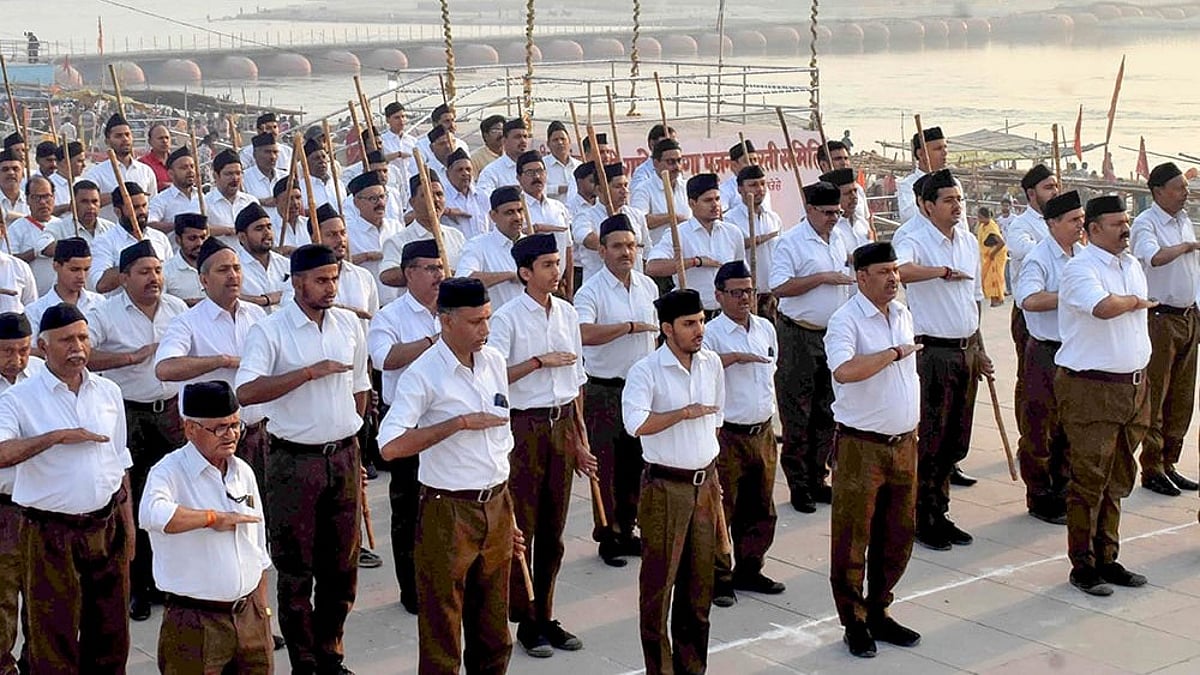
RSS General Secretary Dattatreya Hosabale defended the organization at a Hudson Institute event, saying it is not a Hindu supremacist group and highlighting its 83,000 shakhas, volunteer network, and social work across education, health, rural development, and disaster relief. He said tensions with minorities and neighboring countries stem from political interests and historical misunderstandings, while arguing that cultural values and modernisation can coexist. The remarks are primarily reputational and political in nature, with limited direct market impact.
This is less a market event than a signaling event: the RSS is attempting to lower the perceived policy tail risk premium embedded in India exposure, especially for foreign allocators who still attach a “majoritarian instability” discount to domestic assets. The practical second-order effect is not on index levels today, but on the probability-weighted cost of capital for sectors sensitive to social friction, regulatory scrutiny, and state-federal coordination — notably education, healthcare, consumer services, and infrastructure execution. If the message lands, the beneficiaries are Indian equities with high domestic revenue and long-duration compounding characteristics, because a lower narrative risk premium tends to compress discount rates before it shows up in earnings.
The more interesting angle is coalition management. Public reassurance to minority and diaspora audiences is a form of reputational insurance ahead of election cycles and policy bargaining, suggesting the organization is actively defending its ability to shape governance without triggering investor alarm. That should reduce the odds of abrupt, headline-driven multiple compression in India Inc., but only gradually; the market will want repeated evidence of moderation in administrative behavior, not just rhetoric. The biggest lagged winner could be Indian financials and infrastructure names, where even a modest reduction in perceived governance friction can translate into higher project award velocity and better capital formation.
The contrarian read is that the market may already be too complacent on India’s political risk because it extrapolates growth but underprices volatility in social cohesion and external relations. The near-term catalyst for reversal is not this speech itself, but any follow-through event that contradicts it — local unrest, minority-focused legislation, or a sharper diplomatic escalation with a neighbor — which would quickly re-open the discount. Time horizon matters: over days this is noise; over 3-12 months, if the moderation narrative persists, it can support multiple expansion in domestically oriented large caps versus export-heavy cyclicals.
For geopolitics, the most relevant risk is that defensive messaging may reflect an attempt to preempt pressure from U.S. policymakers and diaspora opinion leaders, which means India is still managing a reputational overhang in Washington. That creates a subtle positive for firms with U.S.-facing investor bases and a negative for names exposed to sanctions-sensitive supply chains or cross-border defense procurement, where political optics can alter procurement timing even absent formal policy change.
AI-powered research, real-time alerts, and portfolio analytics for institutional investors.
Request DemoOverall Sentiment
neutral
Sentiment Score
0.05
