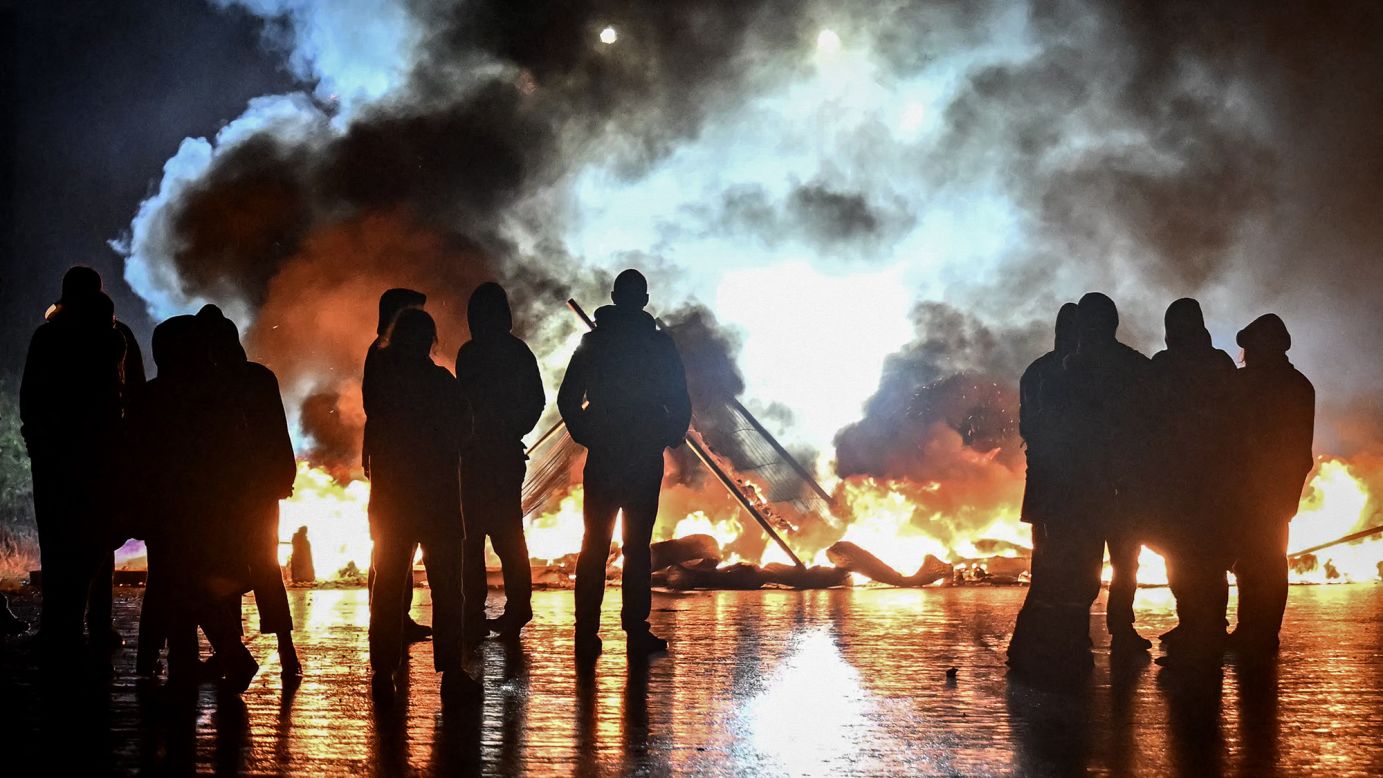
Nationwide unrest erupted across France on Wednesday, marked by road blockades, fires, and clashes with police, leading to 473 detentions and significant disruptions including schools. These protests, fueled by widespread anger against the political class and fiscal policies, coincide with the appointment of new Prime Minister Sébastien Lecornu, whose predecessor was ousted over an unpopular deficit reduction plan. The escalating discontent, which saw activists block key infrastructure and public buildings, signals significant political instability and potential economic disruption, with a larger nationwide strike planned for September 18 involving all trade unions.
France is facing a period of heightened political instability and sovereign risk, marked by nationwide social unrest. The protests, which have led to 473 detentions and the deployment of 80,000 police, are a direct response to public anger over the government's fiscal consolidation agenda, which resulted in the ousting of the previous prime minister. The appointment of a new prime minister, Sébastien Lecornu, a loyalist to President Macron, has failed to quell the discontent and is instead viewed as a continuation of unpopular policies. The 'Block Everything' movement and disruptions to key infrastructure like roads and schools signal a tangible economic impact. The situation is poised to escalate, with a larger, unified nationwide strike involving all trade unions planned for September 18, threatening more significant economic paralysis and challenging the government's ability to implement its budget.
AI-powered research, real-time alerts, and portfolio analytics for institutional investors.
Request DemoOverall Sentiment
strongly negative
Sentiment Score
-0.70
