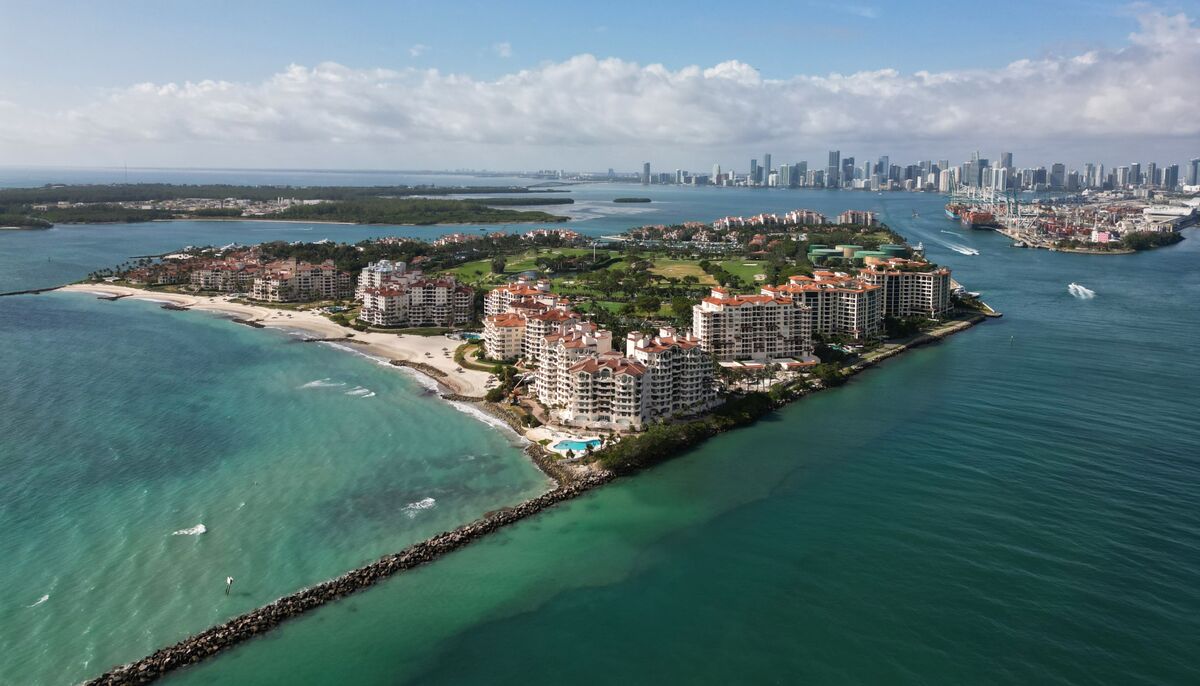
Miami’s mayor is seeking to forcibly acquire 10 acres on Fisher Island, where a Port of Miami fuel depot sits on land sold last year for about $180 million. The dispute pits infrastructure needs against developers’ plans for new condominiums, highlighting a potential land-use and eminent-domain fight. The case is relevant to local real estate and port operations, but it is unlikely to have broad market impact.
This is less a one-off zoning fight than a signal that high-value coastal land use is moving into a higher political-beta regime. For developers, the embedded optionality on trophy waterfront parcels is now constrained by municipal willingness to reclassify “highest and best use” when the asset is tied to critical infrastructure, which should compress the bid for similar redevelopment opportunities in Miami and other port-adjacent luxury markets. The second-order effect is that land banking in ultra-prime areas becomes less about entitlement upside and more about regulatory survivability.
The real beneficiary is the public-sector side of the capital stack: port operators, cruise lines, and fuel/logistics incumbents that depend on uninterrupted maritime throughput. Even if the current parcel dispute takes months to resolve, the mere prospect of forced acquisition raises the hurdle rate for any transaction involving operational infrastructure embedded in luxury redevelopment zones. That tends to favor larger, better-capitalized infrastructure owners and REITs with fewer political and title-friction exposures.
The market is likely underpricing how this changes underwriting across South Florida. If municipalities can credibly threaten seizure or impose hard use restrictions, expected returns on condo projects near ports, airports, and utility corridors should fall, while replacement-cost value for strategic infrastructure should rise. The key catalyst is not the court outcome itself, but whether this becomes a template for other local governments facing public-pressure narratives around housing versus essential services.
Contrarian view: the headline risk may be bigger than the economic damage. Miami’s luxury market has repeatedly absorbed political noise because foreign capital and scarce coastal inventory can overpower local governance friction over multi-year horizons. If developers secure a negotiated settlement or land swap, the market could quickly reprice this as a timing issue rather than a structural threat, leaving short-duration traders chasing a fade.
AI-powered research, real-time alerts, and portfolio analytics for institutional investors.
Request DemoOverall Sentiment
neutral
Sentiment Score
-0.05
