



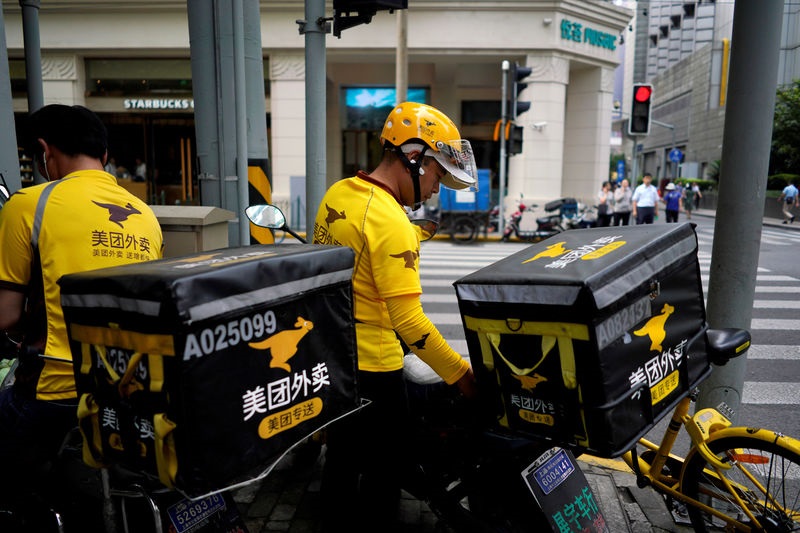
Meituan shares fell 6.1% to HK$72.95, their lowest since Feb. 2024, after the company denied rumors of large-scale layoffs in product operations. The move reflects investor sensitivity to cost-cutting signals amid slowing consumer demand and intensifying competition from JD.com and Alibaba-backed Ele.me. While the layoffs report was denied, the stock reaction shows concern over margin pressure and market share losses.
The market is treating this as a rumor-driven de-risking event, but the more important signal is that investors remain hypersensitive to any margin-defense narrative in China consumer internet. That matters because when a platform is already in a subsidy war, even a false layoff headline can widen the valuation discount: the market is effectively saying operating leverage is no longer credible until traffic and order growth reaccelerate. The immediate pressure is on competitors to keep spending, not just on the company in question.
Second-order, the real beneficiaries are the players with deeper balance-sheet capacity to sustain promotions longer than the market expects. JD and Alibaba-backed delivery assets can use the next few weeks of sentiment weakness to force share gains if they maintain subsidy intensity while the incumbent is forced to signal discipline; the risk is that this becomes a multi-month game of chicken that compresses sector margins more than headline analysts are modeling. If consumer demand stays soft, the winner will be the firm that can tolerate lower unit economics without forcing the market to revise down its growth algorithm.
The contrarian view is that the move may be overdone on price, not on fundamentals: a single denial does not resolve the core issue, which is whether food delivery is entering a structurally lower-return phase as competition shifts from growth to retention. The equity can bounce quickly if management reaffirms hiring and capex cadence, but any relief rally is likely to fade unless there is proof of stabilized take rates or a reduction in subsidy intensity across the industry. Over 1-3 months, the key catalyst is not headlines but whether order frequency holds up into a weaker consumer tape.
From a positioning standpoint, this is a cleaner relative-value short than an outright sector short: the names with the most to lose are those most exposed to China retail demand elasticity and aggressive promotion cycles. If the rumor spillover persists, it could also pressure broader Chinese internet sentiment and keep multiple compression in place even for companies with less direct exposure to delivery competition.
AI-powered research, real-time alerts, and portfolio analytics for institutional investors.
Request TrialOverall Sentiment
mildly negative
Sentiment Score
-0.25
Ticker Sentiment
