
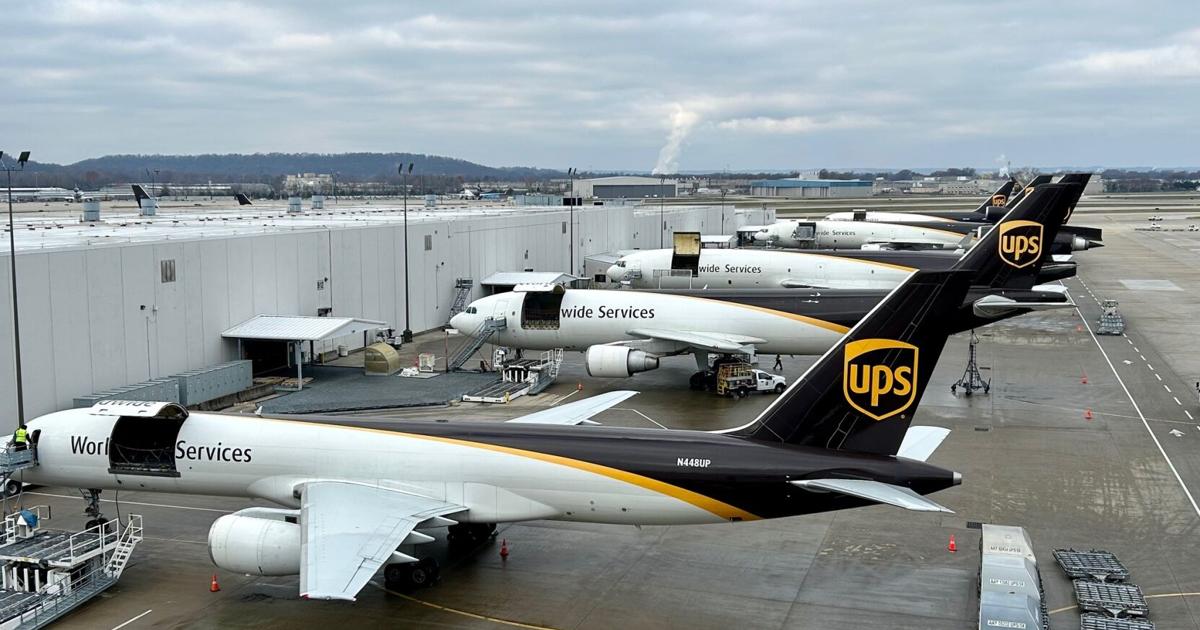
A UPS flight at Louisville Muhammad Ali International Airport was forced to go around at about 12:10 a.m. Tuesday after another aircraft turned onto the runway without permission. The FAA said required separation was maintained and no contact occurred, while UPS said there was no operational impact. The incident comes five months after a fatal UPS cargo-plane crash near the airport that killed 15 people, including three crewmembers.
This is not a near-term earnings event for UPS, but it is another data point that keeps the stock in a reputational and regulatory overhang. The market usually discounts single runway incidents quickly, yet repeated aviation headlines around the same hub raise the probability of incremental oversight, procedural tightening, and higher operating friction at the margin — even if no direct operational disruption is disclosed. For a network carrier, the bigger risk is not one delayed departure; it is the cumulative effect of more conservative ATC handling, longer taxi/hold times, and potential audit costs that slowly bleed into service reliability and cost per package.
The second-order winners are competitors with less perceived safety scrutiny and less concentration at this airport footprint, especially carriers whose investor narratives are already centered on reliability and execution. If shippers begin to perceive Louisville as a higher-variance node, even a small rerouting of time-critical freight can benefit alternative integrators and regional operators over a 1-3 quarter horizon. That said, because the incident did not produce an operational impact, this is more likely to create sentiment drag than immediate volume loss unless a follow-on event or formal FAA action emerges.
The contrarian view is that the stock may be overpricing headline risk relative to actual economic damage. The real catalyst would be a tangible change in FAA posture, crew scheduling constraints, or airport-wide procedural restrictions; absent that, this may fade into a noise event within days. The downside case is therefore path-dependent: a benign internal review means the equity impact is mostly multiple compression at the margin, while a fresh incident would quickly turn this into a months-long governance and liability story.
AI-powered research, real-time alerts, and portfolio analytics for institutional investors.
Request TrialOverall Sentiment
mildly negative
Sentiment Score
-0.15
Ticker Sentiment
