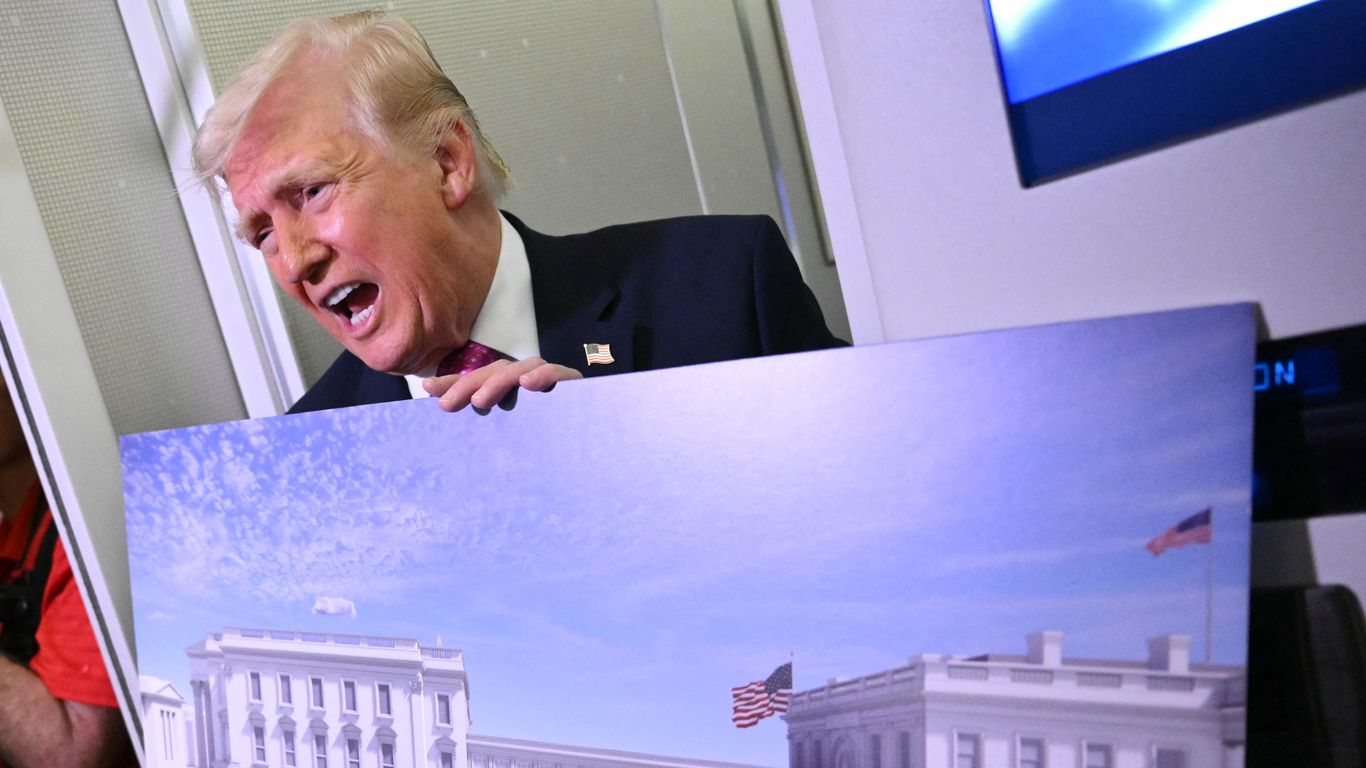
House Republicans are proposing $1 billion in Secret Service funding tied to security for the White House ballroom project, triggering sharp Democratic opposition. The bill is part of an $82 billion reconciliation package and can advance without Democratic support, though tight GOP margins could complicate passage. The issue is primarily political and legislative, with limited direct market impact.
The market relevance is not the headline dollar amount; it is the signal that fiscal process is being used as a governance wedge. That tends to be modestly bearish for broad risk appetite because it reinforces a higher-policy-vol regime, where small procedural fights can still create outsized headline risk in an election year. The immediate economic impact is negligible, but the second-order effect is a higher probability of last-minute rider fights, shutdown noise, and incremental delay in appropriations that can leak into government contractors, defense admin vendors, and rate-sensitive “policy beta” names.
The cleaner read is that this is an optics trade more than a budget trade. If Republicans hold together, the episode likely strengthens the narrative that executive-aligned spending can be forced through reconciliation, which is structurally negative for congressional bargaining power and positive for perceived executive discretion. If party discipline cracks, the loser is not the project itself but the GOP’s ability to keep reconciliation clean, raising the odds of procedural slippage on other legislation that markets care about more, including tax and spending extensions.
The contrarian view is that investors may be overpricing the ballot-box outrage and underpricing the eventual de-escalation. These fights often compress into a short window and then vanish unless they interfere with a must-pass vehicle; absent that, the path of least resistance is little direct market fallout. The real trade is not on the ballroom—it is on whether this episode foreshadows a more combative budget cycle that can widen equity risk premia and steepen political-risk hedges over the next 1-3 months.
AI-powered research, real-time alerts, and portfolio analytics for institutional investors.
Overall Sentiment
mildly negative
Sentiment Score
-0.20
