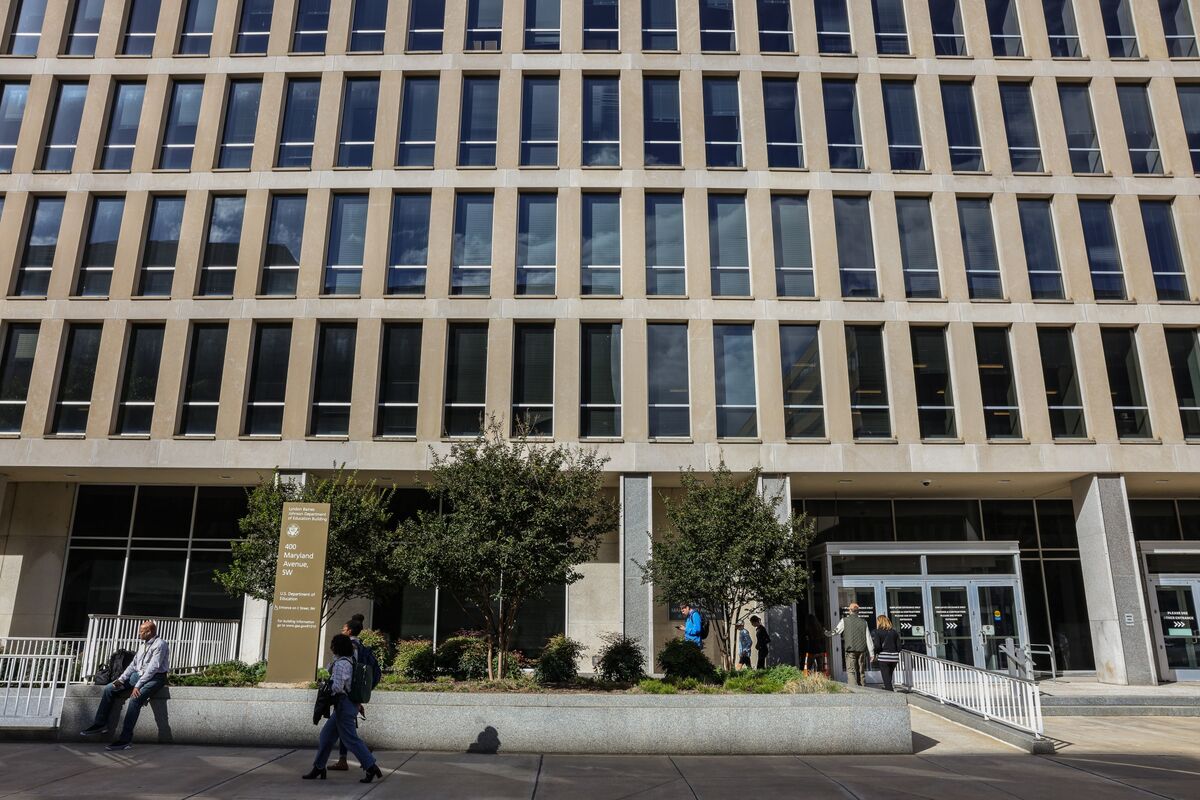
The administration is transferring management of the $1.7 trillion federal student loan portfolio from the Department of Education to the Department of the Treasury under an interagency agreement. Treasury will gain power to collect payments from borrowers in default and will eventually assume most Federal Student Aid operations, including administering FAFSA and Pell Grants. This is described as a key step toward dismantling a cabinet-level agency and shifts operational and regulatory control to Treasury, with potential implications for loan servicers, federal program administration, and fiscal oversight.
The administrative consolidation should reprice the economics of the loan servicing ecosystem more than the headline shift. Servicers that rely on per-account servicing fees and ancillary collections (small-cap specialists) face a multi-quarter pipeline of lost RFPs and margin compression as procurement centralizes; conservatively model 20-40% EBITDA risk for pure-play servicers over 6–18 months if contracts are re-awarded to large systems integrators or internalized.
Counterparty winners are likely to be large federal IT integrators and platform vendors with scale, audit trails, and Treasury-grade security certifications; a handful of multi-billion-dollar contract awards over 12–24 months could represent 5–8% incremental revenue for incumbents like Accenture or Leidos and drive outsized EPS revision. On the flip side, private student lenders and ABS investors face a regime shift in cash collection and workout practices — faster recoveries would tighten expected loss assumptions in SLABS, but more aggressive garnishment could raise cross-product delinquencies in consumer ABS as stressed borrowers reallocate scarce cashflow.
Tail risks are concentrated: intense litigation or Congressional pushback could reverse policy within months, while contract transitions and systems builds will take 12–36 months to fully manifest operationally. A contrarian reading: the market may be over-discounting a permanent revenue loss for servicers — Treasury historically outsources complex customer-facing workflows, so many incumbents could win transitional tech/integration work that partially offsets servicing fee attrition. Watch procurement notices and GAO audits as high-signal catalysts over the next 3–9 months.
AI-powered research, real-time alerts, and portfolio analytics for institutional investors.
Request DemoOverall Sentiment
neutral
Sentiment Score
0.00
