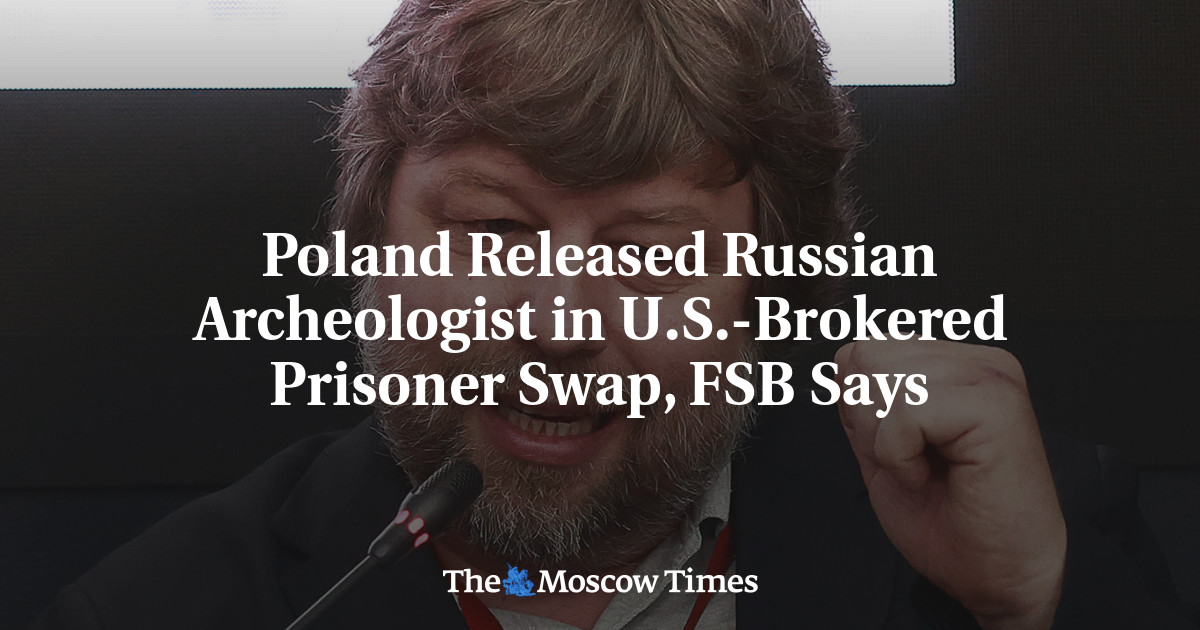
Poland released Russian archaeologist Alexander Butyagin as part of a broader prisoner swap brokered with U.S. involvement, after a Polish court had approved his extradition to Ukraine over alleged damage to cultural heritage sites in Crimea. The exchange also involved the release of three Poles and two Moldovans, while Russia returned individuals identified by the FSB as Moldovan intelligence officers. The story is primarily geopolitical and legal in nature, with limited direct market impact.
This is less about one archeologist and more about the commercialization of prisoner diplomacy as a geopolitical instrument. The immediate signal is that Poland, Belarus, and U.S. intermediaries can now coordinate around a Russian-facing swap channel, which marginally reduces the tail risk of isolated detentions turning into multiyear legal standoffs. That lowers expected friction for select cross-border business travel in the region, but only at the margin; the real economic effect is reputational and political, not operational.
The second-order implication is that Belarus is trying to monetize its role as a logistics node between Russia and Europe, while Washington is implicitly rewarding that behavior. That can create a tactical de-escalation premium in frontier EM assets tied to Belarus-adjacent trade routes, but it is fragile: any deterioration in the Ukraine war or a high-profile detention can snap the channel shut within days. For defense and security contractors, this kind of swap does not change medium-term demand, but it reinforces that grey-zone conflict remains normalized rather than resolving.
The contrarian read is that the market should not extrapolate this into broader détente. Cultural-heritage and espionage-related cases are politically cheap bargaining chips precisely because they are not strategically binding; Moscow can trade them without conceding on sanctions, troop posture, or occupied territory. The more durable signal is that legal risk in Eastern Europe remains highly path-dependent and can be weaponized opportunistically, which argues for staying cautious on any capital allocation thesis that assumes improving rule-of-law conditions in the region over the next 6-12 months.
AI-powered research, real-time alerts, and portfolio analytics for institutional investors.
Request DemoOverall Sentiment
neutral
Sentiment Score
-0.10
