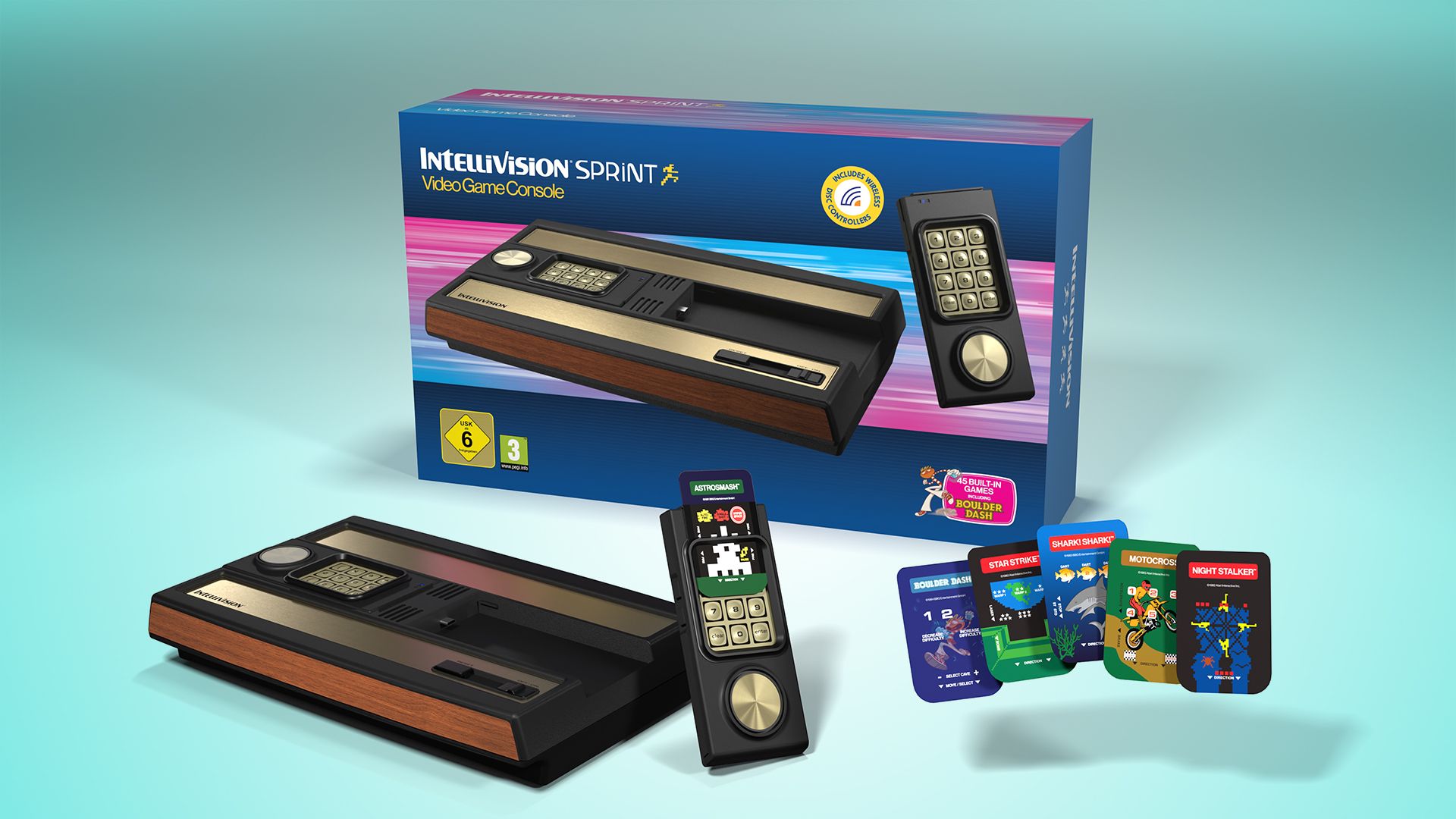
Atari, having secured the Intellivision licence in 2024, has launched the Intellivision Sprint in the UK and Europe (after a US release), a modern remake retailing at £99.99 with two wireless controllers, HDMI/USB connectivity, controller overlays and 45 preinstalled games. The product targets the retro-gaming niche and monetizes legacy IP with an aggressive price versus the original 1981 UK launch (inflation-adjusted ~£774), suggesting modest revenue upside from branded hardware sales but limited broader market or investor impact given the niche positioning and lack of reported financials.
Market Structure: The reissue is a niche, high-margin consumer product that primarily benefits Atari (licensor) and specialty retailers; a realistic sales run of 50k–200k units in UK/EU at £99 implies £5–20m revenue and €1.5–6m of incremental EBITDA for a small licensor if wholesale margins are ~30% over 12 months. Broader incumbents (Sony MSFT NTDOY) see negligible impact; small retail/consumer-electronics resellers and IP licensors gain pricing power in retro/niche segments. Supply/Demand: Limited production runs and nostalgia-driven demand create tight initial supply and aftermarket upside (collector premiums), so scarcity can sustain price elasticity above typical hardware margins for 3–12 months.
Risk Assessment: Tail risks include IP/licensing disputes, manufacturing recalls, or weak reviews suppressing demand — each could wipe 50–100% of projected product revenue over 0–6 months. Hidden dependencies: royalty terms, inventory buybacks, and retailer return policies can shift margin to near-zero; monitor Atari licensing disclosures and EU retailer return rates within 30 days. Catalysts: EU/UK sales data, retailer sell-through reports during next 4–8 weeks, and holiday-season sell-out rates will be decisive.
Trade Implications: Direct play — small-cap exposure to Atari (ATA.PA) or similar licensors offers asymmetric upside but high idiosyncratic risk; consider 0.5–1% position sizes and clear exit triggers (20% gain or 100k+ unit sell-through). Pair trades: long niche gaming ETF (ESPO or HERO) vs short mass-market hardware suppliers if niche outperforms mainstream over 3–12 months. Options: use short-dated call spreads to cap cost around key catalyst dates (retail sell-through/holiday results).
Contrarian Angles: Consensus underestimates aftermarket/collector margins and cross-sell IP monetization (merch, digital re-releases) which can add 10–30% lifetime revenue beyond box sales over 12–36 months. Conversely, the market may be overpricing structural growth in retro hardware as durable; if supply proves ample, scarcity premium collapses within weeks. Historical parallel: NES Classic (2016) showed rapid sell-outs then falling secondary prices after restocks — plan for both scenarios with tight inventory/resolution triggers.
AI-powered research, real-time alerts, and portfolio analytics for institutional investors.
Request DemoOverall Sentiment
mildly positive
Sentiment Score
0.35
