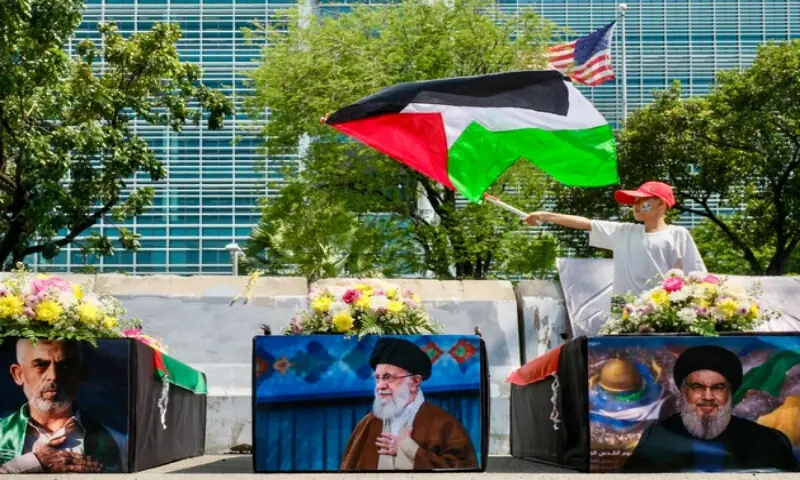
The Iran conflict is eroding US reputation and security partnerships in Bahrain, Azerbaijan and Indonesia, with diplomats warning of rising anti-US sentiment and reduced cooperation. State Department cables say pro-Iran online influence campaigns are amplifying criticism of Washington, while limited embassy messaging is hampering real-time responses. The report suggests potential strain on US defense relationships and broader geopolitical risk in Muslim-majority countries.
This is less a headline risk event than a slow-burn impairment of US soft power, and that matters because alliance quality is an input to defense burden-sharing, basing access, and sanctions efficacy. The first-order market effect is not on oil alone; it is on the political premium embedded in regional security relationships, which can widen the discount rate investors assign to exposed EM assets and defense-adjacent supply chains. The most vulnerable assets are countries whose macro story depends on stable US security guarantees and external financing, especially where public opinion can bleed quickly into policy constraints.
The second-order dynamic is that influence operations are now a force multiplier for geopolitical risk: cheaper, faster, and harder to counter than kinetic escalation. If local publics start perceiving the US as an unreliable partner, governments in Bahrain, Indonesia, and similar states may hedge by delaying procurement, diversifying suppliers, or soft-pedaling cooperation with Washington over months rather than days. That creates a lagged headwind for US defense exporters, port/logistics projects tied to US presence, and EM credit spreads where political stability is a key valuation input.
The near-term catalyst path is reputation damage compounding through repetition, not a single event. The market should watch for visible policy frictions: delayed basing agreements, softer rhetoric in joint statements, or procurement shifts toward non-US platforms over the next 1-3 quarters. A reversal would require a credible US information response and de-escalation on the Iran front; absent that, the trend is sticky because narrative fatigue and algorithmic amplification work against quick repair.
The contrarian angle is that some of this may already be partially priced into broad risk-off positioning, while the real mispricing may sit in niche defense and EM winners/losers. If investors are already underweight geopolitical risk, the better expression is not a macro short but a relative trade targeting countries and contractors with the most reputation beta. The bigger risk to the consensus is underestimating how quickly public sentiment can become procurement behavior, especially in democracies where defense ties are politically visible.
AI-powered research, real-time alerts, and portfolio analytics for institutional investors.
Request TrialOverall Sentiment
moderately negative
Sentiment Score
-0.45
