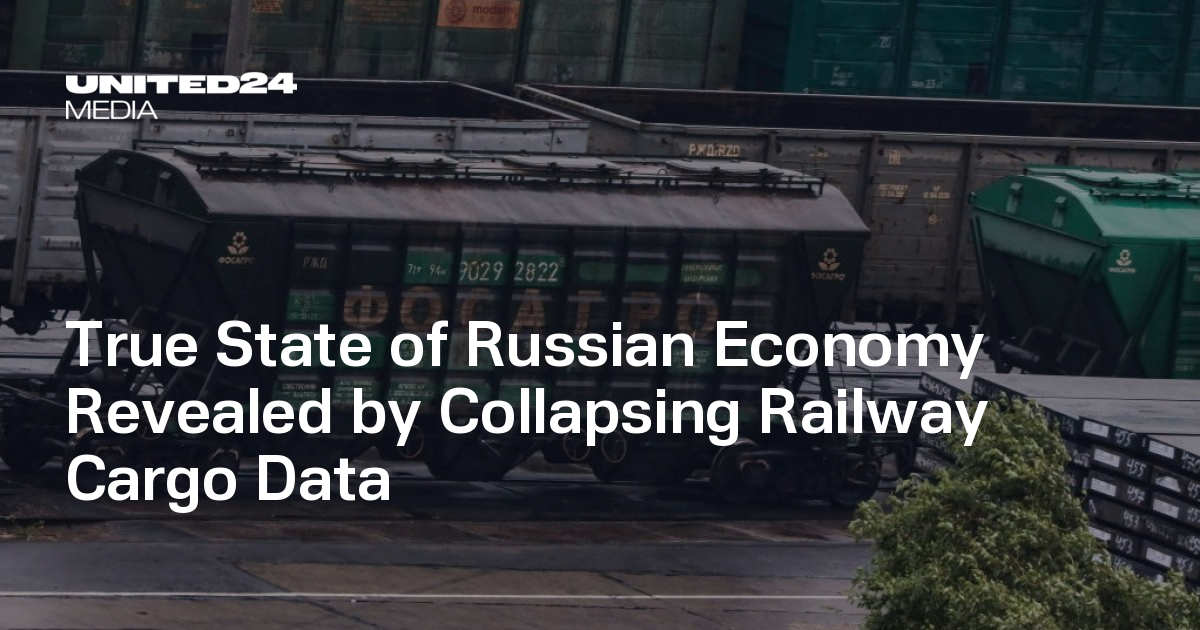
Russian railway freight volume was 13% below 2021 levels by end-2025, hitting a 16-year low and underscoring a broad deterioration in the civilian economy. Key cargoes weakened sharply: coal shipments fell about 10% from pre-war levels, ferrous metals dropped more than 25%, and construction materials lost roughly 20%. RZD’s debt topped 3.3 trillion rubles ($44 billion) while net profit plunged from 50 billion rubles in 2024 to 2.3 billion in 2025, as sanctions, war spending, and infrastructure bottlenecks exposed structural weakness.
BAM is a proxy not just for Russian industrial activity, but for the failure of the country’s post-sanctions logistics reconfiguration. The key second-order effect is that rail underutilization does not simply hit throughput; it destroys pricing power and capital efficiency at the monopoly level, forcing a debt-funded maintenance and expansion cycle that becomes self-reinforcing as volumes fall. That dynamic is more important than headline GDP because it implies a prolonged squeeze on the real economy even if nominal output is artificially propped up by fiscal spending.
The biggest beneficiary is not any single foreign competitor, but non-Russian logistics and commodity corridors that can absorb marginal trade displacement over multiple years: Baltic/Nordic rail-port nodes, Central Asian transit routes, and Indian/Middle Eastern shipping intermediaries. For commodities, the supply-chain consequence is a gradual reallocation of Russian export optionality toward lower-margin, higher-friction channels, which should compress realized prices net of freight and discounts. That is bearish for Russian miners, steel, and petroleum-linked industrials, while also raising counterparty risk for state-owned payables across the domestic industrial complex.
The market is likely underestimating the duration of the squeeze. The relevant horizon is months to years, not days: even if sanctions enforcement does not tighten, physical bottlenecks and arrears can keep widening because the system is now losing both volume and working capital. A true reversal would require either a meaningful easing of sanctions or a step-change in rail capacity; both are slow-moving and politically constrained, making the current deterioration structurally sticky.
Contrarian angle: the consensus may be over-indexing on headline war-spending resilience and underpricing the possibility that the civilian economy is already in a liquidity trap. The risk to a bearish Russia trade is that the state can temporarily monetize more deficits and hide stress through price controls and delayed payments, extending the illusion longer than fundamentals justify. But that only deepens the eventual adjustment, making dips in Russian asset proxies opportunities to express the slowdown rather than fade it.
AI-powered research, real-time alerts, and portfolio analytics for institutional investors.
Request DemoOverall Sentiment
strongly negative
Sentiment Score
-0.78
Ticker Sentiment
