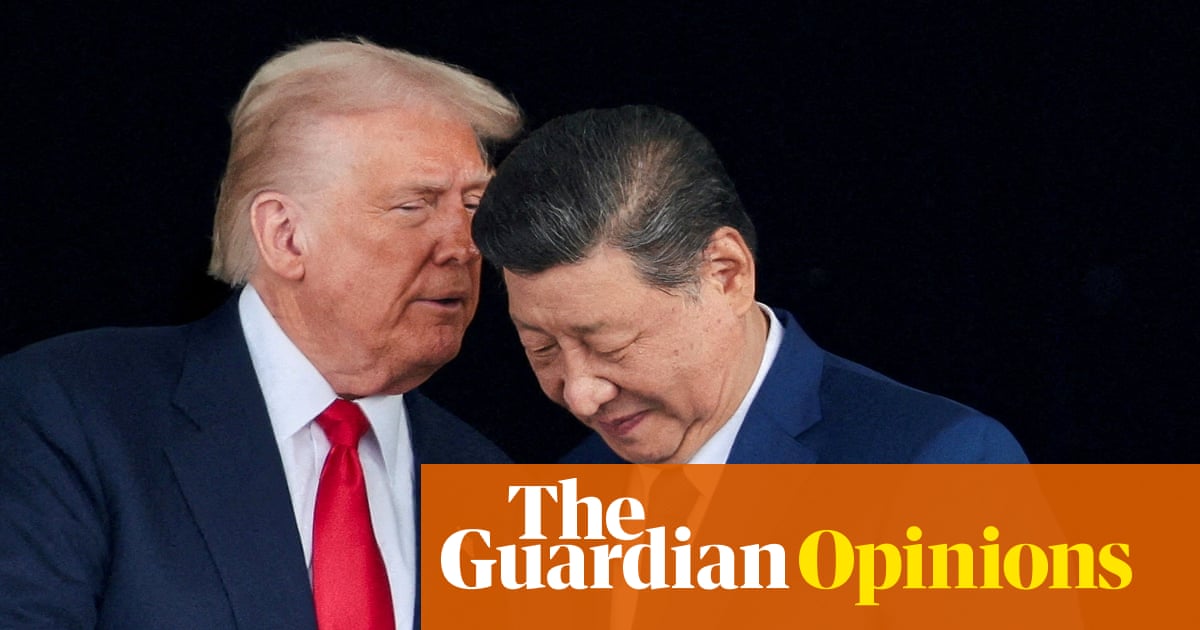
The article argues that Trump’s summit with Xi comes amid escalating geopolitical risks tied to Iran, Taiwan, and the Indo-Pacific, with potential spillovers to global energy and trade flows. It highlights the risk that China could reduce support for US positions on Taiwan or increase covert assistance to Iran, while the US is already diverting military resources to the Middle East. The piece implies significant downside for US allies and a broad market backdrop of higher geopolitical uncertainty, especially for oil and shipping through the Strait of Hormuz.
The market’s first-order read is higher geopolitical risk premium, but the more interesting second-order effect is allocation of scarce U.S. military and diplomatic bandwidth away from Asia while Beijing quietly deepens optionality. That tends to be bullish for Asian defense procurement over a 6-18 month horizon, because regional buyers cannot rely on U.S. deterrence signaling alone and will have to spend preemptively. It also supports a wider dispersion trade: suppliers tied to missile defense, ISR, EW, naval systems, and secure comms should outperform broad industrials because the spend is urgency-driven rather than cyclical.
Energy is more nuanced. A Hormuz disruption headline is not just a crude spike trade; it is a squeeze on Asian importers, a margin tax on chemicals, refining, airlines, and shipping, and a de facto support for U.S. LNG and non-Gulf supply chains. The medium-term loser is not only China’s growth rate but also any company with high Gulf exposure and weak pricing power; the beneficiaries are firms with contract-based gas export exposure, tanker leverage, and non-Middle East upstream barrels. If Beijing is perceived as able to stabilize or de-escalate, the immediate risk premium can unwind fast, so any long crude/energy position needs to be tied to concrete escalation markers rather than a vague geopolitical thesis.
The contrarian miss is that some of the worst outcomes are already partially priced in: markets have lived with elevated Middle East risk for months, and investors may be overstating the probability of a clean, material U.S. policy retreat from Taiwan. The bigger trade may be the gradual repricing of allied self-help spending and supply-chain redundancy, not a one-off war shock. That argues for buying quality defense and selective Japan/Taiwan enablers on weakness rather than chasing headline-driven oil spikes.
Catalyst path matters: days for crude and shipping, quarters for defense budgets, and years for semiconductor and allied industrial reshoring. The key reversal risk is a surprise Beijing-mediated de-escalation or a credible U.S. off-ramp, which would compress the conflict premium quickly in energy while leaving the defense thesis intact. In that scenario, shorts in airlines, shippers with Middle East exposure, and chemical names should cover first, while defense longs can be held through budget cycles.
AI-powered research, real-time alerts, and portfolio analytics for institutional investors.
Request DemoOverall Sentiment
strongly negative
Sentiment Score
-0.78
