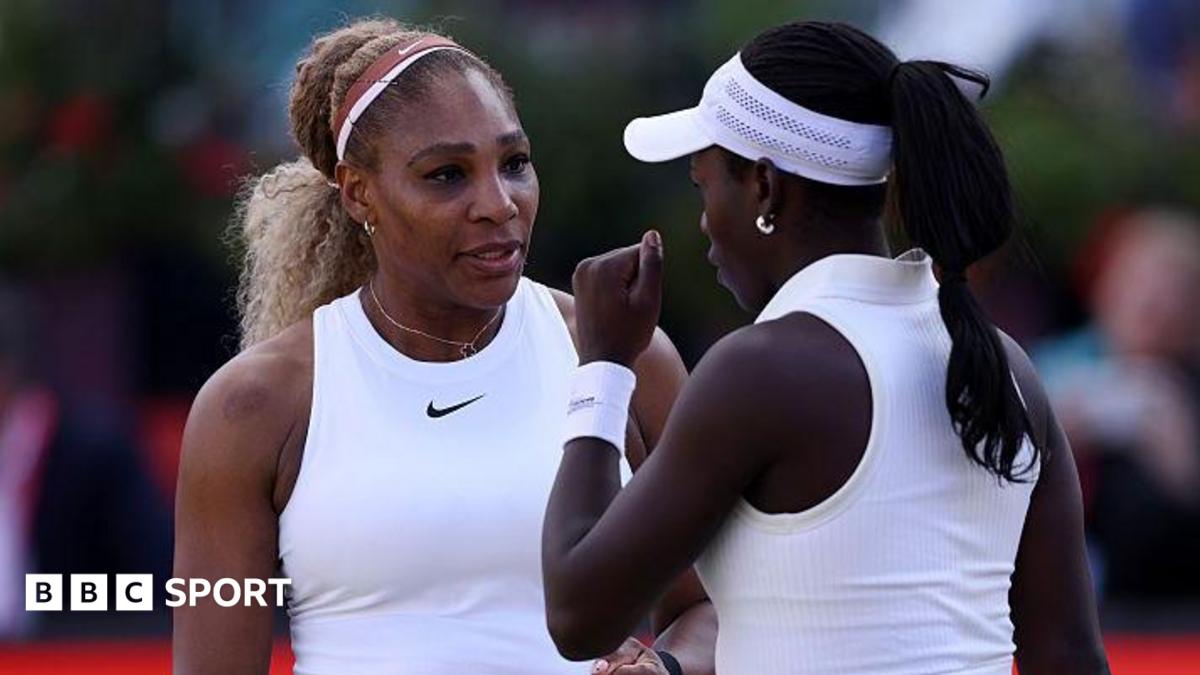
Victoria Mboko withdrew from Queen’s with a left knee injury after falling in her singles match, ending Serena Williams’ doubles campaign there. Mboko’s status for Wimbledon, which begins on 29 June, is uncertain, while Williams is still expected to continue her comeback in Berlin next week. The news is sports-focused and unlikely to have meaningful market impact.
The immediate market read is not about one doubles match; it is about lineup fragility around a marquee draw and the monetization of a comeback narrative. Any interruption to Williams’ path reduces near-term attention capture for the event, but the larger second-order effect is on the wildcard decision and associated ticketing/media uplift at Wimbledon, where even a few extra rounds from a global name can have disproportionate hospitality and broadcast value.
From a risk perspective, Mboko’s injury is the more important catalyst because it shifts the distribution of outcomes for the Wimbledon field. If she is sidelined for even 2-6 weeks, the injury would meaningfully alter the competitive slate and likely depress near-term engagement around a breakout-young-player storyline; if the knee issue is more serious, the downside extends into the summer hard-court swing, where missed development time matters more than the immediate ranking hit.
The contrarian angle is that the market may be overpricing the binary “Williams wildcard” narrative while underpricing the broader event-ops benefit from uncertainty itself. Wimbledon retains optionality: a wildcard decision can be used to maximize global attention, while Williams’ doubles participation in Berlin creates a contingency path that keeps her in the news regardless of the final draw. That means the best trade is not to chase headline sentiment, but to express the view through event-driven proxies with defined time decay.
Near term, the most relevant catalyst window is the next 7-10 days: wildcard committee timing, injury update cadence, and any roster announcements for Berlin. If Williams is granted the wildcard, the upside is concentrated in short-lived media and demand effects; if denied or if Mboko’s injury sidelines her, the incremental event buzz fades quickly, which argues for fading any knee-jerk re-rating after the announcement.
AI-powered research, real-time alerts, and portfolio analytics for institutional investors.
Request DemoOverall Sentiment
mildly negative
Sentiment Score
-0.18
