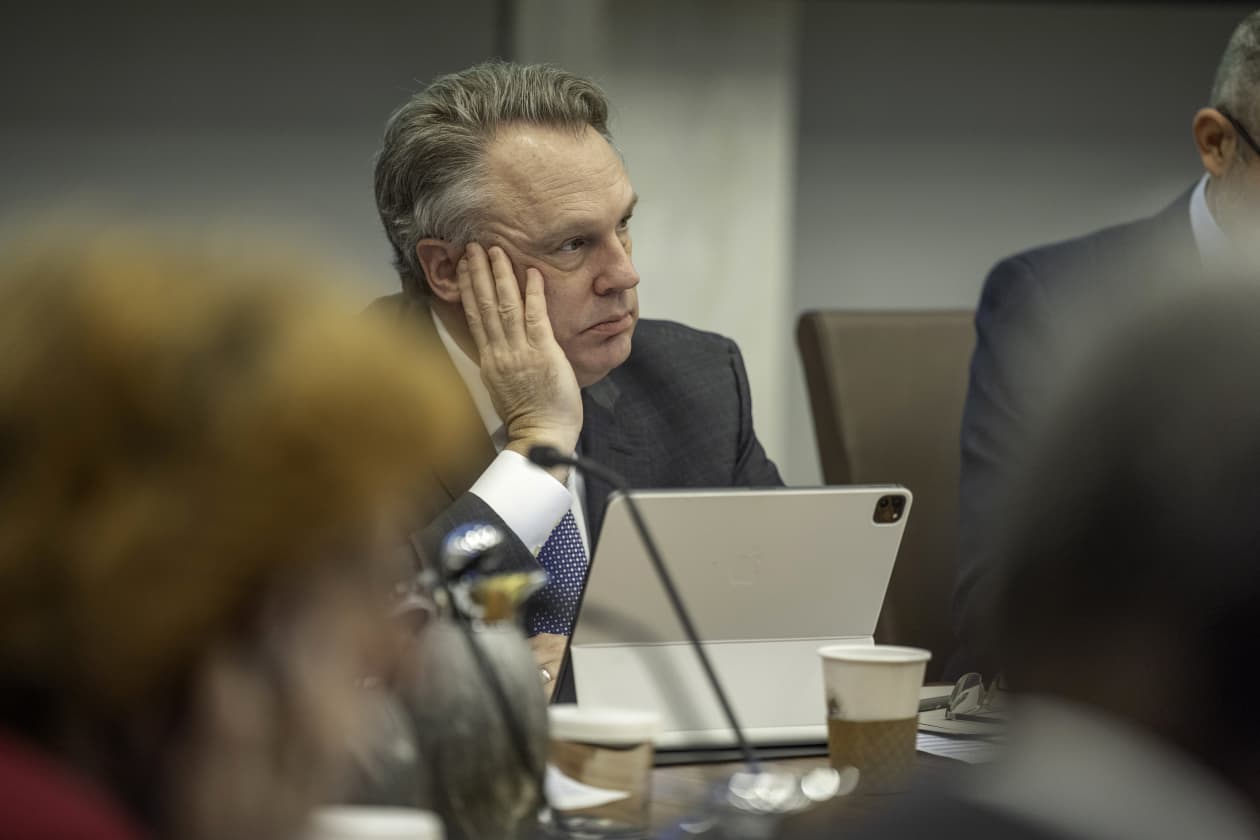
Senior Federal Reserve officials, including New York Fed President John Williams, characterize the labor market as "solid" despite a weak July jobs report, signaling no immediate rush to cut interest rates. They emphasize the need to ensure inflation, currently at 2.8% (core PCE) and partly fueled by tariffs, returns to the 2% target, with Williams projecting this by 2027. This patient, wait-and-see approach, prioritizing inflation control, suggests the Fed will maintain its current policy stance longer than market expectations.
Despite a weak July jobs report that prompted markets to increase bets on a rate cut, senior Federal Reserve officials are publicly maintaining a patient, data-dependent stance. Key figures, including New York Fed President John Williams, characterize the labor market as "solid," pointing to low unemployment and layoff rates as evidence of underlying strength in a "low-hire, low-fire" economy. The primary obstacle to monetary easing is persistent inflation, with the core PCE price index at 2.8%, well above the 2% target, and partly influenced by tariffs. This focus on inflation explains the officials' 'wait-and-see' approach, with Williams forecasting a return to the target not until 2027. However, the Federal Open Market Committee is not unanimous, as evidenced by a recent 9-2 vote where two governors dissented, arguing the labor market is weaker and tariff-related inflation will be transient. This internal division, coupled with the explicit pushback against market expectations for an imminent cut, underscores a period of heightened uncertainty where the bar for policy change remains high.
AI-powered research, real-time alerts, and portfolio analytics for institutional investors.
Overall Sentiment
mixed
Sentiment Score
0.00
