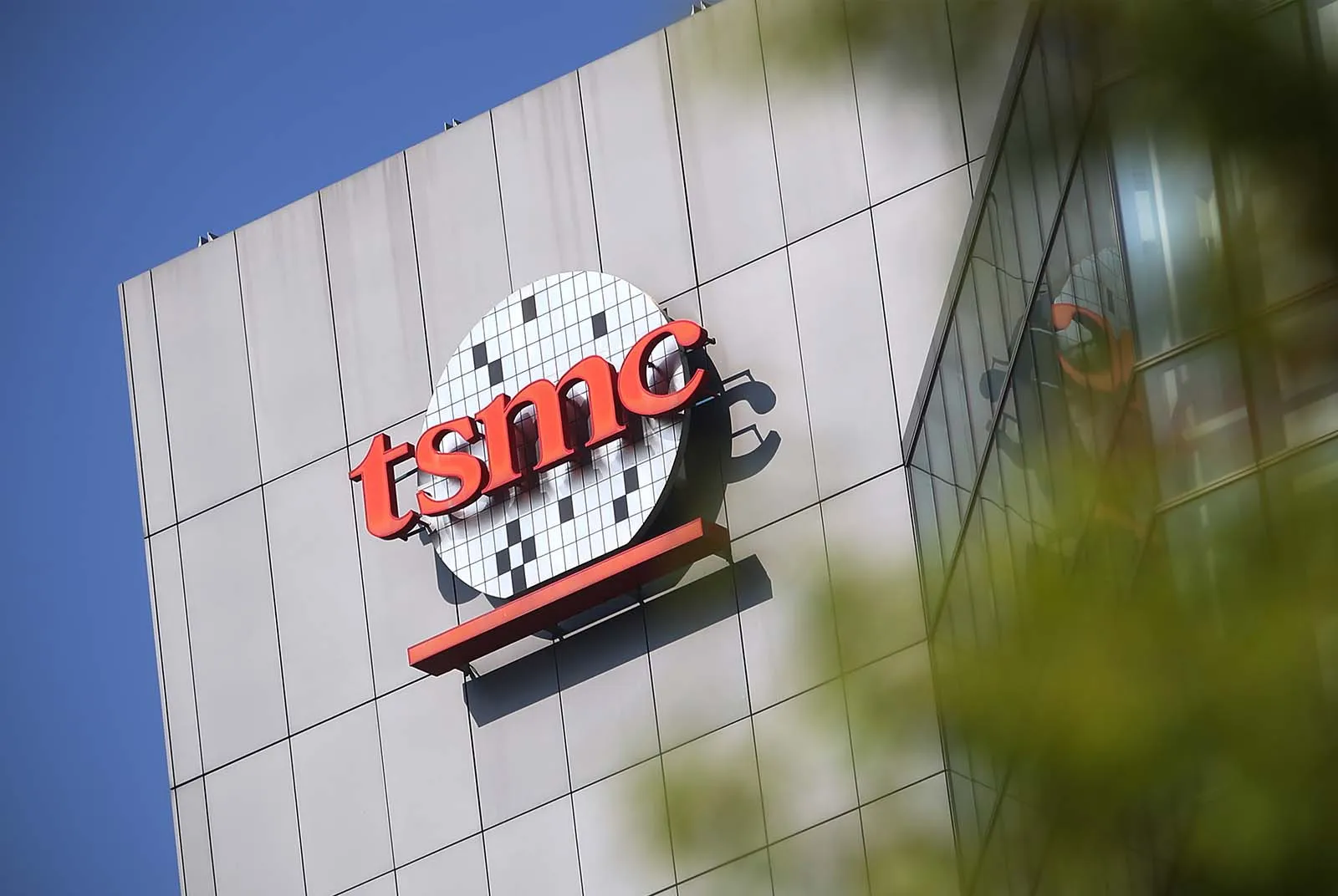
Taiwan stocks closed at a record high, with the Taiex up 1.17% to 36,722.14 and intraday as high as 37,064.16, as TSMC rose 1.22% to NT$2,080 ahead of its Q1 earnings release. The rally was supported by AI-chip optimism, strong foreign buying of NT$55.71 billion, and easing risk sentiment on hopes for U.S.-Iran talks, while lower oil prices pressured petrochemical names. Separately, Elon Musk said Tesla’s AI5 tape-out was successful and discussed Samsung production, reinforcing AI and foundry interest. Japan also unveiled a $10 billion support plan for Southeast Asia to secure oil supplies amid Middle East tensions.
TSM remains the cleaner expression of the AI capex trade than the broader Taiwan beta. The key second-order effect is that record index levels plus heavy foreign inflows can force systematic and active managers to chase a name that already screens as a high-quality earnings compounder, which can keep multiple expansion going even if the print itself is merely in-line. The risk is that the trade has become crowded into a single catalyst window, so an earnings miss on margin mix or guidance could trigger a sharp de-grossing across the whole Taiwan semiconductor complex within 1-3 sessions.
The more interesting read-through is competitive rather than directional: any signal that advanced-node capacity diversification is becoming real is modestly negative for TSM’s monopoly premium and incrementally positive for Samsung’s foundry credibility. If Samsung can show credible 2nm yield progression, it changes the narrative from “capacity is constrained” to “capacity is strategically redundant,” which could compress the scarcity premium in leading-edge wafer pricing over 6-12 months. That said, this is still a validation story, not a share-shift story; the market will likely reward proof of process stability long before it believes meaningful wallet-share migration.
For TSLA, the foundry news is less about the chip itself and more about de-risking the autonomy roadmap. If the AI5 tape-out is truly on track, the market can re-accelerate optionality on robotaxi/robotics over the next 2-4 quarters, but the stock will remain highly sensitive to execution slippage because investors are paying for future platform economics, not current auto fundamentals. The contrarian view is that any AI5 enthusiasm may be over-extended if it gets conflated with volume scalability; chip success does not solve vehicle software, regulatory, or manufacturing bottlenecks, so upside here is more likely to be sentiment-led than fundamentals-led in the near term.
AI-powered research, real-time alerts, and portfolio analytics for institutional investors.
Request DemoOverall Sentiment
mildly positive
Sentiment Score
0.35
Ticker Sentiment
