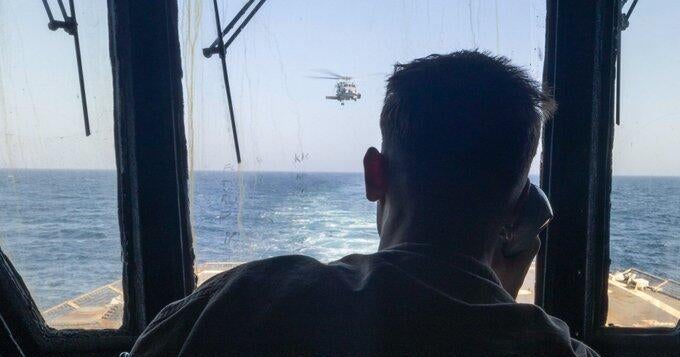
Iranian attacks on the UAE and commercial shipping in the Strait of Hormuz have kept the ceasefire under strain, while the U.S. says 51 vessels have been turned back under its blockade and more than 15,000 troops are supporting Project Freedom. Two U.S. Navy destroyers transited the strait under fire, with seven to eight Iranian small boats destroyed and a South Korean tanker disabled after an apparent strike. The situation remains highly escalatory for energy flows, shipping routes, and regional security, with Saudi Arabia, Germany, South Korea, and China all reacting to the disruption.
The market should treat this less as a binary ceasefire headline and more as a regime shift in shipping-risk premia. Even if kinetic escalation stays contained, the cost of moving cargo through the Gulf is now being repriced by escort requirements, detours, insurance surcharges, and queueing delays; that is a direct tax on Asia-exposed importers, refiners, and container lines with weak pricing power. The first-order effect is higher freight and energy volatility; the second-order effect is that smaller or less-secure counterparties will self-sanction, reducing effective throughput even without a formal blockade.
The real winner is not the obvious defense prime set so much as anyone monetizing maritime bottlenecks: mine countermeasure, ISR, anti-drone, and command-and-control vendors should see procurement urgency persist for months, not days. Conversely, European industrials and Asian manufacturing names with high Gulf exposure face a margin squeeze from both input costs and schedule unreliability; the hidden risk is inventory restocking panic that can overstate near-term freight demand, then collapse once supply chains adapt.
The contrarian read is that the market may be overestimating the durability of the current disruption in one place while underestimating its persistence in another. A ceasefire can fail to restore commerce if insurers, charterers, and port operators continue to demand military escort, so the damage can linger even if missiles stop. Watch for any sign that Washington broadens escort operations or that Gulf neighbors form a coalition; that would compress the risk premium quickly, but absent that, volatility in tanker rates and crude differentials should remain elevated for several weeks.
AI-powered research, real-time alerts, and portfolio analytics for institutional investors.
Request DemoOverall Sentiment
strongly negative
Sentiment Score
-0.72
