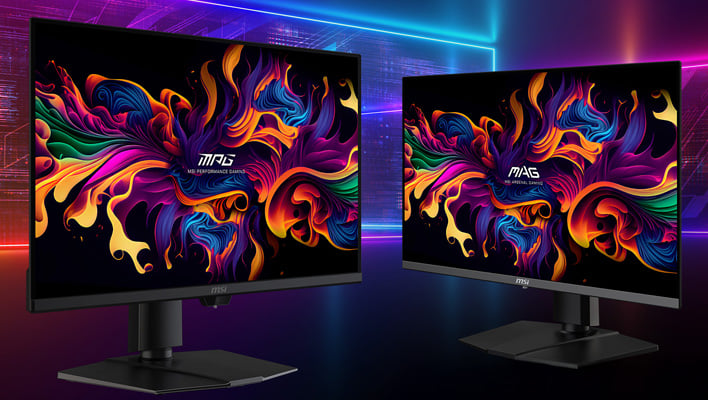
MSI unveiled two new 31.5" 4K QD-OLED gaming displays—MPG 322UR QD-OLED 24X and MAG 321UP QD-OLED X24—using a 5-layer tandem OLED architecture based on Samsung's Gen 3 panels. The displays incorporate MSI's DarkArmor film, which the company says improves pure black levels by up to 40%, raises surface hardness from 2H to 3H (about 2.5x better scratch resistance), and adds adjustable HDR brightness curves for more uniform luminance; MSI positions these changes as delivering higher brightness, lower power use and reduced burn-in risk. Full specifications will be released at CES, but the upgrades suggest a competitive product step in high-end gaming monitors that could modestly influence sales and positioning in the premium display segment.
Market structure: Tandem QD‑OLED upgrades primarily benefit panel/IP owners and upstream materials suppliers (Samsung Display via Samsung Electronics 005930.KS, Universal Display Corp. OLED) and premium monitor OEMs (MSI, ASUS). Expect an ASP uplift for 31.5" 4K premium gaming monitors of roughly $50–150 (≈10–25%) versus current high‑end LCD/miniLED SKUs, supporting margin expansion if supply remains constrained; incumbents reliant on legacy LCD volumes will be pressured.
Risk assessment: Tail risks include persistent yield shortfalls at fabs, a faster pivot to microLED/miniled cost declines, or IP/licensing disputes that raise input costs; these could depress expected ASPs by >20% within 12 months. Immediate effects are CES‑driven sentiment moves (days–weeks); supply/earnings evidence will drive real re‑rating over 3–12 months, while full category penetration plays out over 12–36 months.
Trade implications: Direct plays: long OLED (OLED) and Korea display exposure (005930.KS) for 6–18 months, plus GPU beneficiary NVDA for ancillary demand; consider LEAP calls on OLED (12–18m) or 6–9m call spreads on NVDA to express upside with defined risk. Pair trade: long OLED/005930.KS (2–3% portfolio) and short AU Optronics (2409.TW) (1–2%) to capture relative winners; entry: scale 30–50% pre‑CES, add on confirmed supply deals, targets 20–40% in 12 months, stop‑loss 15%.
Contrarian angles: The market may underweight adoption hurdles — premium upgrade cycles are niche (expect <10% monitor penetration in 24 months) so early enthusiasm can be overbought; history (OLED TV cycle) shows multi‑year gestation with periodic oversupply and price compression. Watch OEM inventory weeks, panel ASPs, and Samsung display shipment/yield announcements as high‑information signals that could flip positions quickly.
AI-powered research, real-time alerts, and portfolio analytics for institutional investors.
Request DemoOverall Sentiment
mildly positive
Sentiment Score
0.30
